
Solving Nigeria's Electricity Crisis
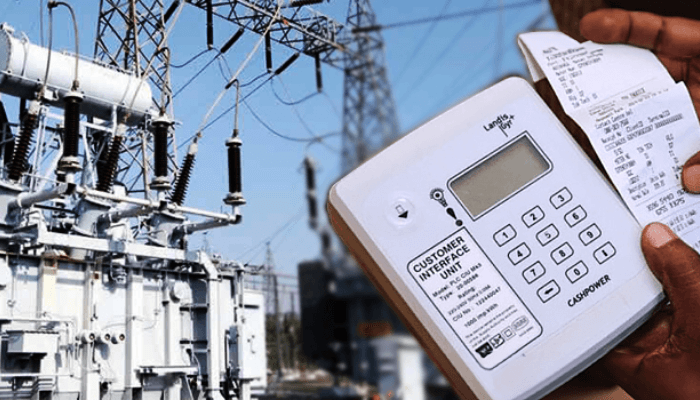
For decades, Nigeria’s power sector has remained the ultimate paradox: a nation sitting on some of the world’s largest gas reserves and bathed in perennial sunlight, yet perpetually cloaked in darkness. Despite billions of dollars in investment and a landmark privatisation exercise in 2013, the insoluble nature of the power crisis persists, stifling industrialisation and wearying the spirit of over 200 million citizens.
nTo break this cycle, we must move beyond cosmetic repairs and confront the structural rot with several surgical interventions. First, we must push harder to dismantle the myth of the “National Grid” as a singular, fragile entity. Despite recent efforts to decentralise power supply, we remain largely stuck in the centralised architecture. A single tripped circuit in a remote substation plunges the entire federation into a blackout.
nWith vandals and terrorists actively attacking our power infrastructure, coupled with inefficiencies in generation, transmission and distribution of power, outages add to human suffering and economic misery.
nTransitioning to a decentralised, cluster-based model—where industrial hubs and residential zones are powered by independent mini-grids—will protect against total system collapses. By localising generation and distribution, we can ensure that a failure in one region does not paralyse the nation.
nAlso, the “liquidity squeeze” must be addressed with ruthless efficiency. The sector is currently debt-riddled. Despite partial removal of power subsidies which many are still struggling to adjust to, Distribution Companies, DisCos, cannot pay Generating Companies, GenCos, which in turn cannot pay gas suppliers.
nAt this point, universal metering must be aggressively pursued. Estimated billing is a form of economic extortion that destroys consumer trust. While government should allow a tariff structure that reflects the real cost of production, it must provide targeted, transparent subsidies for the most vulnerable small businesses and individuals.
nWe must secure our Gas-to-Power infrastructure. It is a national embarrassment that thermal plants sit idle while gas is flared or exported. Domestic gas supply obligations must be enforced with the same vigour as international contracts. Furthermore, the physical security of these pipelines is a matter of national sovereignty; without a steady fuel supply, our turbines are merely expensive monuments of inefficiency.
nThe Transmission Company of Nigeria, TCN, requires a total technological overhaul. The grid remains “blind” without a functional SCADA (Supervisory Control and Data Acquisition) system. We cannot manage what we cannot see. Automating the grid to respond to frequency fluctuations in real-time is the only way to end the era of frequent system collapses.
nWe must aggressively embrace a diversified energy mix. Over-reliance on gas and ageing hydro has left us vulnerable. Integrating solar, wind and small-scale hydro into local distribution networks—particularly in the energy-starved North—will provide the “embedded generation” needed to stabilise the load.
nFixing Nigeria’s power problem requires patriotism, courage and vision.
n nRelated Stories
 General News
CELEBRATING TWO YEARS OF TRANSFORMATIONAL LEADERSHIP IN THE PRESIDENTIAL AMNESTY PROGRAMME
Tomorrow, 14TH March 2026, as we look forward to the second anniversary, we reflect on the remarkable two years since the Administrator of the Preside
 General News
PRESIDENTIAL AMNESTY PROGRAMME PHASE 3: DISREGARD PURPORTED STATEMENT ON DELAYED ITA PAYMENTS — OFFICE OF NATIONAL CHAIRMAN
The Office of the National Chairman of the Presidential Amnesty Programme Phase 3, General Elaye ThankGod Dollar Slaboh, has called on beneficiaries a
 General News
RE: CLARIFICATION ON MY PERSONAL RELATIONSHIPS
PUBLIC NOTICErnrnRE: CLARIFICATION ON MY PERSONAL RELATIONSHIPSrnrnIt has become necessary to make this public clarification following the increasing