
Soaring costs are compromising the standard of nutrition in Nigerian diets
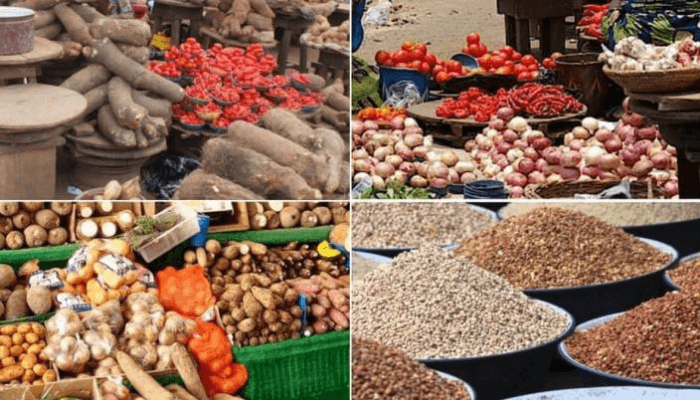
Nigerian households are feeling the pinch of rising food prices, with meals being divided into smaller portions and families skipping breakfast to make ends meet, as the cost-of-living crisis worsens.
nThe federal government has raised concerns over the growing food safety crisis in Nigeria, revealing that nearly 50 million illnesses and over 53,000 deaths are caused by unsafe food annually, with children under five bearing the brunt of the burden.
nAdebimpe Olatunji, a mother of four in Ikeja, described the struggle to feed her family, saying "we manage, the children may take bread before school, then the proper meal comes later, sometimes everybody skips breakfast).
nPatricia, another mother, echoed similar sentiments, stating "it is no longer about eating well, it is just making sure everybody eats something," highlighting the difficulties faced by many families in accessing nutritious food.
nAngela, a civil servant and single mother, noted that the impact of rising food prices is felt deeply, saying "you notice your salary more through what it cannot do anymore," as families are forced to make tough choices about how to allocate their limited resources.
nTunde Lawal, a teacher in a public school in Lagos, observed that some pupils now come to class without food for break time, saying "you can tell when a child has not eaten properly, some struggle to pay attention," highlighting the effects of food insecurity on education.
nTraders at Mile 12 market in Lagos reported that people are no longer buying in bulk, with Ope, a pepper seller, saying "everything is now small, small, before, somebody buys a basket, now it may just be a handful," as families struggle to make ends meet.
nBiola Idowu, another trader, noted that bulk buying has become difficult, saying "I buy only what can last a few days now," as the rising cost of food forces families to change their shopping habits.
nThe 2025 Consumer Price Index report from the National Bureau of Statistics showed that food inflation remained in double digits for most of the year, with prices of staples like rice, beans, yam, and maize rising sharply across urban areas.
nIn Lagos markets, the price of rice has risen from around N250 or N300 per kilogram in 2015 to between N1,800 and N2,200, while beans have increased from roughly N300 per kilogram to as much as N2,800.
nA crate of eggs that once cost below N1,000 now sells for up to N6,000 in some areas, forcing families to make tough choices about how to allocate their limited resources.
nGrains trader Iya Ade noted that more customers are now shopping daily because weekly buying has become difficult, saying "people calculate every item before they buy, nobody shops carelessly again," as families strive to make their money go further.
nTaiwo, a fish seller, echoed similar sentiments, saying "people calculate every item before they buy, nobody shops carelessly again," highlighting the careful planning that goes into food shopping for many families.
nFeeding a family in Lagos now costs far more than it did a decade ago, with Vanguard findings showing that a family of five could spend between N35,000 and N45,000 monthly on food in 2015, but now requires between N200,000 and N300,000 to maintain the same standard of living.
nFamilies are now shopping in smaller quantities, cutting back on protein, and planning meals more carefully to make supplies last through the week, as the rising cost of food forces them to adapt.
nWhen money becomes tight, many families cut protein and fresh foods before reducing the quantity of food itself, with meat becoming occasional, fish reduced, and soups stretched further, according to Onome David, a single mother earning a minimum wage.
nCommunity nutrition practitioner Eunice Obi noted that people depend more on starch now because they just want food that fills the stomach, saying "people depend more on starch now because they just want food that fills the stomach," highlighting the shift towards cheaper, filling meals.
nA 2024 World Bank Nigeria Development Update warned that rising food prices were pushing more families toward cheap, filling meals with lower nutritional value, which can have long-term consequences for health and wellbeing.
nDr. Shoba Suri, a nutrition researcher, noted that when families switch mostly to cheaper staples, fruits, vegetables, and protein reduce first, saying "the body may still feel full, but important nutrients are missing," highlighting the risks of malnutrition.
nCarina Venter, a paediatric nutrition specialist, warned that poor diets might affect growth and brain development, even when children appear to eat regularly, highlighting the need for careful planning and attention to nutrition.
nPoor feeding does not always announce itself immediately, sometimes it begins with constant tiredness and frequent illness, according to Prof. Salisu Abubakar, President of the Nutrition Society of Nigeria.
nFormer president of the society, Prof. Ngozi Nnam, noted that eating enough food doesn’t always mean eating well, saying "a child may eat regularly and still suffer malnutrition if the meals lack variety," highlighting the importance of a balanced diet.
nNutritionists say healthy eating is still possible for many households, but now requires more planning and simpler choices, according to Mrs. Amaka Nwaora, Managing Director of Kamary Nutrition Consult.
nLocal foods are still some of the best options, with beans, millet, sweet potatoes, ugwu, groundnuts, and local vegetables being nutritious and often cheaper than processed foods, according to Mrs. Amaka Nwaora.
nPlanning meals ahead can reduce waste, and buying in bulk markets can save money, while home cooking can stretch food further, according to Mrs. Amaka Nwaora.
nThe NBS Food Price Watch from December 2025 to March 2026 indicated that tubers, eggs, legumes, and fresh vegetables recorded some of the sharpest increases, further eroding the purchasing power of millions of families already battling high inflation and weak income growth.
nSweet potatoes emerged as the commodity with the highest increase during the period, rising by 10.03 per cent from N752.86 in December 2025 to N828.34 in March 2026, according to the NBS Food Price Watch.
nIrish potatoes followed with a 7.45 per cent increase to N2,044.40 from N1,902.61, while the average price of one agric egg rose by 6.44 per cent to N256.48, according to the NBS Food Price Watch.
nYam tubers rose by 4.38 per cent to N2,144.70, with Delta State recording one of the highest average prices at N2,680.21, according to the NBS Food Price Watch.
nWhite beans increased by 6.31 per cent to N1,276.63, while brown beans rose by 6.06 per cent to N1,325.85, according to the NBS Food Price Watch.
nImported long-grain rice recorded an increase of 1.03 per cent to N2,223.83, while local short-grain rice rose by 1.70 per cent to N1,876.36, according to the NBS Food Price Watch.
nGarri prices equally moved upward, with white garri rising by 3.24 per cent and yellow garri increasing by 2.20 per cent, according to the NBS Food Price Watch.
nFresh vegetables maintained an upward trajectory, with tomatoes rising by 4.53 per cent to N1,104.95, and carrots gaining 4.31 per cent to N2,003.08, according to the NBS Food Price Watch.
nOther food items that recorded increases included ginger, bread, dairy products, beef, and frozen fish, according to the NBS Food Price Watch.
nNigeria’s annual inflation rate rose in March and April to 15.38 per cent and 15.69 per cent respectively, following the persistent increase in food prices, according to the National Bureau of Statistics.
nThe annual food inflation rate rose to 14.32 per cent in March and 16.06 per cent in April, according to the National Bureau of Statistics.
nMinister of State for Health and Social Welfare, Dr. Iziaq Salako, raised alarm over the growing food safety crisis in the country, revealing that unsafe food was responsible for nearly 50 million illnesses and over 53,000 deaths annually.
nChildren under five account for more than 80 per cent of all foodborne disease burden in Nigeria, with diarrhoeal diseases caused by foodborne pathogens being the biggest contributor to the country’s food safety burden, according to Dr. Iziaq Salako.
nOver 40 million diarrhoeal illnesses annually are linked to dangerous pathogens, such as Salmonella, E. coli, Campylobacter, Shigella, and Rotavirus, which remain major causes of hospitalisation, malnutrition, and death among children, according to Dr. Iziaq Salako.
nChemical hazards are emerging as a serious concern, with lead exposure responsible for tens of thousands of healthy lives lost to illness, disability, or early death, according to Dr. Iziaq Salako.
nNigeria has made significant progress in strengthening food safety systems
Related Stories
 General News
CELEBRATING TWO YEARS OF TRANSFORMATIONAL LEADERSHIP IN THE PRESIDENTIAL AMNESTY PROGRAMME
Tomorrow, 14TH March 2026, as we look forward to the second anniversary, we reflect on the remarkable two years since the Administrator of the Preside
 General News
PRESIDENTIAL AMNESTY PROGRAMME PHASE 3: DISREGARD PURPORTED STATEMENT ON DELAYED ITA PAYMENTS — OFFICE OF NATIONAL CHAIRMAN
The Office of the National Chairman of the Presidential Amnesty Programme Phase 3, General Elaye ThankGod Dollar Slaboh, has called on beneficiaries a
 General News
RE: CLARIFICATION ON MY PERSONAL RELATIONSHIPS
PUBLIC NOTICErnrnRE: CLARIFICATION ON MY PERSONAL RELATIONSHIPSrnrnIt has become necessary to make this public clarification following the increasing