
Seven in ten female students and three in ten male students experience gender-based violence at universities and colleges, according to a recent study.
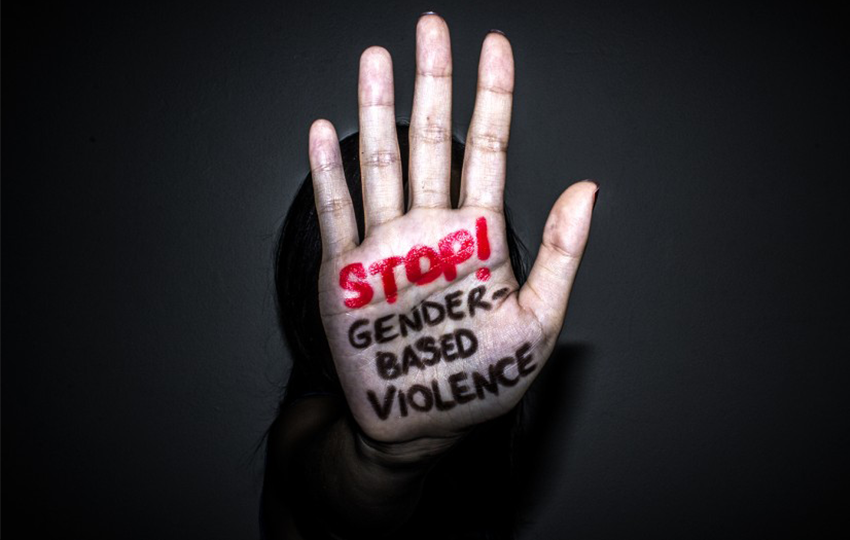
A staggering 70 percent of female students and 30 percent of male students have fallen victim to at least one form of gender-based violence on campus, according to the National Campus Climate Baseline Survey on Sexual Harassment in Tertiary Institutions in Nigeria.
nConducted across 12 participating universities, including six federally owned and six state universities, the survey was organised by the Committee of Gender Studies Directors in Nigerian Universities in partnership with Alliance for Africa, AfA, and Co-Impact, covering all six geopolitical zones of the country.
nProf. Igot Ofem, Acting Director of the Centre for Response and Prevention of Sexual and Gender-Based Violence, CRPSGBV, revealed the survey's findings at a media briefing commemorating International Women’s Day 2026, themed “Rights, Justice, Actions for All Women and Girls,” at the Lagos State University, Ojo.
nThe survey explored various dimensions, including sexual harassment, dating violence, and other forms of sexual misconduct, assessing victimisation, perpetration, prevention efforts, support resources, and institutional responses, with key findings indicating that 70 percent of female students and 30 percent of male students have experienced gender-based violence on campus.
nFurthermore, the survey found that 63 percent of female staff and 37 percent of male staff have experienced gender-based violence on campus, with sexual misconduct, including unwanted touching, inappropriate comments, verbal abuse, and stalking, being the most commonly reported form of harassment, affecting 42.2 percent of all respondents.
nStudents are often coerced into sexual exchanges for academic favour, transferred between universities, or lose academic privileges, while many survivors do not report incidents due to a lack of trust in institutional reporting systems, according to the survey's findings.
nThe report calls on university authorities nationwide to establish independent sexual harassment response units, strengthen institutional policies, and create confidential reporting channels to protect students and staff from gender-based violence.
nProf. Igot Ofem commended the Vice Chancellor of Lagos State University, Prof. Ibiyemi Olatunji-Bello, for fulfilling the call to action to universities, citing LASU's standard centre for responding to GBV on campus, its embedded information on GBV in the Students’ Handbook, and its functional Sexual Abuse and GBV Policy.
nLagos State University has also incorporated GBV response and prevention into its General Nigerian Studies, GNS, course for 200-level students, demonstrating its commitment to addressing gender-based violence on campus.
nProf. Ibiyemi Olatunji-Bello, in an address read on her behalf, stated that the theme of the event aligns with the institution's core values and shared humanity, emphasizing that every woman and girl has a right to safety, dignity, and mental wellbeing.
nAccording to Prof. Olatunji-Bello, justice for survivors of gender-based violence goes beyond the law, requiring an environment where they feel safe to speak up and are taken seriously, highlighting the need for intentional actions to change these narratives.
nShe stressed that the rights of women and girls are fundamental human rights that must be protected, respected, and fulfilled in every space, including university communities, and are not optional, negotiable, or secondary.
Related Stories
 General News
CELEBRATING TWO YEARS OF TRANSFORMATIONAL LEADERSHIP IN THE PRESIDENTIAL AMNESTY PROGRAMME
Tomorrow, 14TH March 2026, as we look forward to the second anniversary, we reflect on the remarkable two years since the Administrator of the Preside
 General News
PRESIDENTIAL AMNESTY PROGRAMME PHASE 3: DISREGARD PURPORTED STATEMENT ON DELAYED ITA PAYMENTS — OFFICE OF NATIONAL CHAIRMAN
The Office of the National Chairman of the Presidential Amnesty Programme Phase 3, General Elaye ThankGod Dollar Slaboh, has called on beneficiaries a
 General News
RE: CLARIFICATION ON MY PERSONAL RELATIONSHIPS
PUBLIC NOTICErnrnRE: CLARIFICATION ON MY PERSONAL RELATIONSHIPSrnrnIt has become necessary to make this public clarification following the increasing