
Series of joint American and Israeli attacks target crucial Iranian facilities
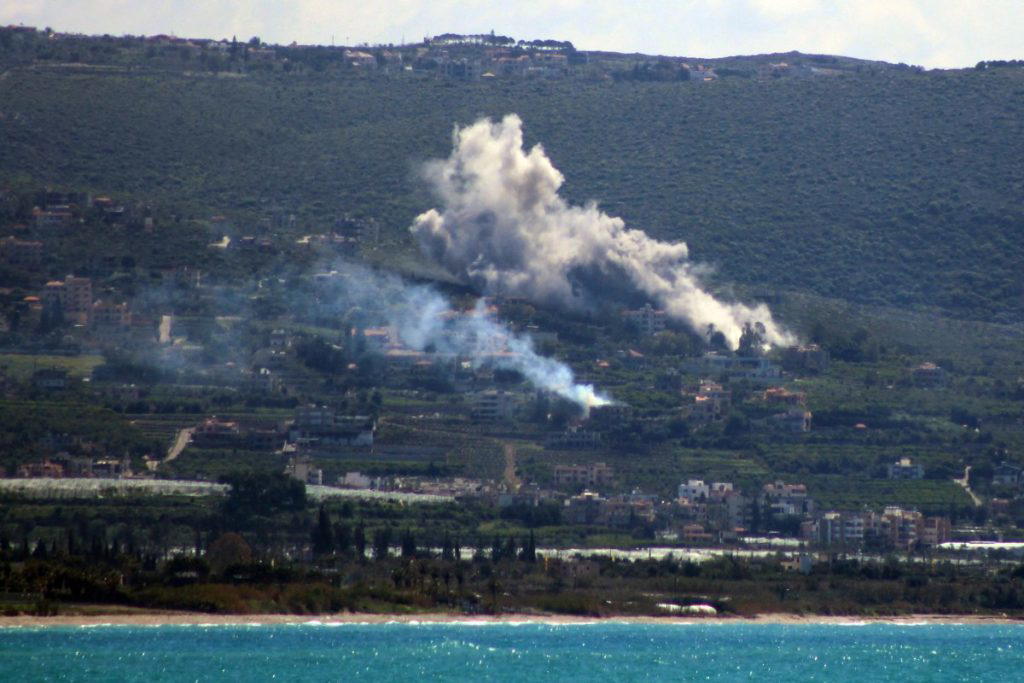
A photograph captured from the southern coastal city of Tyre reveals smoke billowing from the site of an Israeli airstrike that hit the village of Majdel Zoun on March 31, 2026, as Israel’s military reported the loss of four more soldiers in combat in southern Lebanon.
nOn March 31, Israel’s military disclosed that the war had spread to southern Lebanon, where its forces are engaged in battle with Iranian-backed Hezbollah, resulting in the deaths of four additional Israeli soldiers.
nIranian media reported on Tuesday that a wave of US-Israeli strikes had targeted military bases, a cancer drug plant, and a religious site, following a threat by President Donald Trump to destroy the country’s oil wells and power grid.
nVerified video footage showed at least two massive explosions and columns of smoke in Isfahan, central Iran, while state media reported damage to the Grand Husseiniya, a Shia religious centre, in Zanjan in the northwest.
nThe Iranian government also reported that airstrikes had hit a pharmaceutical plant producing cancer drugs and anaesthetics, and a health ministry official stated that a bombing had left a desalination plant on Qeshm Island in the Strait of Hormuz “completely out of service”.
nIt was not clear when the reported strike on the desalination plant had taken place, but Iran has vowed to match strikes on its infrastructure with raids on its neighbours throughout the month-old conflict.
nDesalinated water provides a significant portion of drinking water in several countries, including 42 percent in the United Arab Emirates, 70 percent in Saudi Arabia, 86 percent in Oman, and 90 percent in Kuwait.
nAny attack on civilian drinking water could trigger a major escalation and draw Iran’s neighbours into the fray, analysts warn, as President Trump threatened to “blow up and completely obliterating all of their Electric Generating Plants, Oil Wells and Kharg Island (and possibly all desalinization plants!)” if Iran didn’t strike a deal and reopen the Strait of Hormuz to sea traffic.
nQatar’s foreign ministry announced that the Arab monarchies shared a “very unified position in the Gulf on calling for the de-escalation and an end to the war” despite Trump’s latest threat.
nIran’s Fars news agency reported explosions and power outages in parts of Tehran, where residents, such as 27-year-old dental assistant Fatemeh, are clinging to some routine despite tight security, saying “When I make it to a cafe table, even for a few minutes, I can almost believe the world hasn’t ended”.
nFatemeh added, “And then I go back home, back to the reality of living through war, with all its darkness and weight” as oil prices seesawed up and down in response to Trump’s confidence that Tehran would soon buckle against fears of a possible US ground operation in the Gulf.
nExplosions were heard in Dubai and near Erbil airport in northern Iraq, sirens sounded in Jerusalem, and two people were wounded when air defence intervened to intercept a drone near the Saudi Arabian capital Riyadh, according to civil defence reports.
nIsraeli emergency services reported that eight people received minor injuries from falling munitions fragments in Bnei Brak, near Tel Aviv, as at least 10 blasts were heard in the Jerusalem area after missile launches from Iran were detected.
nKuwait’s state oil company reported that one of its giant crude oil tankers was on fire off Dubai after a “direct and malicious Iranian attack while in the anchorage area”.
nSuch attacks on oil tankers and export facilities have world markets on edge, with all eyes on the Strait of Hormuz, the maritime channel that Iran has effectively closed to all vessels except those it approves.
nTwo Chinese container ships were able to pass the strait, and Beijing expressed gratitude to “the relevant parties”, according to a foreign ministry spokeswoman.
nWorld oil prices have surged since the US and Israel launched the war more than a month ago with strikes on Tehran that killed supreme leader Ayatollah Ali Khamenei, but have fallen back every time Trump promises a rapid conclusion to the conflict, leaving markets jittery.
nInvestment adviser Christopher Dembik of Pictet Asset Management noted, “The fog of war continues” as Israeli Prime Minister Benjamin Netanyahu, Trump’s partner in attacking Iran, said more than half of the operation’s military aims had been achieved.
nBoth leaders have refused to put a timeline on the war, while Israel’s military also reported on Tuesday that four more of its soldiers had been killed in combat in southern Lebanon, where the war has spread and where it is battling Iran-backed Hezbollah.
nDefence Minister Israel Katz said Israel’s military would occupy a swathe of southern Lebanon even after the end of the current war against the Hezbollah, declaring, “All the houses in the villages adjacent to the border in Lebanon will be demolished in accordance with the Rafah and Beit Hanoun model in Gaza”.
nPakistani Foreign Minister Ishaq Dar, whose country is acting as an intermediary between Tehran and Washington, was in Beijing for talks on “global issues of mutual interest” with counterpart Wang Yi, and hosted foreign ministers from Saudi Arabia, Egypt, and Turkey in the Pakistani capital on Sunday.
nDar stated that Islamabad was ready to host talks between the United States and Iran in the “coming days”, while Trump has claimed to be in direct contact with senior Iranian figures, although the Iranian foreign ministry said that Washington had sent only a request to talk via intermediaries, including Pakistan.
Related Stories
 General News
CELEBRATING TWO YEARS OF TRANSFORMATIONAL LEADERSHIP IN THE PRESIDENTIAL AMNESTY PROGRAMME
Tomorrow, 14TH March 2026, as we look forward to the second anniversary, we reflect on the remarkable two years since the Administrator of the Preside
 General News
PRESIDENTIAL AMNESTY PROGRAMME PHASE 3: DISREGARD PURPORTED STATEMENT ON DELAYED ITA PAYMENTS — OFFICE OF NATIONAL CHAIRMAN
The Office of the National Chairman of the Presidential Amnesty Programme Phase 3, General Elaye ThankGod Dollar Slaboh, has called on beneficiaries a
 General News
RE: CLARIFICATION ON MY PERSONAL RELATIONSHIPS
PUBLIC NOTICErnrnRE: CLARIFICATION ON MY PERSONAL RELATIONSHIPSrnrnIt has become necessary to make this public clarification following the increasing