
SEREC warns of risk posed by US–Iran tension for African maritime
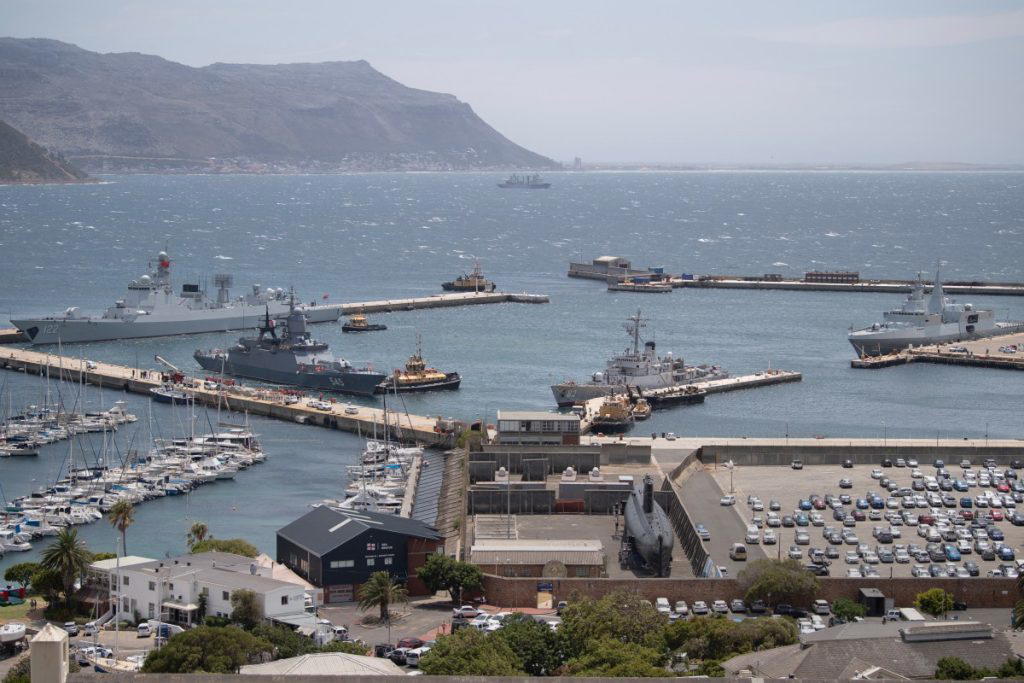
A general view of the Chinese guided-missile destroyer Tangshan (Hull 122), (L), the Stoykiy, the Iranian navy ship, the IRIS Makran 441 (2nd L), and the South African SAS Amatola (F145), (R) in Simon’s Town harbour, near Cape Town, on January 9, 2026. The Chinese lead Will For Peace 2026 exercise 2026 brings together navies from BRICS Plus countries for joint maritime safety operations. (Photo by RODGER BOSCH / AFP)
nBy Providence Ayanfeoluwa
nThe Sea Empowerment and Research Center, SEREC, has warned that African maritime nations face heightened economic and security challenge due to the escalating tensions between the United States and Iran.
nThe Centre highlights the far-reaching implications for import-dependent economies across the African Union economies considered to be particularly vulnerable.
nIn the communiqué signed by Head of Research at SEREC, Eugene Nweke, said rising global oil prices and shipping could translate into higher fuel and food inflation, while currency depreciation pressures may intensify.
nNweke said any prolonged disruption could trigger sustained oil price volatility, freight rate escalation, war-risk insurance spikes, and global inflationary pressure.
nHe pointed out that maritime security is also expected to come under greater pressure, with shipping routes becoming more volatile, African nations may need to expand naval coordination and surveillance to safeguard trade corridors, particularly in the Gulf of Guinea.
nIn its recommendations, SEREC urged Nigeria and regional partners to channel oil windfall gains into stabilization and infrastructure investment rather than recurrent expenditure. It also advised guaranteeing steady crude allocation to domestic refineries, strengthening maritime security coordination across the Gulf of Guinea, expanding strategic petroleum reserves, and deepening regional trade integration to reduce reliance on volatile extra-African shipping routes.
nThe communiqué stressed that Nigeria’s resilience will depend not merely on crude revenue gains but on disciplined fiscal management, domestic refining optimization, trade diversification, and maritime competitiveness. Without coherent national policy alignment, the potential stabilizing role of the Dangote Refinery could be undermined
n“The US–Iran confrontation is more than a geopolitical conflict — it is a structural stress test for global trade and maritime systems. Nigeria’s ability to withstand external shocks will hinge on prudent fiscal discipline and strategic maritime cooperation”.
n nRelated Stories
 General News
CELEBRATING TWO YEARS OF TRANSFORMATIONAL LEADERSHIP IN THE PRESIDENTIAL AMNESTY PROGRAMME
Tomorrow, 14TH March 2026, as we look forward to the second anniversary, we reflect on the remarkable two years since the Administrator of the Preside
 General News
PRESIDENTIAL AMNESTY PROGRAMME PHASE 3: DISREGARD PURPORTED STATEMENT ON DELAYED ITA PAYMENTS — OFFICE OF NATIONAL CHAIRMAN
The Office of the National Chairman of the Presidential Amnesty Programme Phase 3, General Elaye ThankGod Dollar Slaboh, has called on beneficiaries a
 General News
RE: CLARIFICATION ON MY PERSONAL RELATIONSHIPS
PUBLIC NOTICErnrnRE: CLARIFICATION ON MY PERSONAL RELATIONSHIPSrnrnIt has become necessary to make this public clarification following the increasing