
SERAP takes INEC to court for allegedly neglecting to investigate claims of misusing N800 billion in FAAC funds for election financing purposes
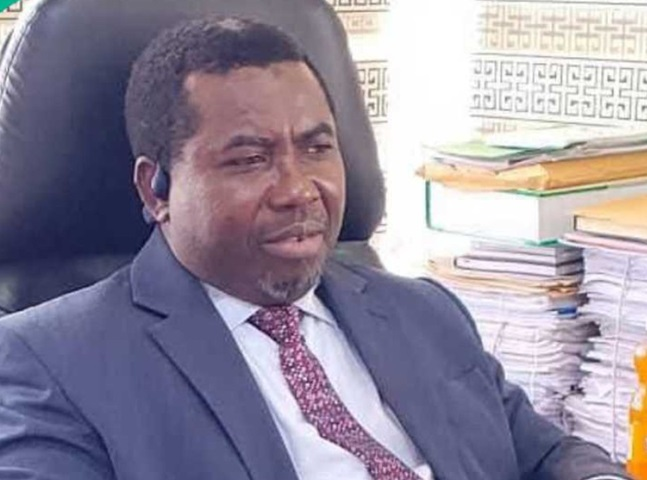
Joash Amupitan, the chairman of the Independent National Electoral Commission (INEC), is facing a lawsuit filed by the Socio-Economic Rights and Accountability Project (SERAP) over the commission's failure to investigate allegations that governors of the All Progressives Congress (APC) diverted N800 billion for political and campaign purposes.
nAccording to reports, APC governors are allegedly making monthly contributions from their Federation Account Allocation Committee (FAAC) allocations to a dedicated campaign fund to support President Bola Tinubu’s re-election campaign.
nSERAP filed the lawsuit, numbered FHC/ABJ/CS/1426/2026, at the Federal High Court in Abuja, seeking an order of mandamus to direct and compel INEC to investigate the allegations of diversion of N800 billion by APC governors for political and campaign purposes.
nThe lawsuit also seeks an order of mandamus to direct and compel INEC to request full disclosure from the governors and APC regarding the alleged contributions made to any dedicated campaign fund, including the names of donors and the lawful origin of funds.
nSERAP is further seeking an order of mandamus to direct and compel INEC to promptly initiate a formal review and investigation into compliance with Section 91 of the Electoral Act by all political parties and candidates, particularly in relation to the sources and scale of political or campaign financing in the current political cycle.
nThe allegations, according to SERAP, raise serious concerns about political finance transparency, electoral fairness, and the constitutional right of Nigerians to participate freely in their own government.
nSERAP argues that opaque political financing remains a major entry point for corruption and a threat to democratic legitimacy, and that Nigerians deserve to know who funds the candidates or political parties of their choice and the sources of any such funding.
nThe abuse of state resources for electoral advantage, SERAP notes, undermines democratic integrity and public trust, and that fairness, transparency, and accountability in political or campaign finance are essential safeguards against corruption, state capture, and undue influence in democratic processes.
nThe lawsuit, filed on behalf of SERAP by its lawyers, Kolawole Oluwadare and Kehinde Oyewumi, states that the allegations of diversion or opaque use of public funds pose a grave risk to the integrity of the 2027 general elections.
nLarge-scale public fiscal flows, coupled with weak transparency and oversight mechanisms, provide a compelling basis for INEC to activate its constitutional and statutory mandates, according to the lawsuit.
nPolitical finance in Nigeria remains characterized by limited transparency, inadequate disclosure, and weak enforcement, creating significant risks of the misuse of public resources for political purposes, the lawsuit notes.
nSection 91 of the Electoral Act empowers and requires INEC to set limits on political donations that individuals or entities can make to political parties or candidates and demand disclosure of contributions and sources of funds, and enforce sanctions against violations.
nSection 91 establishes that any political party that exceeds the prescribed donation limit is liable to a fine of up to ₦10,000,000, plus forfeiture of the excess amount, and that any individual who exceeds the donation limit commits an offence and is liable to a fine equal to five times the amount donated in excess of the legal limit.
nSection 91(2) of the Electoral Act provides that any individual, candidate, or political party that exceeds the donation limits set by INEC commits an offence and is liable upon conviction to sanctions, including a fine of up to ₦10,000,000 and forfeiture of any amount received above the prescribed limit for political parties.
nExceeding donation limits attracts sanctions, including fines, forfeiture of excess funds, and penalties of up to five times the amount contributed in excess for individuals, according to the lawsuit.
nThe right to political participation requires that citizens have a real opportunity to exercise their political rights, and the right to free, fair, and transparent elections is a fundamental human right, the lawsuit argues.
nThe allegations of diversion or opaque use of public funds—particularly on the scale reported—pose a grave threat to the integrity of the 2027 general elections, according to SERAP.
nThe combination of large-scale public fiscal flows, opaque deduction structures, and allegations of misuse of public funds for political and campaign purposes creates a reasonable basis to direct INEC to exercise its investigative and monitoring mandates under the Nigerian Constitution 1999 and the Electoral Act.
nThe Nigerian Constitution, the Electoral Act, and anti-corruption and human rights standards prohibit the misuse of state resources and impose clear obligations regarding campaign finance transparency and fairness, the lawsuit notes.
nINEC has constitutional and statutory obligations to ensure that no individual or political party exceeds legally prescribed contribution limits, whether directly or indirectly, and to ensure full transparency regarding the origin and quantum of political funding, according to SERAP.
nWhere allegations exist that large-scale financial resources—including potentially state-derived or publicly controlled funds—may be influencing political activity outside lawful channels, such circumstances fall squarely within the preventive and investigative mandate of INEC, as provided for by the Electoral Act.
nINEC continues to fail to proactively enforce the provisions of the Nigerian Constitution and the Electoral Act regarding the allegations of political finance distortion, thereby undermining public trust in electoral institutions and the right of Nigerians to participate in their own government, the lawsuit argues.
nSection 14(2)(c) of the Nigerian Constitution guarantees that the participation by the people in their government shall be ensured, imposing a positive constitutional obligation to maintain electoral conditions that are free, fair, and not distorted by undue influence.
nSection 15(5) of the Nigerian Constitution requires public institutions to abolish all corrupt practices and abuse of power, while Section 13 imposes clear responsibility on INEC to conform to, observe, and apply the provisions of Chapter 2 of the constitution.
nArticle 13 of the African Charter on Human and Peoples’ Rights guarantees every citizen the right to participate freely in government, and Article 25 of the International Covenant on Civil and Political Rights requires that elections reflect the free expression of the will of the electorate, both of which Nigeria has ratified.
nNigeria has made legally binding commitments under the UN Convention against Corruption to ensure accountability in the management of public resources, with Articles 5 and 9 imposing legal obligations on INEC to ensure proper management of public affairs and public funds.
nArticle 7(3) of the Convention requires institutions, including INEC, to ensure political finance transparency, aiming to prevent corruption in and through elections, and these commitments ought to be fully upheld and respected, according to SERAP.
nWhere public resources are allegedly diverted or deployed for political and campaign purposes, the result is not merely financial impropriety—it is a direct distortion of electoral competition, undermining the principle of a level playing field and eroding the ability of citizens to freely choose their representatives.
nAny use of public funds for political advantage would constitute a grave violation of these national and international standards and a threat to electoral credibility, the lawsuit argues.
nNo date has been fixed for the hearing of the suit.
Related Stories
 General News
CELEBRATING TWO YEARS OF TRANSFORMATIONAL LEADERSHIP IN THE PRESIDENTIAL AMNESTY PROGRAMME
Tomorrow, 14TH March 2026, as we look forward to the second anniversary, we reflect on the remarkable two years since the Administrator of the Preside
 General News
PRESIDENTIAL AMNESTY PROGRAMME PHASE 3: DISREGARD PURPORTED STATEMENT ON DELAYED ITA PAYMENTS — OFFICE OF NATIONAL CHAIRMAN
The Office of the National Chairman of the Presidential Amnesty Programme Phase 3, General Elaye ThankGod Dollar Slaboh, has called on beneficiaries a
 General News
RE: CLARIFICATION ON MY PERSONAL RELATIONSHIPS
PUBLIC NOTICErnrnRE: CLARIFICATION ON MY PERSONAL RELATIONSHIPSrnrnIt has become necessary to make this public clarification following the increasing