
Senegal MPs back constitutional reform reducing president’s power
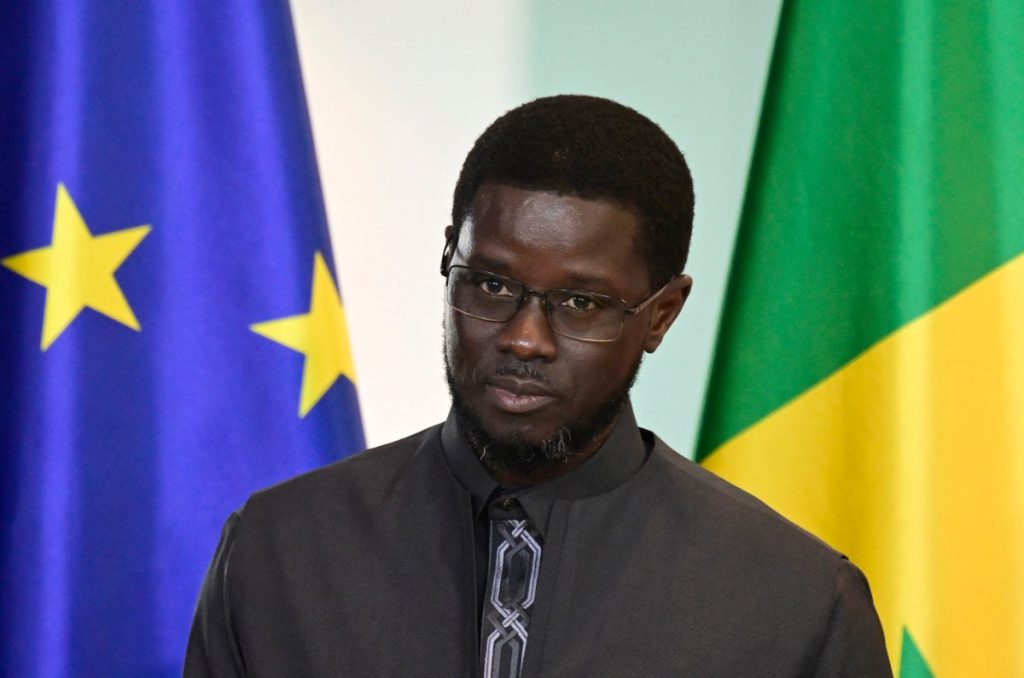
Senegal’s President Bassirou Diomaye Faye gives a joint press conference with the German Chancellor at the Chancellery in Berlin on June 23, 2026. (Photo by John MACDOUGALL / AFP)
nSenegal’s National Assembly passed a bill revising the balance of power between the country’s executive and parliament on Monday, prompting the president to announce a national referendum on the matter.
nThe bill was passed by an overwhelming majority in a tense atmosphere marked by heated exchanges, an opposition boycott and scuffles outside the building during which police used tear gas, AFP journalists saw.
nThe measure strengthens the powers of the National Assembly and the prime minister, while effectively curtailing the powers of the president, Bassirou Diomaye Faye.
nThe Pastef party, led by Faye’s rival and former prime minister Ousmane Sonko, proposed the measure.
nFaye fired Sonko as prime minister in May and Sonko was swiftly named speaker of the National Assembly, which is controlled by Pastef.
nThe opposition and various civil society organisations have criticised the amendment.
n“Parliament is being used to weaken the president. (The proposals) appear aimed at limiting the influence of the president of the republic by increasing the powers of the head of the National Assembly”, presidential coalition leader Aminata Toure said Sunday during a press briefing.
nDuring Monday’s debates, Faye’s justice minister announced the president’s intention to put the matter to a vote, though no date was specified.
nJustice Minister Moussa Sarr told parliament ahead of the bill’s adoption that “the president has decided to inform the speaker of the National Assembly (Sonko) that he has decided… to put the adopted text to a referendum”.
nSonko expressed scepticism that the president had the power to do so.
n“I will ask the president of the republic to promulgate this law, plain and simple. A qualified majority of the National Assembly voted and secured the adoption and approval”, he argued.
nHe claimed that under Constitutional Council precedent, the text is final if approved by three-fifths of the deputies present, which it was.
n– ‘Rebalancing of powers’ –
nAccording to Pastef, which holds 130 of the Assembly’s 165 seats, the reform aims for a “better rebalancing of powers” among the executive, legislative and judicial branches in Senegal, a country with a presidential system.
nEarlier in the day, the debate had opened with tensions openly on display.
nAn opposition MP, who had proposed postponing the vote and refused to leave the podium after his motion was rejected, was ultimately forcibly removed by gendarmes.
nFollowing the incident, all opposition MPs walked out of the hall in protest, with the exception of one.
nMeanwhile around 50 protesters, mostly from the Alliance for the Republic (APR), the party of former president Macky Sall, gathered outside the National Assembly.
nThey attempted to storm the building but were repelled by security forces using tear gas, AFP journalists saw. Stones were also thrown at the police, who made several arrests.
n– Weakened president –
nLast week the government expressed disagreement with several aspects of the reform, arguing that it was being pursued without consultation with political stakeholders.
nUnder the revision, the president “will no longer be able to lead a political party or a coalition of parties”.
nThe reform also bars the president from signing certain official acts during the period between a presidential election and the inauguration of the president-elect.
nAnd according to the text, the drafting of the government program, which is currently the president’s prerogative, will henceforth be carried out by the president “in consultation with the prime minister”, who will also have authority to “make civil service appointments.”
nThe reform additionally strengthens the National Assembly by expanding its “investigative power”, notably allowing it to “hear any relevant person” such as magistrates who cannot currently be questioned by lawmakers.
nParliament must also be “automatically informed” of investment agreements related to natural resources, to better control state finance.
n nRelated Stories
 General News
CELEBRATING TWO YEARS OF TRANSFORMATIONAL LEADERSHIP IN THE PRESIDENTIAL AMNESTY PROGRAMME
Tomorrow, 14TH March 2026, as we look forward to the second anniversary, we reflect on the remarkable two years since the Administrator of the Preside
 General News
PRESIDENTIAL AMNESTY PROGRAMME PHASE 3: DISREGARD PURPORTED STATEMENT ON DELAYED ITA PAYMENTS — OFFICE OF NATIONAL CHAIRMAN
The Office of the National Chairman of the Presidential Amnesty Programme Phase 3, General Elaye ThankGod Dollar Slaboh, has called on beneficiaries a
 General News
RE: CLARIFICATION ON MY PERSONAL RELATIONSHIPS
PUBLIC NOTICErnrnRE: CLARIFICATION ON MY PERSONAL RELATIONSHIPSrnrnIt has become necessary to make this public clarification following the increasing