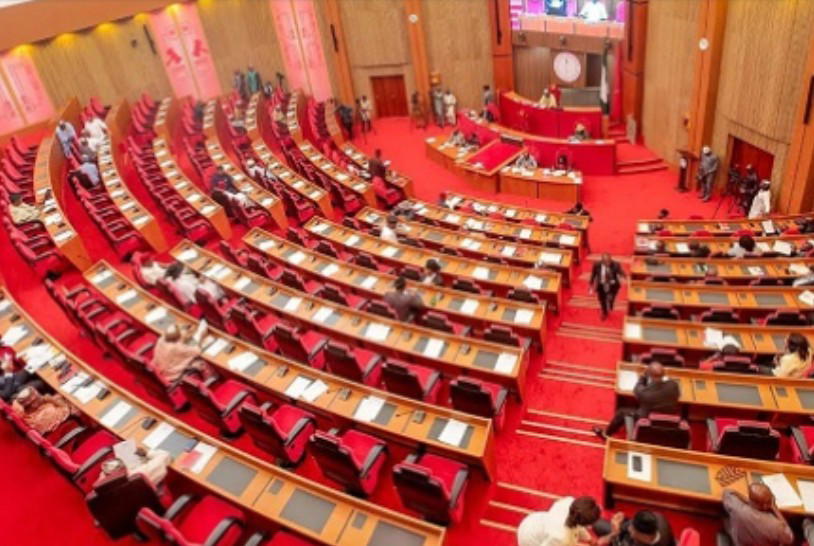
Senate
By Henry Umoru, Abuja
The Senate has passed the Factoring, Assignments and Receivables Financing Bill, a major legislative effort aimed at improving access to finance for Micro, Small and Medium Enterprises (MSMEs) and strengthening liquidity in the business sector.
The Bill provides a legal and regulatory framework for debt factoring in Nigeria, allowing suppliers and MSMEs to sell their unpaid invoices (receivables) to third-party financiers—known as “factors”—at a discount in exchange for immediate cash. The arrangement is expected to ease cash flow pressures on small businesses without requiring traditional collateral.
Leading the debate on the general principles of the Bill, Senate Leader, Opeyemi Bamidele, explained that the legislation seeks to establish a structured environment for factoring transactions in both domestic and international trade.
Bamidele noted that the Bill had already passed through all required legislative stages in the House of Representatives and complied with Senate procedural requirements, including Order 78(3) of the Senate Standing Orders, 2026. He added that it had been reviewed and cleared by the Ad-Hoc Committee on Compliance chaired by Senator Abdul Ningi.
According to him, the Bill defines the relationship between sellers, debtors, and financiers, while clearly outlining their respective rights and obligations to ensure transparency and legal certainty in factoring transactions.
Also speaking on the Bill during its earlier consideration, its sponsor, Chairman of the Senate Committee on Banking, Insurance and Other Financial Institutions, Tokunbo Abiru, said the framework would help businesses convert receivables into working capital, improving access to credit for MSMEs.
Abiru explained that factoring allows companies to sell invoices owed by creditworthy customers to financiers, who then assume responsibility for collection.
He said the system would be particularly beneficial for small businesses that supply large corporations on credit terms, enabling them to access immediate funding instead of waiting for delayed payments.
The Bill is expected to enhance liquidity, reduce payment bottlenecks, and support the growth of MSMEs, which form a significant part of Nigeria’s economy.



Comments
Please login to leave a comment.
No comments yet. Be the first to share your thoughts!