
Senate moves to integrate e-health services in Nigeria hospitals
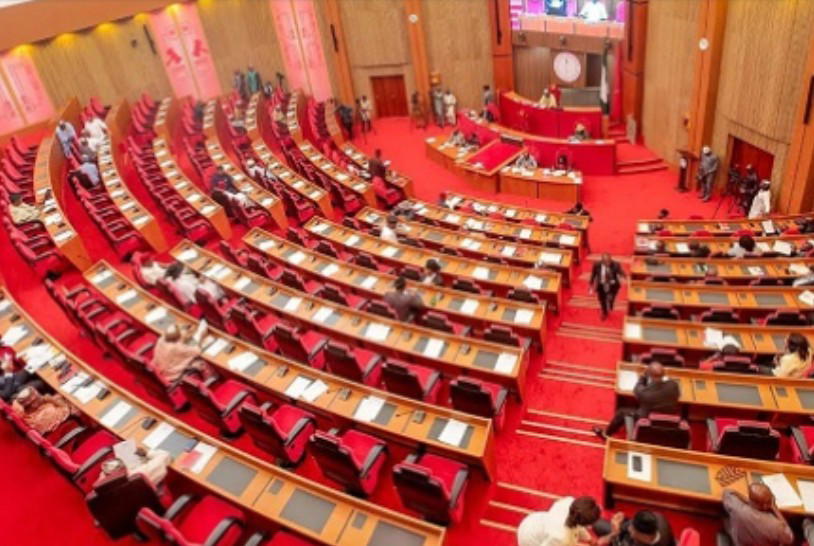
Senate
nThe Senate on Wednesday passed for second reading a bill seeking to establish a comprehensive legal and regulatory framework for the development, coordination and integration of electronic health services in Nigeria.
nLeading the debate, the sponsor of the bill, Sen. Jibrin Barau, said the proposed bill would provide the legal foundation for a modern, technology-driven healthcare system capable of improving access, efficiency, and quality of medical services in Nigerian hospitals.
nBarau, the deputy senate president, said the bill sought to establish a comprehensive framework for electronic health services, stressing that digital healthcare had become indispensable globally for improving service delivery.
nAccording to him, despite investments in the health sector, Nigeria’s healthcare system still faces challenges, including paper-based medical records, fragmented patient information, and limited access to specialist care.
n“Nigeria cannot afford to remain on the margins of the global digital health transformation.
n“This bill provides the legal framework needed to modernise healthcare delivery in our hospitals,” he said.
nThe deputy senate president said that the COVID-19 pandemic underscored the importance of telemedicine, remote consultations and electronic health information systems in ensuring continuity of healthcare services during emergencies.
nHe noted that the absence of comprehensive legislation had led to fragmented implementation, inconsistent standards, and uncertainty about legal responsibilities in digital healthcare delivery.
n“Through telemedicine, patients in remote communities will consult qualified healthcare professionals without travelling long distances.
n” It will improve access to quality healthcare and reduce pressure on tertiary hospitals,” he added.
nBarau added that the bill would strengthen data protection, improve disease surveillance, reduce waiting time through electronic appointment systems and stimulate innovation in Nigeria’s digital economy.
nHe emphasised that the legislation aligned with the federal government’s digital transformation agenda, universal health coverage objectives, the Nigeria Data Protection Act and the Sustainable Development Goals.
nIn his contribution, Sen. Mohammed Monguno (APC-Borno North) said the bill would provide the legal backing required to deploy electronic healthcare services across the country.
n“The whole world has embraced technology in healthcare delivery. This bill will safeguard medical records and align Nigeria’s electronic healthcare services with international best practices,” Monguno said.
nAlso contributing, Sen. Orji Uzor Kalu (APC-Abia North) described the bill as timely, saying digital healthcare would expand access to medical services and reduce the burden of distance on patients.
n“Medical services are expensive and difficult to access in many communities. With this digital approach, we will reach more Nigerians and improve healthcare delivery,” Kalu said.
nOn his part, Sen. Tony Nwoye (NDC-Anambra North) also supported the bill, saying it would improve access to healthcare, especially in rural communities where specialist medical services remain inadequate.
n“The bill will reduce pressure on tertiary hospitals, improve access to telemedicine and ensure patients can easily retrieve their medical records,” Nwoye said.
nFollowing overwhelming support, the Senate passed the bill to second reading by voice vote.
nThe Senate President, Godswill Akpabio, subsequently referred the bill to the Senate Committee on Health, Secondary and Tertiary with a mandate to report back within four weeks.
n nRelated Stories
 General News
CELEBRATING TWO YEARS OF TRANSFORMATIONAL LEADERSHIP IN THE PRESIDENTIAL AMNESTY PROGRAMME
Tomorrow, 14TH March 2026, as we look forward to the second anniversary, we reflect on the remarkable two years since the Administrator of the Preside
 General News
PRESIDENTIAL AMNESTY PROGRAMME PHASE 3: DISREGARD PURPORTED STATEMENT ON DELAYED ITA PAYMENTS — OFFICE OF NATIONAL CHAIRMAN
The Office of the National Chairman of the Presidential Amnesty Programme Phase 3, General Elaye ThankGod Dollar Slaboh, has called on beneficiaries a
 General News
RE: CLARIFICATION ON MY PERSONAL RELATIONSHIPS
PUBLIC NOTICErnrnRE: CLARIFICATION ON MY PERSONAL RELATIONSHIPSrnrnIt has become necessary to make this public clarification following the increasing