
Senate advances Bill to strengthen Public Complaints Commission
By Henry Umoru
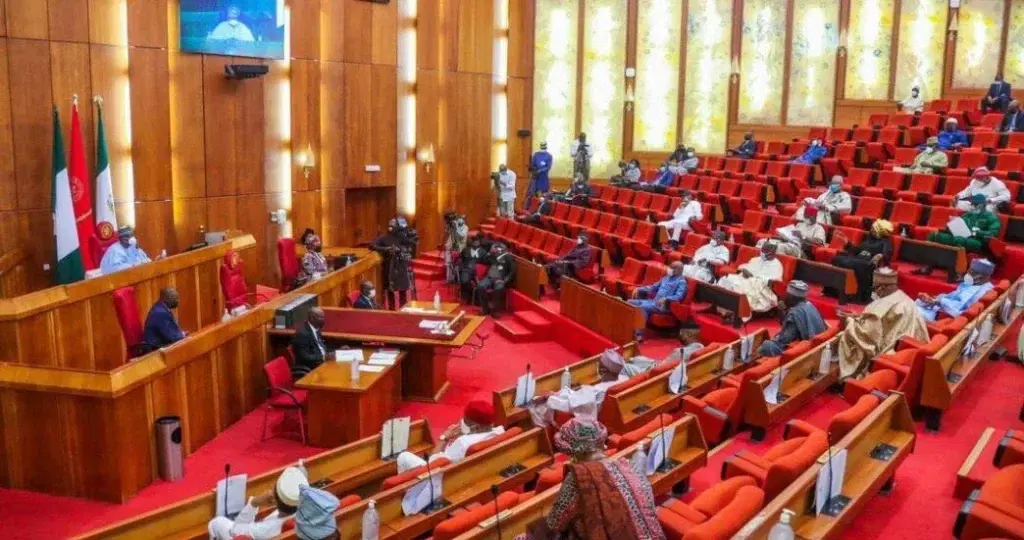
nABUJA — A bill seeking to strengthen the Public Complaints Commission (PCC), improve public service delivery and establish a legal framework for the protection of whistleblowers has passed second reading in the Senate.
nThe proposed legislation also seeks to expand the investigative powers of the Commission, enabling it to conduct more effective investigations into complaints, obtain relevant information and documents, make recommendations, and promote fairness, accountability, transparency and good governance across public institutions.
nThe bill, titled “A Bill for an Act to Repeal the Public Complaints Commission Act, Cap P37, Laws of the Federation of Nigeria, 2004, and Re-enact the Public Complaints Commission Act, 2026, in line with Section 315(5)(b) of the Constitution of the Federal Republic of Nigeria, 1999 (as amended), to Reposition the Commission as an Independent National Ombudsman Institution and for Related Matters” (SB. 1040), is sponsored by the Chairman of the Senate Committee on Ethics, Code of Conduct and Public Petitions, Senator Neda Imasuen (APC, Edo South).
nThe bill aims to modernise and strengthen the legal and institutional framework of the Public Complaints Commission in line with constitutional provisions, contemporary governance realities and internationally recognised ombudsman principles.
nSpeaking with journalists after the bill scaled second reading, Senator Imasuen said the proposed legislation would repeal and re-enact the existing Act, which he noted had become outdated after more than two decades.
nAccording to him, the review is necessary to reflect technological advancements and strengthen the Commission’s capacity to effectively discharge its constitutional mandate.
nHe said the legislation would enhance the Commission’s operational efficiency and make it more responsive to the complaints and welfare of Nigerians.
n“The essence of the bill is to strengthen the agency to do its work more effectively and serve the Nigerian people even better,” he said.
nImasuen identified the establishment of a comprehensive whistleblower protection framework as one of the key innovations in the bill, saying it would encourage citizens to provide vital information without fear of intimidation or retaliation.
n“Oftentimes, people have vital information, especially on insecurity, but they are afraid to disclose it because they fear for their safety,” he said.
nHe added that incorporating whistleblower protection into the PCC Act would provide legal safeguards for informants and facilitate information gathering by security agencies and other relevant institutions.
nLeading the debate on the general principles of the bill, Imasuen said the Public Complaints Commission was established to provide citizens with an accessible mechanism for seeking redress against administrative injustice, abuse of office and arbitrary actions by public authorities.
nHe, however, noted that changes in governance, public administration, technology and citizens’ expectations had rendered the existing law inadequate for addressing contemporary challenges.
nAccording to him, the bill seeks to reposition the Commission as an independent National Ombudsman Institution with enhanced powers to receive, investigate, mediate and resolve complaints arising from maladministration, abuse of power, unfair treatment and other administrative actions by public authorities, public officers and corporate bodies.
nHe said the proposed law would strengthen the Commission’s independence and operational autonomy to ensure complaints are handled impartially, professionally and without undue interference.
nThe bill also proposes a comprehensive Public Interest Disclosure and Whistleblower Protection Framework to encourage individuals to report corruption, abuse of office, maladministration and other misconduct in both the public and private sectors without fear of victimisation.
nImasuen said the legislation would strengthen administrative justice by providing citizens with a more effective avenue for redress, reducing bureaucratic arbitrariness, enhancing public sector accountability and restoring confidence in government institutions.
nHe added that the bill aligns Nigeria’s ombudsman system with international best practices, where independent ombudsman institutions play a critical role in protecting citizens’ rights, promoting good governance and improving public service delivery.
nAccording to him, the proposed legislation is a strategic reform aimed at deepening democratic governance, strengthening the rule of law, enhancing transparency and promoting accountability in public administration.
n nRelated Stories
 General News
CELEBRATING TWO YEARS OF TRANSFORMATIONAL LEADERSHIP IN THE PRESIDENTIAL AMNESTY PROGRAMME
Tomorrow, 14TH March 2026, as we look forward to the second anniversary, we reflect on the remarkable two years since the Administrator of the Preside
 General News
PRESIDENTIAL AMNESTY PROGRAMME PHASE 3: DISREGARD PURPORTED STATEMENT ON DELAYED ITA PAYMENTS — OFFICE OF NATIONAL CHAIRMAN
The Office of the National Chairman of the Presidential Amnesty Programme Phase 3, General Elaye ThankGod Dollar Slaboh, has called on beneficiaries a
 General News
RE: CLARIFICATION ON MY PERSONAL RELATIONSHIPS
PUBLIC NOTICErnrnRE: CLARIFICATION ON MY PERSONAL RELATIONSHIPSrnrnIt has become necessary to make this public clarification following the increasing