
Security Concerns: American Committee Alleges Collusion Between Law Enforcement and Military in Militia Violence
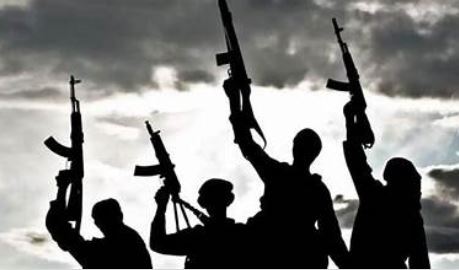
The US Commission on International Religious Freedom has accused certain police and army officers in Nigeria of colluding with Fulani militias in deadly attacks and mass abductions targeting religious communities, prompting a call for action from the US Congress to address these severe religious freedom violations.
nUS Secretary of War, Pete Hegseth, revealed that President Donald Trump has ordered the Pentagon to prioritise Nigerian Christians targeted by ISIS, resulting in the killing of ISIS’ second-in-command in Nigeria, a directive that was carried out quietly.
nHegseth stated that the media often overlooks the many things the president empowers the department to do on behalf of the American people, adding that the president deserves great credit for these efforts, which include protecting Nigerian Christians from ISIS.
nIn a May 2026 report, the US commission noted that Nigerian government censorship has hindered accurate analysis of the identities and motivations of armed groups violating religious freedom, making it difficult to determine the extent of the problem.
nThe report, titled “Non-state Violators of Religious Freedom in Nigeria: Fulani Militants”, stated that the fates of kidnapping victims remain unknown due to the sensitivity of ransom negotiations and possible collusion between perpetrators and some officials from the police and/or army.
nThe commission warned that escalating violence in Nigeria’s Middle Belt has driven at least 1.3 million people from their homes, with armed attacks continuing to destabilise several states in the region, and estimated that about 30,000 armed actors operate across the country.
nThese armed actors, according to the report, operate in a variety of contexts and with a multiplicity of likely aims and motivations, including financial enrichment and a violent interpretation of Islam, often coordinating with other actors to carry out attacks.
nThe commission noted that Fulani militant attacks have forced at least 1.3 million people in the Middle Belt off their lands and into displacement camps, with the militants frequently attacking isolated rural communities at night using motorcycles, automatic weapons, and machetes.
nThe violence has been driven by repeated attacks on rural settlements, often leaving entire communities abandoned as residents flee for safety, with the commission describing the armed actors as operating without centralised leadership but frequently carrying out coordinated raids on vulnerable rural communities.
nThe report detailed several attacks carried out in 2025 and early 2026, including mass killings in Benue and Plateau states, such as one attack in Benue in June 2025 that killed at least 200 people, including internally displaced persons living in a Catholic mission.
nIn another attack, more than 200 Christians, mostly sleeping women and children, were reportedly killed and over 3,000 people displaced in Yelwata, Benue State, in 2025, with the militants deliberately timing some attacks to coincide with Christian religious holidays.
nIn February 2026, suspected Fulani militants reportedly killed at least 32 people in Niger State and attacked Holy Trinity Parish in the Kafanchan Diocese of Kaduna State, killing three people and abducting 11 others, including parish priest, Father Nathaniel Asuwaye.
nThe commission also documented kidnappings targeting both churches and mosques, including the kidnapping of an imam and seven worshipers from a mosque in Plateau in February 2026, with the kidnappers demanding a ransom of N16m.
nOn Easter Sunday, Fulani militants reportedly killed five worshippers at two churches in Kaduna State while abducting 31 others, according to the report, which stated that conflicting narratives surrounding the violence have complicated efforts to determine the motivations behind the attacks.
nThe commission criticised the federal and state authorities for inadequate responses to the violence, noting that some Christian advocates accused security agencies of showing favouritism toward Muslim communities during investigations and security operations.
nThe US commission urged Congress to bar individuals lobbying on behalf of foreign governments Washington had blacklisted for severe religious freedom violations from receiving payment for such services, including those working on behalf of Nigeria, which was re-designated as a Country of Particular Concern in 2025.
nThe commission also called for legislation prohibiting any person from receiving compensation for lobbying on behalf of foreign governments of countries the State Department designates as Country of Particular Concern, in an effort to prevent lobbying efforts aimed at softening US policy toward these governments.
nNigeria has stepped up spending on US lobbying firms, with the Federal Government contracting Washington-based DCI Group in a $9 million agreement to communicate its efforts to protect Christian communities and counter misinformation about religious violence.
nThe deal, executed on December 17, 2025, through Aster Legal on behalf of National Security Adviser, Nuhu Ribadu, runs for six months through June 30, 2026, with an automatic renewal clause, and covers $750,000 monthly payment for professional services and expenses.
nSimilarly, former Vice President Atiku Abubakar engaged Von Batten-Montague-York, L.C. in a 12-month, $1.2 million deal signed March 10, 2026, and registered with the DOJ’s FARA Unit on April 1, 2026, to provide strategic advisory, congressional and executive branch engagement, and reputational management.
nThe commission further urged Congress to authorise individuals legally residing in the US to sponsor relatives from persecuted and religious minority groups for resettlement in the country, and to fund efforts addressing the humanitarian fallout of religious persecution.
nThe commission prescribed a full accounting of US foreign assistance to CPC and SWL countries, including Nigeria and Sudan, to determine whether such assistance supports or hinders efforts to advance religious freedom, and urged the administration to prioritise religious freedom in foreign policy and assistance programmes.
nNational President of the Middle Belt Forum, MBF, Dr. Bitrus Pogu, agreed with the report, stating that the MBF had long maintained that some individuals within the nation’s security architecture are aiding the insurgents, and that this is a complex network that involves people within the security services and political framework.
nDr. Pogu noted that the evidence of collusion between security men and insurgents is well-documented, citing the example of General T Y Danjuma, who said that security men are colluding with insurgents, and that even former President Jonathan acknowledged that there were Boko Haram members or agents within his government.
nAfenifere’s National Publicity Secretary, Mr Jare Ajayi, said that the commission’s claim should not be dismissed, adding that it is not surprising given the strong belief that the nature of terrorism bedeviling Nigeria would not be festering for this long without complicity from some powerful quarters.
nAjayi wondered how difficult it would be for a conflagration to be active over a stream without the handiwork of some forces, and stated that government and patriotic security agencies in Nigeria seem very determined to end banditry in the country, but that there seems to be a spike in terrorism despite this.
nAjayi attributed this to sabotage and complicity from within and from without, and noted that Afenifere had been calling the attention of those concerned to these areas, including the need for security agencies to look inward, for about a year.
Related Stories
 General News
CELEBRATING TWO YEARS OF TRANSFORMATIONAL LEADERSHIP IN THE PRESIDENTIAL AMNESTY PROGRAMME
Tomorrow, 14TH March 2026, as we look forward to the second anniversary, we reflect on the remarkable two years since the Administrator of the Preside
 General News
PRESIDENTIAL AMNESTY PROGRAMME PHASE 3: DISREGARD PURPORTED STATEMENT ON DELAYED ITA PAYMENTS — OFFICE OF NATIONAL CHAIRMAN
The Office of the National Chairman of the Presidential Amnesty Programme Phase 3, General Elaye ThankGod Dollar Slaboh, has called on beneficiaries a
 General News
RE: CLARIFICATION ON MY PERSONAL RELATIONSHIPS
PUBLIC NOTICErnrnRE: CLARIFICATION ON MY PERSONAL RELATIONSHIPSrnrnIt has become necessary to make this public clarification following the increasing