
Scientists fighting the disease showcase latest breakthroughs and innovative therapies
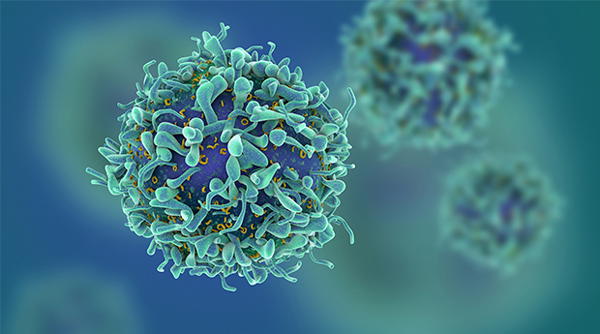
Cancer researchers highlighted several treatment breakthroughs during their annual summit in Chicago that concluded Tuesday, including preliminary but encouraging data on potential benefits of weight loss medications.
nHere is an overview of the latest developments from the American Society of Clinical Oncology’s (ASCO) annual meeting:
n– Major strides in pancreatic treatment –
nAmong the more than 7,000 studies presented, one on pancreatic cancer gained particular acclaim.
nFocused on one of the deadliest forms of cancer, the clinical trial represented the first significant breakthrough against the disease in decades.
nThe treatment, which was developed by the American start-up Revolution Medicines, involves a new molecule named daraxonrasib.
nIt demonstrated significantly greater efficacy than standard chemotherapy in patients suffering from an aggressive yet common form of the disease.
nHalf of the patients studied survived for more than 13 months — double the time observed in patients in the chemotherapy group.
n“I think this represents, I would say, an unprecedented paradigm shift in how we’re treating advanced pancreatic cancer,” said oncologist Monty Pal.
nThe research kindles hope for other potential new treatments as well, as the molecule targets a protein implicated in several types of cancer.
nUntil recently, the protein had not responded to therapies.
n– Could Ozempic impact cancer? –
nResearchers presented very early but promising data that leading weight-loss medications like Ozempic and Wegovy could have a potential impact on cancer.
nThese medications that mimic a gastrointestinal hormone (GLP-1) were originally developed to treat diabetes and may offer benefits in other areas, particularly in terms of cardiovascular health.
nMany American patients suffering from obesity and diabetes use these drugs and are, due to underlying conditions, at higher risk of developing certain cancers.
nBased on that premise, US researchers sought to determine whether these medications could prevent cancer from progressing from an early stage to a metastatic stage.
nTheir results showed a 38 to 50 percent reduction in disease progression across four types of cancer — lung, breast, colorectal and liver — in patients taking GLP-1 agonists compared to those taking conventional diabetes treatments.
nThe data is encouraging, but still requires confirmation through randomized clinical trials, said study author Mark Orland, who added “it’s just the start.”
n– Better-targeted treatments –
nSeveral studies that were presented focused on paring back cancer treatments.
nOne re-evaluated the benefit of axillary lymph node dissection, which is a surgical procedure involving the removal of armpit lymph nodes in some patients with breast cancer.
nThe new clinical trial showed that forgoing the surgery — which carries significant side effects — “is safe for patients with breast cancer that has spread” to just one or two lymph nodes.
n“We are probably way over performing actually lymph node dissections, and causing long term side effects in our patients when it’s unnecessary,” said Julie Gralow, ASCO vice president, as she praised the findings.
n– Personalizing prostate cancer approach –
nResearchers also found notable an international trial focused on prostate cancer, which is the most common cancer to strike men and the second-leading cause of cancer deaths.
nThe new study has the potential to transform management of patients carrying genetic mutations, who tend to develop more aggressive forms of the disease.
nResearchers tested a combination of treatments in these patients: enzalutamide to block the hormonal signals fueling the tumor, and talazoparib to short-circuit the DNA repair mechanism within the cancer cells.
nFor patients carrying the BRCA2 gene mutation, which can lead to one of most aggressive forms, the addition of talazoparib reduced risk of tumor progression or death by 65 percent.
nThe results are “exceptional” and “a major step forward” said French-Moroccan professor Karim Fizazi, who coordinated the study.
n– Blood tests: not there yet –
nSome studies highlighted the potential value of liquid biopsies, especially when it comes to early detection of treatment resistance.
nThere has also been hope that blood tests could play a role in early detection of cancers that don’t have a standard screening protocol.
nOne study examined the potential benefit of a blood test called Galleri — which vows to detect 50 types of cancer before symptoms appear — but its results failed to garner unanimous support.
nBased on data from more than 140,000 United Kingdom patients the results, while encouraging in some respects, failed to demonstrate a reduction in late stage diagnoses for 12 types of cancer.
n nRelated Stories
 General News
CELEBRATING TWO YEARS OF TRANSFORMATIONAL LEADERSHIP IN THE PRESIDENTIAL AMNESTY PROGRAMME
Tomorrow, 14TH March 2026, as we look forward to the second anniversary, we reflect on the remarkable two years since the Administrator of the Preside
 General News
PRESIDENTIAL AMNESTY PROGRAMME PHASE 3: DISREGARD PURPORTED STATEMENT ON DELAYED ITA PAYMENTS — OFFICE OF NATIONAL CHAIRMAN
The Office of the National Chairman of the Presidential Amnesty Programme Phase 3, General Elaye ThankGod Dollar Slaboh, has called on beneficiaries a
 General News
RE: CLARIFICATION ON MY PERSONAL RELATIONSHIPS
PUBLIC NOTICErnrnRE: CLARIFICATION ON MY PERSONAL RELATIONSHIPSrnrnIt has become necessary to make this public clarification following the increasing