
Sallah: Sheep prices surge to N1.2m in Nigeria – Report
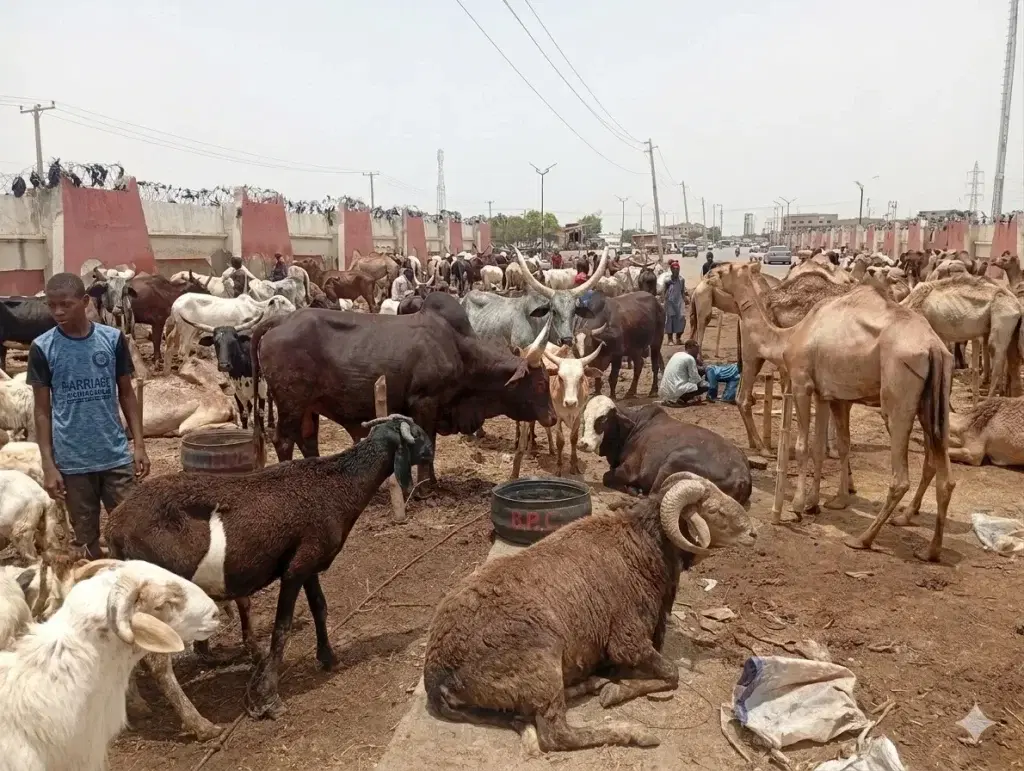
Economic crunch, rising petrol prices triggered by the Middle East war and insurgency have driven costs of sheep up in Nigeria ahead of Eid-al-Adha.
nTraders lamented sluggish sales as thousands of sheep stood in pouring rain on Friday at Kara Market, a sprawling livestock hub along the Lagos-Ogun border in southwest Nigeria.
nThe market receives thousands of animals daily from northern Nigeria — where most of the country’s livestock is reared — as Muslims prepare for the annual festival.
nRoughly half of the country’s population is Muslim and demands for sheep surge during the celebrations.
nBut several traders told AFP that sales had been slow this year as the cost of livestock has risen sharply.
nPrices of sheep, which are favoured for the celebrations, range from 250,000 naira (about $183) to 1.2 million naira, depending on the size.
nComparable animals sold for between 150,000 and 1.0 million naira last year, said trader Abdullahi Bukar.
nHe said insurgency in the country’s northeast, multiple taxes and illegal toll collections by security officials have driven up prices.
nShoppers nevertheless waded through the muddy market in search of bargains as the downpour eased to a drizzle on Friday.
n“We are always scared when we go to the market to buy livestock because terrorists usually attack the markets where we buy stock,” said Bukar, 29.
nHe had travelled from northeastern Yobe state to trade at the market.
n“Sometimes people don’t come to the market to sell to us because of fear,” he said.
nMore than 2,100 civilians were killed in “violent incidents including attacks from terrorists” in the first quarter of the year, according to SBM Intelligence, a Lagos-based risk consultancy.
n“I was told to bring 1.2 million naira for a sheep that is not very big,” shopper Ibrahim Kosoko said. “I had to look for something I can afford.”
nHe settled for one that cost him around 400,000 naira in a country where the monthly minimum wage is 70,000 naira (about $51).
n– Transport costs –
nSome traders travel more than 1,000 kilometres (600 miles) to sell sheep at the market and elsewhere in southwest Nigeria, where demand surges ahead of the Muslim festival;
nBut cost of transporting livestock to the market has more than doubled.
nTransport costs typically rise during festive periods but this year’s surge in petrol prices — triggered by the Middle East war — has intensified the pressure.
nMany Muslims travel to celebrate Eid with their families but some are now considering shelving their plans due to rising fares.
nPetrol prices have nearly doubled in many parts of the country, from around 850 naira per litre to more than 1,320 naira — a record high in a country where gasoline sold for around 195 naira at the start of 2023.
n“I will need to spend at least 80,000 naira on travelling to and from my hometown with my child,” said 40-year-old civil servant Taibat Bashir. “That’s not something I can afford.”
nShe said an uptick in violent attacks in her Kwara home state in recent months — some blamed on jihadist groups — made the prospect of travelling less appealing.
nTraders at the sheep market told AFP that rising transport fares were a major headache for them too.
n“Truck drivers collect about 2.7 million naira from us to transport our livestock down,” said Abubakar Dauda, 33, from northeastern Adamawa.
nThat is nearly three times the same service cost him in 2025.
n“We even spend up to 300,000 on police checkpoints and taxes to every state we pass through,” he said.
nDauda, who brings in most of his sheep from Chad, said exchange rate volatility had pushed up import and sourcing costs, driving prices in the market even higher.
nShopper Kosoko said there were ways around the price problem.
n“It is not compulsory to buy sheep for Ileya,” he said, using the Yoruba word for Eid-al-Adha. “If we cannot afford one, we will find ways to celebrate regardless.”
n nRelated Stories
 General News
CELEBRATING TWO YEARS OF TRANSFORMATIONAL LEADERSHIP IN THE PRESIDENTIAL AMNESTY PROGRAMME
Tomorrow, 14TH March 2026, as we look forward to the second anniversary, we reflect on the remarkable two years since the Administrator of the Preside
 General News
PRESIDENTIAL AMNESTY PROGRAMME PHASE 3: DISREGARD PURPORTED STATEMENT ON DELAYED ITA PAYMENTS — OFFICE OF NATIONAL CHAIRMAN
The Office of the National Chairman of the Presidential Amnesty Programme Phase 3, General Elaye ThankGod Dollar Slaboh, has called on beneficiaries a
 General News
RE: CLARIFICATION ON MY PERSONAL RELATIONSHIPS
PUBLIC NOTICErnrnRE: CLARIFICATION ON MY PERSONAL RELATIONSHIPSrnrnIt has become necessary to make this public clarification following the increasing