
SALLAH: Ram Costs Approach N1m, Pepper Sees 200% Spike as Consumers Seek Options
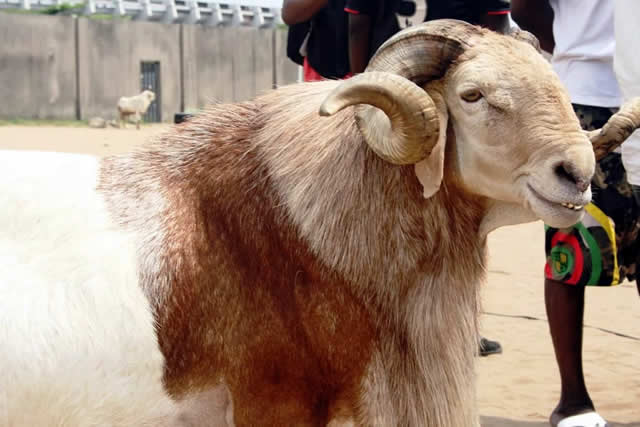
As Muslims across Nigeria prepare for the Eid-el-Kabir celebration, rising food prices, expensive livestock, and increasing transportation costs are forcing many families to scale down festivities, abandon travel plans, and embrace modest celebrations.
nFrom Lagos to Ibadan and Badagry, traders, livestock sellers, and residents who spoke with Sunday Vanguard painted a grim picture of a season overshadowed by economic hardship, with many saying the soaring cost of living has drastically altered how they plan to celebrate this year’s festival.
nThe prices of staple cooking ingredients and livestock, central to Sallah celebrations, have climbed sharply in recent weeks, leaving many households struggling to cope, a reality already evident at major markets in Lagos.
nA fresh tomato and pepper vendor, Ashiru, in Iyana Oba Market, lamented the sudden hike in prices of basic food items, stating that a basket of tomatoes is now N80,000, up from N52,000 or N53,000, and a basket of pepper is now N45,000, a 200 percent increase from N15,000.
nOnion prices have also surged, with a bag now costing N90,000, up from N56,000, according to Ashiru, who highlighted the struggles of vendors and consumers alike in the face of rising costs.
nMrs Ruth Lawal, a food items trader, explained that the prices of rice and cooking oil have gone beyond the reach of many average Nigerians, with a bag of rice now costing N65,000, up from N52,000, and 25 litres of groundnut oil now costing N61,200, up from N50,800.
nLivestock sellers also described a market under pressure, as the prices of cows, rams, and goats continue to surge ahead of the festival, with Mr Abdulraheem, a cow meat seller, stating that the cost of purchasing cattle has risen dramatically.
nAccording to Mr Abdulraheem, a big cow now costs between N1.2 million and N1.5 million, up from N800,000 and N1 million, while rams are sold for between N700,000 and N900,000 for large ones, and N400,000 and N600,000 for medium-sized ones.
nAfeez Awal, a livestock seller, corroborated these prices, stating that small goats are now sold between N200,000 and N300,000, up from N150,000, and big ones are sold for N700,000, up from N300,000, while cows are sold for between N1.2 million and N1.5 million, up from N500,000 and N700,000.
nFor many families, the economic realities mean difficult choices, with a farmer, Temitope Abel, saying she has already abandoned plans to buy a ram for the celebration, opting instead for a carton of turkey, which costs N48,000.
nTemitope Abel also lamented the increase in fish prices, with croaker fish now costing N8,000, up from N6,000, and Kpanla fish also becoming more expensive, highlighting the struggles of consumers in the face of rising costs.
nDespite the hardship, many residents say they are choosing gratitude, moderation, and togetherness over elaborate celebrations, with Mrs Romoke Olisa stating that this year’s Sallah will be intentionally simple, with a focus on a low-key celebration with immediate family.
nMrs Romoke Olisa explained that her family will partner with friends or family members to buy one big cow and split the meat, emphasizing that the main thing is the blessings of the season.
nTaiwo Jimoh said that despite the economic hardship, many families have no option than to celebrate with whatever is available, stating that his family will celebrate the festival with whatever they have, and he believes it is going to be better.
nTaiwo Jimoh urged his Muslim brothers and sisters to celebrate moderately with whatever they have, as the bad economy doesn’t stop some people from celebrating, but if you don’t have enough, celebrate moderately with your family and enjoy with your family.
nA young Brand and Communications Strategist, Abiodun Yakubu, noted that while the situation is painful, Islamic teachings encourage believers to celebrate within their means, emphasizing that sacrifices and festivities should be based on what one can afford and is capable of, without undue hardship.
nAbiodun Yakubu stated that the focus should now shift from luxury to the spiritual essence of the celebration, with simplicity, gratitude, prayer, and togetherness becoming the core of the festivities, rather than stretching beyond financial capacity.
nA Public Health practitioner, Taoheedah Abdulkareem, said financial discipline and moderation have become necessary, with her approach being to spend within her means and manage her expenses carefully, avoiding unnecessary costs and sticking to essential items.
nTaoheedah Abdulkareem intends to be more practical in her shopping, sticking to her usual sellers and negotiating prices where possible, while managing her expenses overall and cutting out non-essential spending to celebrate meaningfully without financial strain.
nMrs Rukiyat Omolara explained that many Muslim families are making adjustments in food, clothing, and travel expenses, with changes revolving around food to prepare, clothing, and travelling, opting for dried pepper instead of fresh pepper due to the high cost.
nFor some breadwinners, conversations around sacrifice and endurance have already begun at home, with Mr Raji Razak informing his family that buying new clothes may no longer be possible this year due to the economic situation.
nMr Raji Razak stated that if the government pays his salary before the end of the month, he might be able to buy a small ram for around N150,000, allowing his children and wife to celebrate with him, emphasizing the need for families to adapt to the harsh economic climate.
nMr Awojoodu Kazeem said rising fuel prices and transportation costs have forced him to reconsider his usual travel plans, opting instead to celebrate the Sallah on a low key with his immediate family in Ibadan and sending assistance to his extended family in Ife.
nDespite the hardship, many residents insist that the true spirit of Sallah remains alive, not in extravagant spending, but in sacrifice, compassion, faith, and the ability to share whatever little one has with loved ones, with hope and resilience defining the season.
nFor many households this year, modesty may replace luxury, but the essence of Eid-el-Kabir, which emphasizes sacrifice, gratitude, and togetherness, will continue to be celebrated, albeit in a more subdued and financially responsible manner.
Related Stories
 General News
CELEBRATING TWO YEARS OF TRANSFORMATIONAL LEADERSHIP IN THE PRESIDENTIAL AMNESTY PROGRAMME
Tomorrow, 14TH March 2026, as we look forward to the second anniversary, we reflect on the remarkable two years since the Administrator of the Preside
 General News
PRESIDENTIAL AMNESTY PROGRAMME PHASE 3: DISREGARD PURPORTED STATEMENT ON DELAYED ITA PAYMENTS — OFFICE OF NATIONAL CHAIRMAN
The Office of the National Chairman of the Presidential Amnesty Programme Phase 3, General Elaye ThankGod Dollar Slaboh, has called on beneficiaries a
 General News
RE: CLARIFICATION ON MY PERSONAL RELATIONSHIPS
PUBLIC NOTICErnrnRE: CLARIFICATION ON MY PERSONAL RELATIONSHIPSrnrnIt has become necessary to make this public clarification following the increasing