
Safety vs Finance: Does Increased Investment Hold the Key to a More Secure Nigeria?
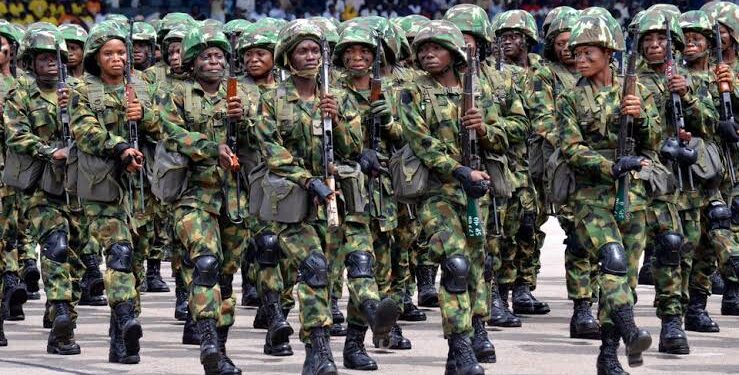
*NASS probes Defence spending as Nigeria records over 100,000 violent deaths since 2012
n*Defence gulps N32.88trn of NN262.834trn budget in 15 years
n*CDS seeks stronger Police, Civil Defence collaboration
n* Senate, Reps target March 31 passage of ₦58.47trn 2026 budget
nBy Clifford Ndujihe & Gift Chapi Odekina
nDespite the allocation of about ₦32.88 trillion to defence in the last 15 years — representing roughly 12.5 per cent of the ₦262.834 trillion national budgets within the period — Nigeria remains trapped in protracted insecurity.
nAcross several regions, communities continue to endure insurgency, banditry, kidnappings, communal clashes and oil-related violence, raising questions about whether increased defence spending is translating into improved safety for citizens.
nSecurity trackers estimate that over 100,000 Nigerians have been killed in violent conflicts and insecurity-related incidents since 2012, while thousands more have been abducted and millions displaced from their homes.
nThe crisis appears far from abating in 2026, with no fewer than 1,091 lives reportedly lost to violent attacks within the first 41 days of the year alone. Currently, no fewer than 3.726 million Nigerians are displaced by insecurity and are scattered in about 3,900 camps across the country.
nAgainst this backdrop, the National Assembly has intensified scrutiny of defence spending as lawmakers work toward passing the 2026 Appropriation Bill by March 31.
nSenate targets March 31 passage
nThe Senate is currently processing the ₦58.47 trillion 2026 Appropriation Bill, which includes about ₦5.41 trillion for defence and security, one of the largest sectoral allocations in the proposed budget.
nThe proposal forms part of President Bola Tinubu’s 2026 budget submitted to the National Assembly in December 2025.
nFollowing the second reading of the bill, Senate committees have been conducting detailed sectoral reviews and budget defence sessions with ministries, departments and agencies, including the Ministry of Defence.
nSenate President Godswill Akpabio recently indicated that the upper chamber is working toward passing the budget before March 31, after committee reports are submitted and harmonised.
nSenators have also stressed the urgency of prompt budget implementation, warning that delays in defence funding could undermine ongoing military operations.
nReps to resume Defence budget scrutiny
nSimilarly, the House of Representatives will resume detailed deliberations on the defence component of the 2026 budget when lawmakers return from legislative recess.
nThe House Committees on Defence, Army, Navy and Air Force are expected to continue reviewing the proposals, focusing on troop welfare, operational logistics, intelligence operations and procurement of military equipment.
nLawmakers say the review will emphasise accountability, operational efficiency and performance-based budgeting, insisting that increased allocations must translate into measurable improvements in national security.
nThe renewed legislative attention comes as Nigeria continues to battle insurgency in the North-East, banditry in the North-West, violent attacks in the North-Central, oil theft in the Niger Delta and maritime insecurity in the Gulf of Guinea.
nRising Defence Allocations
nNigeria’s defence spending has increased significantly in recent years as the government seeks to address escalating security threats across multiple regions.
nIn the 2025 federal budget, about ₦6.57 trillion was allocated to defence and security, making it one of the largest spending sectors.
nFor 2026, the government has proposed ₦5.41 trillion, reflecting continued prioritisation of military operations, intelligence capabilities and security infrastructure.
nWithin the proposal, the Ministry of Defence alone is expected to receive about ₦3.154 trillion, covering personnel costs, capital projects and operational logistics for the Armed Forces.
nYet, lawmakers say the critical question remains whether these rising allocations are producing tangible improvements in safety.
nCDS calls for stronger Inter-agency collaboration
nDuring the defence of the 2026 budget proposal at the National Assembly complex in Abuja, the Chief of Defence Staff, CDS, General Olufemi Oluyede, stressed that the Armed Forces alone could not solve Nigeria’s complex security challenges.
nHe called for urgent strengthening of the Nigeria Police Force,NPF and the Nigeria Security and Civil Defence Corps, NSCDC, to consolidate gains recorded by the military after clearing insurgents and criminal elements from communities.
nAccording to him, the police and civil defence corps possess wider community reach and larger personnel strength.
n“If these institutions are strengthened, they can effectively hold and secure territories where the Armed Forces have succeeded, ensuring that such areas remain safe,” Oluyede said.
nThe CDS also highlighted the pressure on military personnel due to operations across multiple theatres.
n“The soldiers hardly have rest because we don’t have the numbers. Recruiting more personnel comes with other challenges — housing, logistics and welfare.
nThat is why strengthening the police and civil defence is critical,” he added.
nSecurity Operations Across Regions
nProviding an update on ongoing operations, Oluyede disclosed that special forces had been deployed to Benue and Plateau states to address persistent violence in the Middle Belt.
nHe also revealed plans to deploy additional troops to Kwara and parts of Niger State following rising insecurity.
nAccording to him, a new Joint Task Force code-named Operation Savannah Shield will coordinate security operations across the affected areas.
n“We are pulling resources from other theatres to strengthen this operation and ensure improved security in the area,” he said.
nThe CDS assured Nigerians that the Armed Forces were intensifying efforts to address threats nationwide.
n“As we speak, the situation has improved significantly in the North-East. In the North-West we still face serious challenges, and the same applies to parts of the North-Central,” he said.
nIntelligence Partnerships
nOluyede also disclosed that Nigeria was collaborating with allied countries to strengthen intelligence gathering.
n“Our partners have been quite helpful, particularly in intelligence. But we are careful to streamline these collaborations in line with the guidelines of Mr President, to ensure Nigeria’s sovereignty is not compromised,” he said.
nLawmakers demand results
nChairman of the House Committee on Defence, Rep. Babajimi Benson, said Nigeria’s security challenges cannot be solved through military force alone.
nWhile acknowledging the sacrifices of the Armed Forces and other security agencies, he stressed that sustainable peace requires deeper institutional reforms and stronger coordination.
n“The defence and security sector occupies a central place in Nigeria’s development discourse. No nation can make sustainable progress without guaranteeing the safety of lives and property,” Benson said.
nHe warned that input-based budgeting without measurable outcomes was no longer acceptable.
n“Nigerians expect results that translate into safer communities, restored livelihoods and renewed confidence in the authority of the state,” he added.
nBenson also advocated a whole-of-government and whole-of-society approach to security, including investments in:
nstrategic communication
ncommunity peacebuilding
ncyber defence
nborder security technology
npolice reforms
ninter-agency intelligence data centres.
nBudget scrutiny to continue
nWith the National Assembly currently on recess, further deliberations on the defence budget will resume when lawmakers reconvene.
nThe review is expected to determine not only the final size of defence allocations but also oversight conditions tied to their implementation.
nThe bigger question
nDespite assurances from defence authorities and growing legislative scrutiny, a fundamental question persists:
nHas increased defence spending translated into improved security for Nigerians?
nWhile military authorities point to operational gains in several regions, violence continues to affect communities across the country.
nAs the Senate and House of Representatives race to pass the 2026 budget by March 31, Nigerians will be watching closely — not only the size of defence allocations but whether the funds will finally deliver safer communities.
nDefence Alloc in 15 Years
nYear Budget Defence
n2012 ₦5.086trn ₦921.91bn
n2013 ₦4.987trn ₦1.055trn
n2014 ₦5.230trn₦968.13bn
n2015 ₦5.643trn ₦969bn
n2016 ₦6.061trn ₦1.06trn
n2017 ₦7.444trn ₦1.13trn
n2018 ₦9.12trn. ₦1.28trn
n2019 ₦8.92trn ₦1.33trn
n2020 ₦10.59trn ₦974.91bn
n2021 ₦14.57trn ₦1.685trn
n2022 ₦17.908trn ₦2.7trn
n2023 ₦24.007trn ₦2.98trn
n2024 ₦35.055trn ₦3.85trn
n2025 ₦49.74trn. ₦6.57trn
n2026 ₦58.47trn ₦5.41trn
nTotal #262.83trn N32.88trn
n nRelated Stories
 General News
CELEBRATING TWO YEARS OF TRANSFORMATIONAL LEADERSHIP IN THE PRESIDENTIAL AMNESTY PROGRAMME
Tomorrow, 14TH March 2026, as we look forward to the second anniversary, we reflect on the remarkable two years since the Administrator of the Preside
 General News
PRESIDENTIAL AMNESTY PROGRAMME PHASE 3: DISREGARD PURPORTED STATEMENT ON DELAYED ITA PAYMENTS — OFFICE OF NATIONAL CHAIRMAN
The Office of the National Chairman of the Presidential Amnesty Programme Phase 3, General Elaye ThankGod Dollar Slaboh, has called on beneficiaries a
 General News
RE: CLARIFICATION ON MY PERSONAL RELATIONSHIPS
PUBLIC NOTICErnrnRE: CLARIFICATION ON MY PERSONAL RELATIONSHIPSrnrnIt has become necessary to make this public clarification following the increasing