
Russia, Ukraine agree to 32-hour Orthodox Easter ceasefire
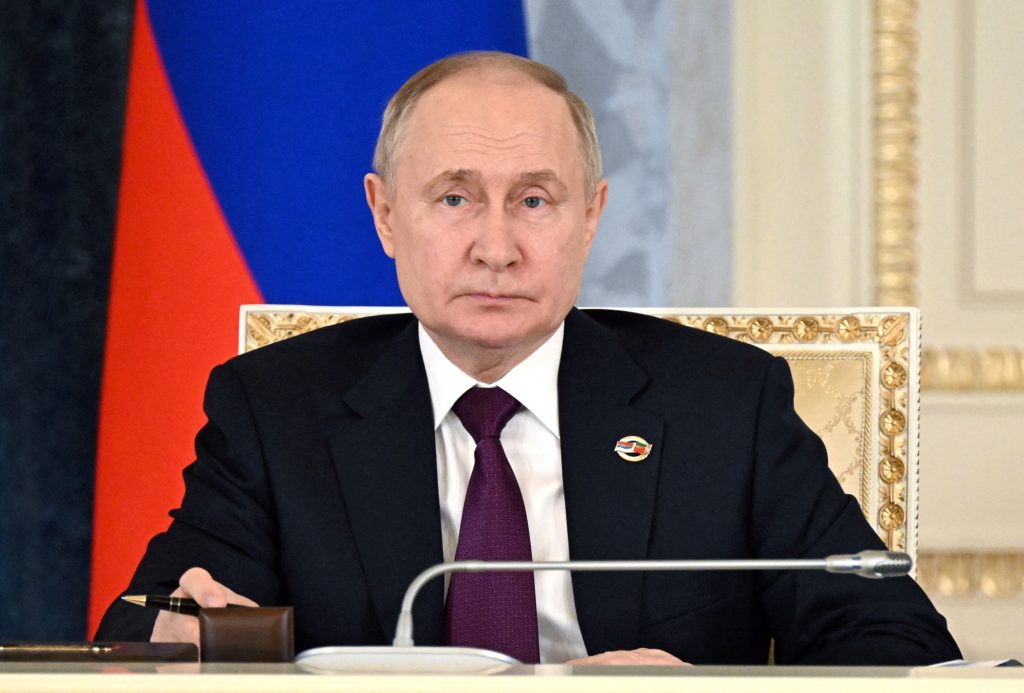
Vladimir Putin
nRussia and Ukraine have agreed to a ceasefire over Orthodox Easter — a temporary truce that the Kremlin says will begin on Saturday afternoon and end on Sunday night.
nRussian President Vladimir Putin ordered the ceasefire late Thursday, more than a week after Ukrainian President Volodymyr Zelensky first called for a truce over Easter.
nThe announcement comes amid a lull in US-led diplomatic efforts to end the four-year war.
nHere’s what we know about the proposal, and the current state of peace talks:
n– What’s been agreed? –
nThe Kremlin said the ceasefire would be in effect from 4:00 pm (1300 GMT) on Saturday until the end of the day on Sunday, a 32-hour period.
nRussia’s Defence Minister Andrei Belousov and army chief Valery Gerasimov have been instructed to “cease hostilities in all directions during this period,” the Kremlin said.
n“We assume that the Ukrainian side will follow the Russian Federation’s example,” the Kremlin added, calling it a “humanitarian” pause.
nZelensky said shortly after that Ukraine had “repeatedly stated” it was ready for a ceasefire over Easter, and was willing to reciprocate.
n“We proposed a ceasefire for the Easter holidays this year and will act accordingly,” he said.
nThe Kremlin’s spokesman denied Russia had discussed the ceasefire with Ukraine or the United States in advance.
n– Previous truces –
nRussia announced a similar, 30-hour truce with Ukraine over Orthodox Easter last year.
nBoth sides accused each other of violating it hundreds of times, although the Ukrainian air force reported a lull in Russian air raids during the truce.
nSeveral days later Putin declared another truce, this time over Russia’s May 9 holiday, when he was due to host world leaders including China’s Xi Jinping for a grand military parade on Red Square.
nZelensky described the proposal as “cynicism of the highest order”, saying Ukraine had no intention of creating a “pleasant atmosphere” for the occasion.
nPrevious proposals for truces failed to materialise.
nRussia has repeatedly rejected Ukraine’s calls for a long-term, unconditional ceasefire, saying it is instead pushing for a final peace settlement.
nUkraine says Moscow is not genuinely interested in peace and wants Kyiv to capitulate.
n– Battlefield situation –
nAfter making its largest gains last year since 2022, the Russian army’s advances have slowed in recent months.
nThe Russian military recorded almost no territorial gains in Ukraine last month for the first time in two and a half years, according to an AFP analysis of data from the Institute for the Study of War (ISW).
nAcross the entire front line, the Russian army seized only 23 square kilometres (8.9 square miles) in March, losing territory in some areas, according to the analysis.
nMoscow currently occupies just over 19 percent of Ukraine, the majority of which it seized during the first weeks of its invasion in 2022.
nApproximately seven percent, including Crimea and areas in the Donbas region, were already under Russian or pro-Russian separatist control before the invasion.
n– Where do peace talks stand? –
nUS President Donald Trump’s administration has been pushing for an end to the fighting, brokering multiple rounds of negotiation between the two sides in Abu Dhabi and Geneva.
nThe three countries last met in Geneva in late February, days before the United States launched its war with Iran.
nTrilateral talks have been effectively frozen since then, although both Moscow and Kyiv have signalled they are ready to resume them.
nProgress towards a peace deal has been slow, due to differences over the issue of territory.
nUkraine has proposed freezing the conflict along the current front lines.
nBut Russia has rejected this, saying it wants Ukraine to give up all the territory in the Donetsk region that it currently controls — a demand Kyiv says is unacceptable.
nThe two sides have also failed to reach an understanding on the issue of control over the Zaporizhzhia nuclear power plant, seized by Russia at the start of the war.
n– ‘Right strategy’ –
nUkraine has indicated it will abide by the truce, despite scepticism among Ukrainians about whether it will work.
n“We believe that a ceasefire is the right strategy to advance diplomatic efforts,” said Ukraine’s foreign minister Andriy Sybiga.
nMoscow has rejected calls for a longer-term ceasefire.
n“Regarding the willingness to compromise, Russia doesn’t seem ready to lower its demands yet,” Russian analyst Konstantin Kalachev told AFP.
nPro-Kremlin military blogger Rybar said the truce could be used to “evacuate the bodies of the dead or even the wounded, which has become virtually impossible due to drones.”
n nRelated Stories
 General News
CELEBRATING TWO YEARS OF TRANSFORMATIONAL LEADERSHIP IN THE PRESIDENTIAL AMNESTY PROGRAMME
Tomorrow, 14TH March 2026, as we look forward to the second anniversary, we reflect on the remarkable two years since the Administrator of the Preside
 General News
PRESIDENTIAL AMNESTY PROGRAMME PHASE 3: DISREGARD PURPORTED STATEMENT ON DELAYED ITA PAYMENTS — OFFICE OF NATIONAL CHAIRMAN
The Office of the National Chairman of the Presidential Amnesty Programme Phase 3, General Elaye ThankGod Dollar Slaboh, has called on beneficiaries a
 General News
RE: CLARIFICATION ON MY PERSONAL RELATIONSHIPS
PUBLIC NOTICErnrnRE: CLARIFICATION ON MY PERSONAL RELATIONSHIPSrnrnIt has become necessary to make this public clarification following the increasing