
Road transport: Nigeria nearly a century behind —FG
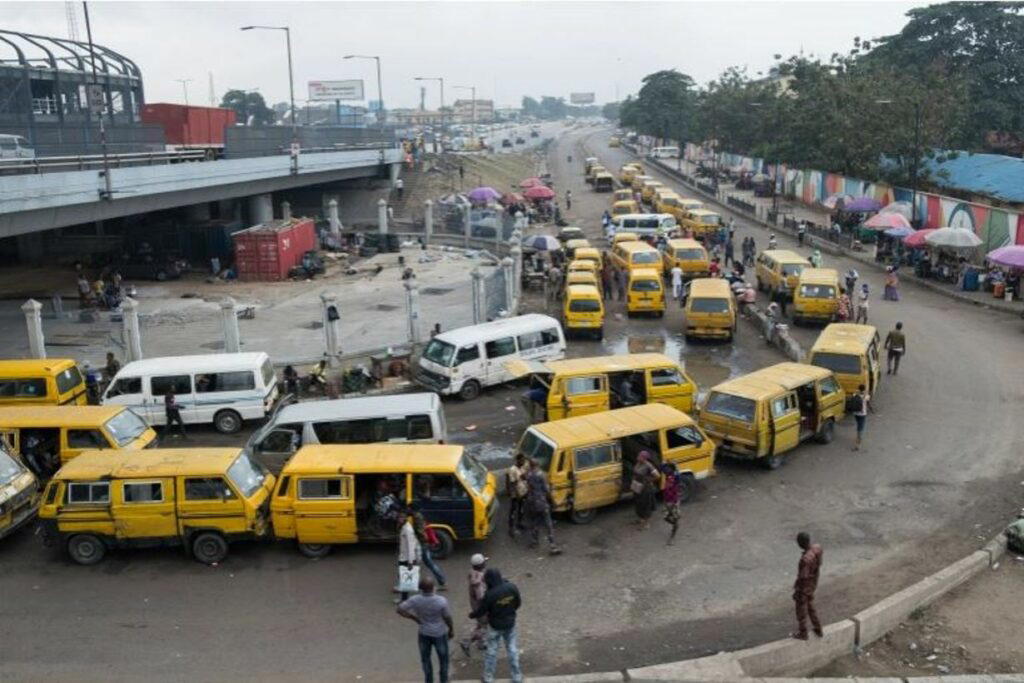
File: Buses is Lagos. Photo: Anthony Obayomi/Al Jazeera
nBy Luminous Jannamike
nABUJA — The Federal Government has begun moves to overhaul Nigeria’s road transport sector, targeting safer roads, modern vehicle fleets, digital systems and stronger regulation in an industry that carries more than 90 per cent of the country’s passengers and freight.
The reform drive follows growing concern over the sector’s poor economic return.
Despite carrying the bulk of Nigerians and their goods, transport and storage contribute only 1.56 per cent to GDP, a situation officials say is unsustainable and holding back wider economic growth.
Vice President Kashim Shettima, who stated this at a stakeholder meeting in Abuja on Monday, said the Initiative on Road Transport Transformation would prioritise road safety and professional driver development, digital systems for vehicles, drivers and infrastructure, modernisation of the national road network, improved private-sector management and closer coordination among the three tiers of government.
Shettima, who was represented by the Special Adviser to the President on Economic Affairs, Dr Tope Fasua, said President Bola Tinubu’s administration was seeking to turn the sector’s challenges into opportunities through infrastructure development, reforms, digital innovation and cleaner energy.
Prince Segun Obayendo, Technical Adviser on Transportation, Logistics and Innovation, however, emphasised the depth of the challenge facing the country.
“Germany, France and the United Kingdom formalised their transport sectors in the 1930s. Nigeria is nearly a century behind,” Obayendo said.
He said the National Road Safety Advisory Council, chaired by Shettima, would oversee the transformation without creating another government agency, while desk officers from existing state and local government structures would support implementation.
On fleet renewal, Obayendo called for single-digit interest rates, saying high commercial lending rates were making it difficult for operators to replace aging vehicles.
“Commercial loans of 30–33 per cent keep vehicles ageing and unsafe,” he said.
He also advocated stronger driver licensing, better transport data systems and wider adoption of compressed natural gas as part of efforts to improve safety and efficiency.
The stakeholder meeting, convened by the Office of the Vice President, brought together federal ministries, regulators, transport unions, banks and development partners.
The stakeholders proposed a multi-sector technical committee to develop an integrated governance framework for the sector, with implementation expected to draw on existing government structures rather than create new agencies.
Shettima said the success of the reform would ultimately be measured by lives saved, greater system efficiency, improved dignity for transport workers and increased national prosperity.
The initiative now awaits formal endorsement and the recommendations of the proposed technical committee.
Related Stories
 General News
CELEBRATING TWO YEARS OF TRANSFORMATIONAL LEADERSHIP IN THE PRESIDENTIAL AMNESTY PROGRAMME
Tomorrow, 14TH March 2026, as we look forward to the second anniversary, we reflect on the remarkable two years since the Administrator of the Preside
 General News
PRESIDENTIAL AMNESTY PROGRAMME PHASE 3: DISREGARD PURPORTED STATEMENT ON DELAYED ITA PAYMENTS — OFFICE OF NATIONAL CHAIRMAN
The Office of the National Chairman of the Presidential Amnesty Programme Phase 3, General Elaye ThankGod Dollar Slaboh, has called on beneficiaries a
 General News
RE: CLARIFICATION ON MY PERSONAL RELATIONSHIPS
PUBLIC NOTICErnrnRE: CLARIFICATION ON MY PERSONAL RELATIONSHIPSrnrnIt has become necessary to make this public clarification following the increasing