
Restoring Healthcare for Leprosy Patients in Nigeria
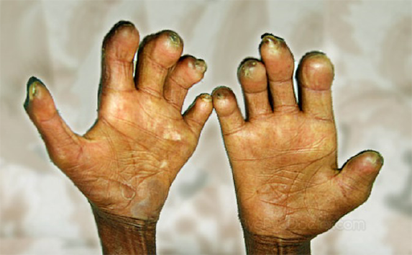
The Uzuakoli Leprosy Colony stands as a stark reminder of Nigeria's overall national failure, a far cry from its glory days as a pioneering leprology centre on the African continent, established by Methodist missionaries in 1931 in the Bende Local Government Area of Abia State.
nBy 1936, the colony had grown to accommodate over 800 residents, and its Dapsone treatment had successfully discharged thousands of patients symptom-free, a feat that highlights the colony's former status as a beacon of hope in leprosy care.
nA bleak period of institutional abandonment followed, leaving the colony to struggle with the consequences, as evident in Nigeria's 2023 leprosy statistics, which recorded 2,425 new cases, with a disturbing 10 per cent Grade 2 disability rate.
nThis means that one in every ten new patients arrived at clinics with visible, permanent deformity that could have been prevented with early treatment, a clear indication of a detection system in disarray.
nIn the conflict-torn Northeast, the situation is particularly dire, with Adamawa State reporting 87.7 per cent of newly diagnosed patients presenting with Grade 2 disability, and Borno State recording 81 per cent, painting a catastrophic picture of leprosy care in the region.
nNationwide, approximately 9.9 per cent of new leprosy cases involve children under 15, a statistic that epidemiologists interpret as proof of active, ongoing transmission in communities where the disease should be on the decline.
nThe Uzuakoli centre has been forced to rely on charity since 2009, when government funding ceased, with donations from faith groups, the Leprosy Mission Nigeria, and German and Belgian NGOs providing limited support for drugs and care.
nHowever, this funding falls short of covering essential services such as rehabilitation, physiotherapy, vocational training, and dignified housing, leaving a significant gap in the care and support provided to patients.
nA 2024 study of leprosy settlements across Nigeria found that a staggering 94.3 per cent of residents reported a very poor quality of life, while 60.4 per cent experienced severe stigma that affected their daily functioning and livelihoods.
nNigeria achieved formal leprosy elimination in 1998, defined as fewer than one case per 10,000 population, but this milestone was short-lived, as the programme was subsequently scaled back, leaving behind a system in disarray.
nToday, over 3,500 people are diagnosed with leprosy annually, with approximately 25 per cent presenting with disability, and treatment defaulting remains a persistent issue, while the centres meant to restore lives are maintained by missionary goodwill.
nThe National Tuberculosis and Leprosy Control Programme (NTLCP) urgently needs adequate funding and staffing, coupled with active case-finding campaigns in high-burden states and conflict-affected zones, to address the alarming disability rates.
nFurthermore, Uzuakoli and the country's other 60 settlements require direct capital investment, rather than empty promises, to provide essential services and support to patients.
nRehabilitation efforts must also involve skills training, cooperative farming, and microcredit initiatives to empower patients and facilitate their reintegration into society.
nIt is essential that patients are not discharged into communities that will stigmatise them, and that the 10 per cent child case rate is treated as the emergency it is, a signal that transmission is ongoing and a generation is being failed.
nGovernor Alex Otti's administration must extend its health reforms to the Uzuakoli Leprosy Centre, setting a template worthy of emulation nationwide, and Nigeria must reclaim its forefront position in leprosy care in Africa.
Related Stories
 General News
CELEBRATING TWO YEARS OF TRANSFORMATIONAL LEADERSHIP IN THE PRESIDENTIAL AMNESTY PROGRAMME
Tomorrow, 14TH March 2026, as we look forward to the second anniversary, we reflect on the remarkable two years since the Administrator of the Preside
 General News
PRESIDENTIAL AMNESTY PROGRAMME PHASE 3: DISREGARD PURPORTED STATEMENT ON DELAYED ITA PAYMENTS — OFFICE OF NATIONAL CHAIRMAN
The Office of the National Chairman of the Presidential Amnesty Programme Phase 3, General Elaye ThankGod Dollar Slaboh, has called on beneficiaries a
 General News
RE: CLARIFICATION ON MY PERSONAL RELATIONSHIPS
PUBLIC NOTICErnrnRE: CLARIFICATION ON MY PERSONAL RELATIONSHIPSrnrnIt has become necessary to make this public clarification following the increasing