
Reps seek crackdown on ransom financing, tighter oversight of BDCs, POS operators
By Gift ChapiOdekina, Abuja
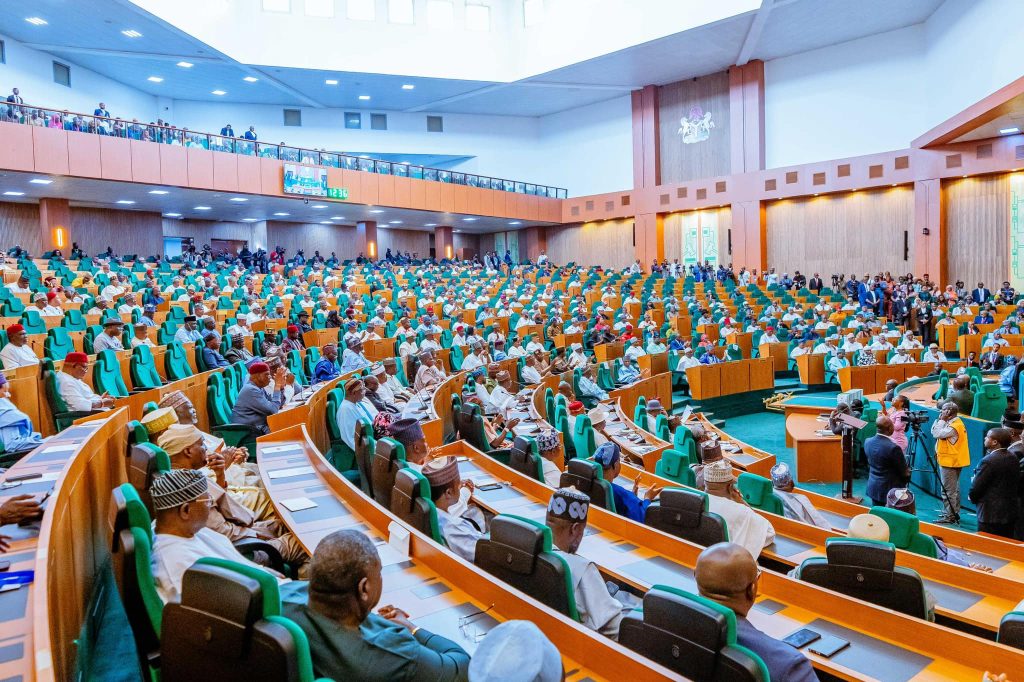
nThe House of Representatives has urged the Federal Government to intensify efforts to dismantle the financial networks sustaining kidnapping, banditry and terrorism by strengthening financial intelligence coordination and tightening regulatory oversight of Bureau de Change (BDC) operators, Point-of-Sale (POS) operators and other financial intermediaries.
nThe resolution followed the adoption of a motion titled, “Need for Executive Action to Halt the Ransom Cash Economy, Strengthen Financial Intelligence Coordination, and Enforce Compliance with Anti-Money Laundering Frameworks in Nigeria,” sponsored by Hon. Ademorin Kuye.
nLeading the debate, Kuye described the growing “ransom economy” as a major threat to national security and economic stability, stressing that the Federal Government has a constitutional responsibility to protect lives and safeguard the country’s financial system.
nHe noted that existing laws, including the Money Laundering (Prevention and Prohibition) Act, 2022, and the Terrorism (Prevention and Prohibition) Act, 2022, already empower relevant agencies to detect, prevent and prosecute money laundering, terrorism financing and ransom-related transactions.
nCiting reports by the Nigeria Financial Intelligence Unit (NFIU), the National Bureau of Statistics’ 2024 Crime Experience and Security Perception Survey, and independent security organisations, Kuye said Nigerians reportedly paid an estimated ₦2.23 trillion in ransom between January 2021 and June 2025.
nHe argued that the huge ransom payments have continued to fuel organised criminal activities, enabling kidnappers and terrorist groups to expand their operations.
nThe lawmaker also referenced findings by the National Counter Terrorism Centre under the Office of the National Security Adviser, indicating that some POS operators and other financial channels have been exploited to facilitate ransom payments and conceal financial trails, making investigations and asset recovery more difficult.
nAccording to him, criminal syndicates increasingly exploit both formal and informal financial systems, including Bureau de Change operators, hawala networks, cryptocurrency platforms, livestock trading and trade-based money laundering schemes, to launder proceeds of crime.
nThe House expressed concern that weak financial intelligence coordination and poor enforcement of anti-money laundering regulations continue to expose Nigeria to significant security risks, undermine public confidence and contribute to the country’s continued placement on the Financial Action Task Force (FATF) grey list.
nFollowing the debate, lawmakers urged President Bola Tinubu to establish a coordinated inter-agency framework to disrupt ransom financing and strengthen collaboration among security, financial and regulatory institutions.
nThey also called for stricter enforcement of existing laws on ransom payments and terrorism financing, while encouraging greater cooperation among victims, financial institutions and law enforcement agencies.
nThe House further urged the Federal Ministry of Finance to provide adequate funding for financial intelligence infrastructure, including advanced transaction monitoring and analytical systems.
nIt directed the Central Bank of Nigeria (CBN), the Nigeria Financial Intelligence Unit (NFIU) and other regulatory agencies to conduct a comprehensive audit of suspicious POS transactions in high-risk areas, strengthen real-time monitoring of financial activities linked to kidnapping and terrorism, and tighten oversight of Bureau de Change operators and other financial intermediaries.
nLawmakers also urged the Attorney-General of the Federation and relevant law enforcement agencies to investigate and prosecute individuals or organisations found to be facilitating ransom transactions in accordance with existing laws.
nIn addition, the House called on the National Security Adviser to convene a national stakeholders’ summit on financial intelligence and ransom financing to develop a coordinated strategy for dismantling criminal financial networks.
nIt also urged security agencies to subject funds and assets recovered during anti-kidnapping and counter-terrorism operations to forensic financial investigations aimed at exposing and dismantling criminal financing structures.
nDuring the debate, Hon. Yusuf Gagdi, representing Kanke/Pankshin/Kanam Federal Constituency of Plateau State, supported the motion, arguing that continued payment of ransom emboldens kidnappers and bandits.
n“The payment of ransom to kidnappers and bandits is not helpful. If we stop paying ransom, that will demoralise them,” he said.
nGagdi also opposed the rehabilitation of repentant bandits, insisting that individuals responsible for killing security personnel should be prosecuted.
nHowever, Hon. Ahmed Jaha (APC, Borno) cautioned against an outright rejection of ransom payments, arguing that families of abducted victims in conflict-affected communities are often left with no option but to negotiate for their release.
nHe urged the government to prioritise the rehabilitation and psychological support of rescued kidnapping victims.
nThe House mandated its Committees on National Security and Intelligence, Banking Regulations and Financial Crimes to monitor implementation of the resolutions and report back within four weeks for further legislative action.
n nRelated Stories
 General News
CELEBRATING TWO YEARS OF TRANSFORMATIONAL LEADERSHIP IN THE PRESIDENTIAL AMNESTY PROGRAMME
Tomorrow, 14TH March 2026, as we look forward to the second anniversary, we reflect on the remarkable two years since the Administrator of the Preside
 General News
PRESIDENTIAL AMNESTY PROGRAMME PHASE 3: DISREGARD PURPORTED STATEMENT ON DELAYED ITA PAYMENTS — OFFICE OF NATIONAL CHAIRMAN
The Office of the National Chairman of the Presidential Amnesty Programme Phase 3, General Elaye ThankGod Dollar Slaboh, has called on beneficiaries a
 General News
RE: CLARIFICATION ON MY PERSONAL RELATIONSHIPS
PUBLIC NOTICErnrnRE: CLARIFICATION ON MY PERSONAL RELATIONSHIPSrnrnIt has become necessary to make this public clarification following the increasing