
Repentant terrorists leaking information —Serving senior officers
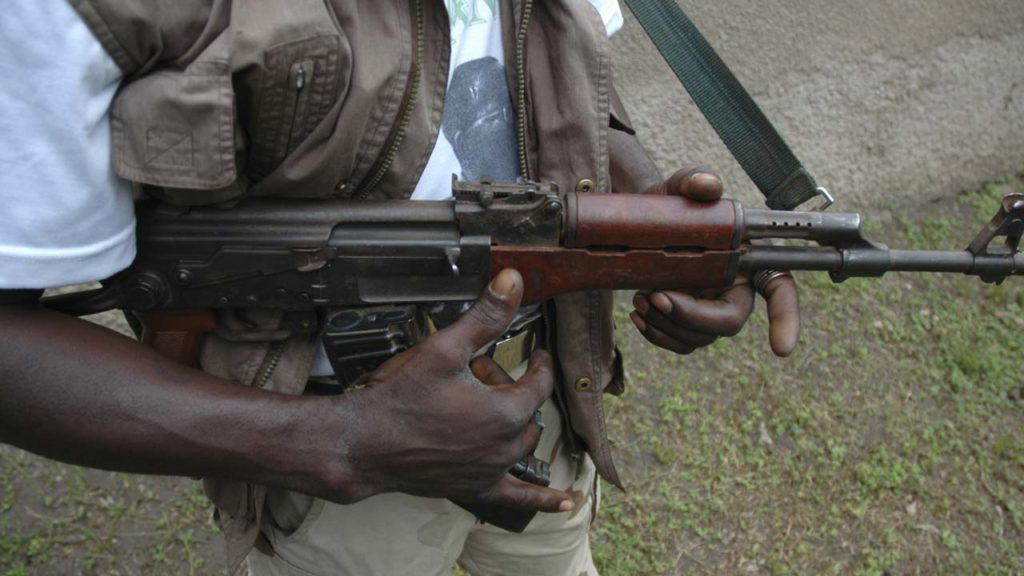
•Lament 3 Colonels lost in Borno; equipment taken, yet nothing done
n•Why terror thrives — Ofoyetan
nBy Evelyn Usman
nAmid Nigeria’s seemingly endless war against terrorism and banditry, a chilling question refuses to fade. It echoes after every mass burial of villagers cut down in midnight raids. It lingers in the silence of deserted communities where farms lie abandoned and schools shut their gates. It trembles in the voices of parents who send their children to school with silent prayers that they will return alive.
nIt is a question soaked in grief and disbelief, a national wound that refuses to heal:
nIf the government knows who the terrorists are and where they hide, why do they still roam free?
nWhat makes the puzzle even more disturbing is that the claims are not coming from anonymous voices whispering from the shadows. They are coming from individuals close to the corridors of power , people who insist that intelligence exists, the names are known and the hideouts mapped.
nYet the killings continue. The gap between what is known and what is done has grown into a haunting paradox, leaving many Nigerians wondering whether the nation is losing the war against terror, or simply refusing to fight it with the urgency it demands.
nThe claims
nThe whispers turned into loud public accusations when Islamic cleric, Sheikh Abubakar Gumi, who has often positioned himself as an intermediary between government and armed groups, recently made one of the most startling claims yet.
nSpeaking during an interview on DRTV, Gumi declared without hesitation that the Nigerian government was fully aware of the identities and locations of terrorists operating across the country.
n“The government knows every terrorist by name and by location,” he said. He further disclosed that his
ncontroversial visits into forests to meet bandits were carried out under official watch and accompanied by security agents. For many Nigerians, the statement raised an unsettling question: if a cleric can walk into the den of lions with state escort, why can’t the state send in the lion hunters?
nZamfara governor, El-Rufai lend their voices
nFrom the embattled soil of Zamfara State, Governor Dauda Lawal also added his voice to the controversy. In a video that went viral in September 2025, the governor expressed frustration that sounded less like a political statement and more like the cry of a leader watching his people bleed while power slips through his fingers.
nLike Gumi, Lawal insisted that intelligence on bandits exists. “I swear to Almighty Allah, wherever a bandit leader is in Zamfara State, I know it. If he goes out, I know. With my phone, I can show you where they are today,” he said. Yet, according to him, the command structure of Nigeria’s security system keeps crucial operational decisions far away from the communities under siege.
nFueling the controversy further, six months ago former Kaduna State governor Nasir El-Rufai alleged on national television that the government had been secretly paying bandits in an attempt to discourage them from killing Nigerians, although he was challenged to provide proof.
nThe implication
nIf the claims are accurate, the implications are deeply unsettling. It would mean that the machinery of the state already possesses the intelligence required to dismantle the criminal networks terrorising communities across the country. If this is so, why are soldiers still dying on battlefields where the enemy’s location is supposedly known? Why are police officers, vigilantes and local hunters still falling into ambushes? Why must families continue to bury sons and daughters in uniform if the element of surprise has already been compromised by intelligence that remains unused?
nSecurity experts speak
nAs the debate intensifies, security analysts and military veterans say the crisis may be rooted in deeper structural failures. In a joint interview on Channels Television, intelligence and security consultant Yahuza Getzo and United States Army veteran Capt. Bishop Johnson (retd.) painted a troubling picture of Nigeria’s security architecture.
nGetzo pointed to the complex web of regional dynamics fueling insecurity. “The trajectory of the security challenges that we have in the country has a lot of factorial influence related to our neighbourhoods such as the borders between Nigeria and Niger, Nigeria and Benin, Nigeria and Cameroon, Nigeria and Chad, and even the trans-Sahara trade routes,” he said.
nResponding to a question on whether Nigeria was effectively utilising its security resources, he added:
n“Yes, of course we may have the equipment and gadgets, but the question is: are we really holding ourselves accountable and holding our personnel accountable for utilising those equipment?”
nGetzo also warned that insurgent groups are increasingly targeting state institutions. “The Lakurawa are focusing on institutional attacks. They are trying to dismantle customs, police and immigration bases,” he said.
nFor him, the crisis represents a “combined challenge” that authorities have failed to confront decisively.
nBut perhaps his most controversial claim was that the problem may not be ignorance but unwillingness to act. “The Nigerian government is intentionally refusing to address insecurity because we know those who are complicit, we know the criminals and we know their location,” he said.
nFor US Army veteran Capt. Bishop Johnson (retd.), Nigeria’s fight against banditry and terrorism has largely been reactive. “We are ill-equipped. We are not prepared. We have not really sat down and taken time to understand what is happening to us,” he said. According to him, porous borders, illicit mining and a growing criminal economy are fueling the violence.
n“If you come into Nigeria and you are able to kidnap people and ransom is paid, your life changes. What is driving this banditry in Northern Nigeria is Nigeria’s mineral resources. The kidnappings you see may be a diversionary tactic while some individuals are busy mining our resources without the state benefiting.”
nJohnson also suggested that rather than arresting controversial figures like Sheikh Gumi, authorities should tap into the intelligence they possess. “This man has a lot of information about the bandits. Intelligence agencies sometimes recruit the worst people in society to take down bigger criminals.
nGovernment cannot say they do not know these people. If they don’t know them, then what is the job of the intelligence agencies?”
nWhy terror thrives — Ofoyetan
nHowever, Dr. Tony Ofoyetan, Director-General of the International Institute of Professional Security, insisted that Nigeria’s battle against terrorism runs deeper than simply knowing where the enemy hides.
nAccording to him, Nigeria’s greatest undoing was underestimating the threat in its early stages, describing terrorism as a cancer that is easier to eradicate at the beginning. For him, the major issue today is the proliferation of sleeper cells.
n“Sleeper cells are terrorist cells, individuals or groups of people who are sympathetic to acts of terrorism. They can be financiers, they can be foot soldiers, and they can take many different forms, both nationally and internationally.
n“Within these sleeper networks, some members deliberately move into strategic positions in society. Some go into politics, some become religious clerics, some establish businesses, while others operate at the intelligence level.
n“They may appear as ordinary people, those selling cucumbers or carrots in your neighbourhood or running small kiosks selling recharge cards. They can remain there for 10 years or more appearing harmless, but what they predominantly do is gather information about the strengths and weaknesses of a community over time.”
nAccording to him, terrorist attacks are the final stage of a long process. “Terrorists do not simply wake up and attack. An attack is the very last stage. By the time it happens, a lot of groundwork has already taken place and they are almost certain of success.”
nOfoyetan also warned that some powerful individuals may be indirectly shielding terrorist networks.
n“Government is doing a lot, but there are what we call partners in crime. Some politicians will stand on the floor of the National Assembly and accuse the government of human rights abuses during military operations. But sometimes it is because they are sympathetic to the terrorists and believe military bombardment is weakening their operational strength.”
nAccording to him, such relationships may even influence legislation and government action.
n“In some cases, the same organisation may have helped that politician to become a senator or member of the House of Representatives and because of that, he feels indebted to them.. This explains the controversial debate around so-called, ‘repentant terrorists’. In a sane society, terrorists are criminals responsible for killing innocent people. Repentance is not a concept that forms part of the law when dealing with terrorism.”
nTroubling battlefield reality
nAdding another layer to the debate, Rear Admiral Dickson Olisemelor (retd.) raised troubling questions about what he described as widespread knowledge of bandit activities.
n“If you listened to the last interview with Gumi, he said the government knows who they are and where they live. Not only the government; even the security agencies, the emirs and traditional rulers know.
n“The other time we saw over 500 motorcycles carrying three passengers each passing through Minna boldly. Just a few days later, we heard they kidnapped school children. Up till this moment, no particular action has been taken against them. In the last few days in Borno State, we have lost three Lieutenant Colonels, with their units destroyed and their equipment taken away. And up till now nothing significant is happening.”
nConcerns within the ranks
nServing senior officers who spoke anonymously also raised concerns about reports that former bandits have been integrated into security structures. One officer said: “Unfortunately many soldiers in some units are those recruited from the same bandits who claim to be repentant. They are still connected to their former associates. Yes, repentant bandits have been recruited. They deny it, but it is happening. That is why information keeps leaking.”
nThe officer also warned about the long-term implications of past counter-terrorism policies.
n“Unfortunately many of the soldiers in some units are these same boys who call themselves repentant. They are still connected to their former brothers. This mistake occurred during the Buhari era and it may affect Nigeria for the next 30 years. The repentant terrorists were injected back into the military, even though it was denied. That is why information keeps leaking.
nAlso, the bandits have drones and the means to intercept our communications but our boys do not have that.”
nAnother officer alleged that political interests may be complicating security operations. “Some politicians who are supposed to deal with these boys are not doing anything. Some are even sponsoring them. When they want to move minerals or arms and ammunition for political purposes, they send these boys to clear the road. Any commanding officer who refuses to comply may be dealt with.”
nUnanswered question
nFor travellers along Nigeria’s northern highways, every journey carries the terror of abduction; for villagers in remote communities, every dawn is shadowed by fear of raids and loss. Children walk to school with silent prayers, farmers tend fields with trembling hands, and families brace for grief that may strike at any moment. Yet, the most haunting question lingers unanswered: if the government knows the criminals and their hideouts, why does the violence persist? Until it is confronted, hope remains fragile, and fear continues to reign.
n nRelated Stories
 General News
CELEBRATING TWO YEARS OF TRANSFORMATIONAL LEADERSHIP IN THE PRESIDENTIAL AMNESTY PROGRAMME
Tomorrow, 14TH March 2026, as we look forward to the second anniversary, we reflect on the remarkable two years since the Administrator of the Preside
 General News
PRESIDENTIAL AMNESTY PROGRAMME PHASE 3: DISREGARD PURPORTED STATEMENT ON DELAYED ITA PAYMENTS — OFFICE OF NATIONAL CHAIRMAN
The Office of the National Chairman of the Presidential Amnesty Programme Phase 3, General Elaye ThankGod Dollar Slaboh, has called on beneficiaries a
 General News
RE: CLARIFICATION ON MY PERSONAL RELATIONSHIPS
PUBLIC NOTICErnrnRE: CLARIFICATION ON MY PERSONAL RELATIONSHIPSrnrnIt has become necessary to make this public clarification following the increasing