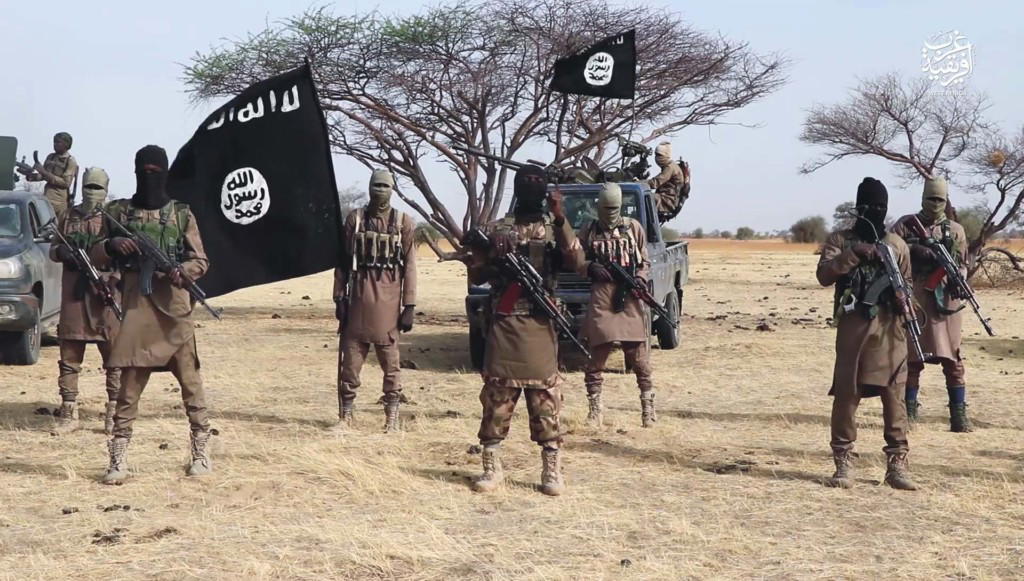
ISWAP fighters
•Say Nigeria losing ground
By Esther Onyegbula, Efe Onodjae & Dickson Omobola
The recent resurgence of violence by extremist groups such as Boko Haram, Islamic State West Africa Province, ISWAP, bandits and others, has once again placed Nigeria at the centre of Africa’s security concerns.
A string of deadly bombings, raids on military bases, and attacks on civilian communities, particularly in the North-East, North-Central and North-West, signals not just a continuation of a long-running insurgency, but a dangerous new phase.
For many Nigerians, especially in conflict-affected states, the situation is a grim reminder that despite years of military campaigns and official claims of progress, the threat remains deeply entrenched.
Sunday Vanguard observed that what is unfolding is not merely a revival of old tactics, but an evolution of the insurgency itself.
The attacks have also become more diffuse, spilling beyond traditional strongholds and intersecting with other forms of insecurity across the country.
This has raised urgent questions about the effectiveness of current strategies and whether Nigeria’s security architecture is adequately equipped to confront a threat that is adapting faster than anticipated.
As the nation grapples with the implications, debates are intensifying over the best path forward.
Should Nigeria double down on military force, or pivot towards intelligence-driven and community-based approaches? What role should regional cooperation and international partners play, particularly countries like the United States, which have previously provided limited support?
The answers to these posers were provided by security experts in several conversations with Sunday Vanguard.
Specifically, they examined the drivers of the renewed violence and explored what must change if Nigeria is to regain the upper hand in the fight against widespread insecurity.
Biggest weakness
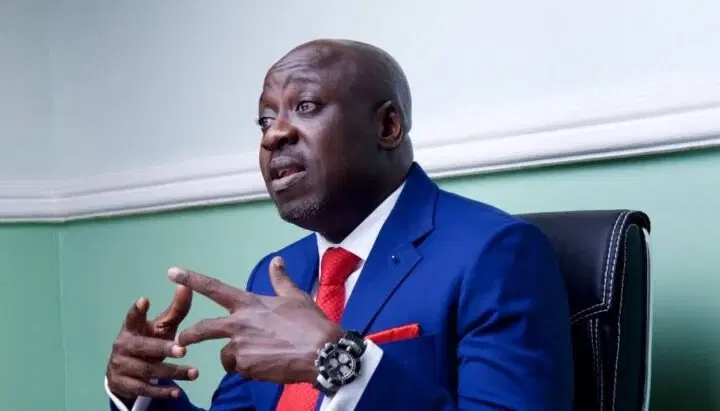
Speaking on the matter, Managing Director of Systems Securities, Dr Akinwale Tijani, argued that Nigeria’s biggest weakness in the fight against insecurity is not a lack of force, but a lack of coherence and foresight.
According to him, security operations remain largely reactive, fragmented across agencies, and poorly coordinated, allowing insurgent groups to exploit gaps between the military, police, and intelligence services.
He noted that government has also failed to sustain control over reclaimed territories, often declaring victories prematurely while neglecting stabilization, governance, and civilian protection.
This, he added, creates a cycle where terrorists regroup, rearm, and return to the same vulnerable communities.
His words: “Nigeria must shift toward a proactive, intelligence-driven strategy anchored in strong local engagement and institutional reform. This includes investing heavily in human intelligence networks, improving inter-agency data sharing, and deploying modern surveillance technologies consistently rather than sporadically.
“Beyond the battlefield, Nigeria must confront the structural drivers of insecurity like youth unemployment, weak local governance, and deep community distrust while simultaneously reforming and properly equipping its security forces. Success will depend on combining sustained military pressure with long-term state-building efforts, ensuring that once territories are cleared, they are effectively governed and protected from reinfiltration.”
Terror financiers
On his part, a professor of International Relations at Lagos State University, Dapo Thomas, said Nigeria’s worsening insecurity can only be addressed by targeting and dismantling the financial networks sustaining insurgency and banditry.
Thomas told Sunday Vanguard that focusing solely on military operations without addressing the sources of funding for terrorist groups will yield limited results.
According to him, as long as financiers and sponsors of violent groups remain untouched, insurgents will continue to adapt, relocate and sustain their operations across different parts of the country.
“The key to ending insecurity lies in dismantling those financing these activities. If they are still being funded and protected, the violence will persist,” he said.
The university don further alleged that some individuals within political and government circles are complicit in sustaining insecurity, describing Nigeria’s insurgency as largely politically motivated.
He expressed concern that despite intelligence reports reportedly identifying sponsors of groups such as Boko Haram, successive administrations have failed to prosecute those involved, thereby allowing the crisis to fester.
Thomas also linked the persistence of insecurity to political developments, noting that rising tensions ahead of elections often contribute to instability and violence.
While acknowledging efforts by the government to equip the military with modern weapons and ammunition, he said there has been little visible improvement in security outcomes, urging stronger institutional commitment and accountability.
On foreign collaboration, he cautioned against expanding external involvement beyond current intelligence-sharing arrangements, insisting that the priority should be internal reforms and decisive action against those funding terrorism. He warned that until the financiers of insurgency are identified, arrested and prosecuted, Nigeria may continue to witness recurring waves of violence and insecurity across the country.
Intelligence coordination
Lending his voice, founder of Arewa Security Network, Alhaji Mounde Tafida, argued that the recent surge in Boko Haram attacks reflects serious lapses in sustained military pressure and intelligence coordination.
He noted that insurgents are exploiting gaps created by the redeployment of troops to other internal security crises, as well as weak border controls that allow fighters and weapons to flow in from the wider Sahel region.
According to him, “the inconsistent presence of security forces in previously liberated areas has enabled terrorist groups to regroup, recruit, and launch increasingly bold attacks on both civilians and military targets.
“Nigeria must urgently rebuild momentum through continuous operations, stronger intelligence-sharing, and tighter border security, while also restoring confidence among affected communities.
“Local vigilante networks and community informants should be better integrated into formal security structures to improve early warning systems and disrupt attacks before they occur.
“Given the evolving sophistication of these groups, Nigeria cannot afford to fight this battle in isolation. There is a clear need for enhanced international collaboration, particularly from the United States, in the areas of intelligence, surveillance, training, and logistics support. Strengthening this partnership will significantly improve Nigeria’s capacity to degrade terrorist networks and prevent further escalation of attacks.”
Emergency
On his part, Managing Director, Badinson Security, Matthew Ibadin, in a chat with Sunday Vanguard, argued: “What is responsible is the foundation, which has been rotting over the years. It is not about renewed attacks, there have been attacks over the years. After the Shehu Shagari regime, no democratically elected government or head of state has been able to inject funds into the police. Today, there are many countries in the world that can do without the army, but there is no country without police. This is where the problem lies. Today, what we need in Nigeria is to have what we call an emergency intervention fund for the police. We need about three trillion Naira.
“In South Africa, their police have 57 helicopters, in Nigeria, our police have less than three functional helicopters. South Africa has about 70 million people, we are almost 240 million. Can you see the disparity? You also find out that the problem we face today is the lack of a crime database. This is the only country where when you commit a crime, you are treated as a first offender.
“There is no data to show that a person had committed crime in the past. Looking at this, there is no way we won’t be having the current crime from the same people who have been committing it. We must invest in the problem. Without a functional police, we cannot solve the problem of insecurity. The Army cannot do it alone because we have a lot of ungoverned spaces in Nigeria. This is where the problem lies. The United States cannot fight your battles for you.
Budget
“As of today, the US has a lot of problems. If we are waiting for the US to come and solve our problems for us, we are wasting our time. How many soldiers recently came from the US? Is that what we need to solve insecurity in Nigeria? How many states will they go to? The earlier we sit down as a nation to formulate a 21st century insecurity architecture, the better it is for us.
“We don’t have the infrastructure to fight crime, and the US won’t give us that. No government has given the police its 100 per cent budget. It is 30 to 40 per cent at most. What we need now isn’t a budget, it is intervention. I am an advocate of state police, but that cannot be done without fixing national police. It will be counterproductive. There will be complications in the country. Even as an advocate of state police and even local government police, I urge federal government to first fix the national police.”
For the Managing Director of Debreeze Protection Services Ltd, Mr Dickson Osajie, he told Sunday Vanguard that the renewed attacks are the result of a combination of factors such as ntelligence gaps, pressure on overstretched security forces, porous borders, the ability of terror groups to regroup in rural enclaves and the evolving tactics of non-state actors such as Boko Haram and ISWAP.
Osajie said: “The recent attacks in Borno, including the March 16, 2026, bombings in Maiduguri and the March 18 assault on a military base in Mallam Fatori, show that these groups remain resilient, adaptive, and capable of using both suicide bombers and emerging tools such as armed drones. For me, the current wave reflects growing operational confidence among the insurgents rather than their total defeat.
“Government must move beyond a purely reactive military approach and adopt a comprehensive national security response. First, intelligence collection and intelligence-sharing between the military, DSS, police, civil defence, and local vigilante structures must be strengthened. Second, border security and surveillance technology must be improved, especially in the North-East and along transnational routes used by fighters and weapons traffickers. Third, troops on the front lines need better welfare, equipment, air support, and rapid reinforcement capacity. Fourth, government must cut off the recruitment pipeline by addressing poverty, unemployment, ideological radicalisation, and weak governance in vulnerable communities. Finally, there must be sustained stabilisation of recovered communities through policing, local intelligence networks, and visible state presence, because insurgents often exploit ungoverned spaces after military clearances. We must stop the character of conquered and abandoned.
“The United States can support Nigeria, but it should not become the primary face of the counterinsurgency. U.S. assistance is most useful in the areas of intelligence, surveillance, logistics, specialised training, and precision support to help Nigeria build lasting domestic capacity. Direct foreign intervention may produce temporary tactical gains, but it cannot substitute for a strong Nigerian-led strategy rooted in local intelligence, legitimate governance, and coordinated security operations. So yes, the U.S. can do more, but mainly in targeted support roles that strengthen Nigeria’s own counterterrorism architecture rather than replace it.”
Dibia: A passion for humanity as JP
By Jerome-Mario Utomi
The revered title of Justice of the
Peace (JP) is not purchased, at least
not in Delta State. It is earned. It is conferred on individuals who have made remarkable contributions to community development, human capital advancement, and the promotion of peace and justice in society. This explains why family members, associates, friends, and all those who know Jacob Ngozi Dibia and his deep compassion for humanity believe that the recent conferment of the prestigious JP title on him by the Delta State Government was deserving, proper, and fitting. Indeed, the honour bestowed on Dibia recognises his exemplary contributions to community development, the maintenance of law and order, and the advancement of justice in the state.
Speaking about Dibia, a renowned security professional and international security consultant, readily brings to mind the reflections of American writer James Moore. In the foreword to Family of Secrets, a book by R. Baker, Moore wrote about the role of journalists in informing society about public servants and leaders. According to him, “when an individual assumes a new office, his (or her) reputation, and what the country knows about the candidate’s background, is initially determined by the work of local and regional media. Generally, those journalists do a competent job of reporting on the prospect’s record.”
Because of his unassuming nature, Dibia’s quiet but significant contributions to societal growth and stability are seldom highlighted by the media. You will not find him trumpeting his achievements. As a result, little publicity has been given to his many good deeds to humanity, from his days as an officer in the Nigeria Police Force to his years of service and eventual retirement from Chevron Nigeria Limited. It therefore behoves those who have witnessed and benefited from his generosity and commitment to the welfare of others to use the instrumentality of the media to celebrate his achievements and acknowledge this important milestone in his life.
To members of his community, the Church of God, and the many vulnerable individuals he has supported over the years, the name Jacob Ngozi Dibia resonates strongly. It is a name associated with humility, compassion, and selfless service. The Ubulu Okiti-born security expert from Aniocha South Local Government Area of Delta State is widely regarded as a man who believes strongly in giving back to society and using his blessings to uplift others.
Dibia is a rare individual blessed with vision and a clear understanding that success in life requires more than hard work. In a rapidly changing world shaped by technological advancement and global competition, he recognises the importance of continuous learning and self-improvement. He understands that education does not end in the classroom; rather, it must be a lifelong pursuit if one is to remain relevant socially, economically, and professionally.
This philosophy was evident throughout his distinguished career spanning more than four decades. His dedication to excellence, discipline, and self-development enabled him to rise steadily through the ranks of the Nigeria Police Force before later transitioning successfully into the private sector with Chevron Nigeria Limited.
However, Dibia is not defined solely by his professional achievements. He strongly believes in the timeless principle that while we earn a living by what we receive, we make a life by what we give. This belief is reflected in his numerous philanthropic efforts and his consistent support for individuals, communities, and faith-based organisations. His compassion transcends barriers of tribe, language, religion, or background. To many who have benefited from his kindness, he has been a channel through which God has brought hope and relief in difficult times.
He has supported educational opportunities for the less privileged, contributed to the building of places of worship, and provided assistance to those facing hardship. In many ways, service to humanity remains one of the defining principles of his life.
Personally, I have learned many invaluable lessons from Mr Dibia. Of these, two stand out most clearly. First, true peace and fulfilment in life are found in serving and uplifting others. Second, every individual needs the inspiration and encouragement of compassionate people whose lives are dedicated to helping others rise above life’s challenges.
In my own life, I remain a direct beneficiary of his kindness and generosity. During one of the most strenious periods of my academic journey, while pursuing a highly competitive scholarship to study at one of the most prestigious universities in the country, Mr Dibia stepped forward with invaluable support and encouragement. Through his assistance, I was able to secure the scholarship and pursue my academic goals.
An African proverb teaches that when a child is carried on the back of an adult, the child’s legs should not be allowed to drag on the ground. In my own experience, Mr Dibia ensured that my legs did not touch the ground. He provided encouragement, guidance, and support that helped me rise above challenges and move forward in life. That gesture remains deeply engraved in my heart.
A pathfinder and strong advocate of excellence, Dibia has accumulated over four decades of experience in the security sector across both public and private institutions.
He began his career in 1973 as a police officer, serving in the Crime Prevention, Patrol, and Administrative Departments of the Nigeria Police Force. Through diligence, discipline, and commitment to professional development, he rose through the ranks to the inspectorate cadre. He was later promoted to the rank of Assistant Superintendent of Police (ASP) after completing the Officers’ Training Programme at the Police Staff College in Jos, Plateau State.
Prior to attending the Police Staff College, he served in Benin City, Edo State, as Staff Officer (Finance) and also functioned as Vote Controller for the State Police Command. Following the creation of Zone 5 Headquarters in 1986, which then covered Bendel, Ondo, Anambra, and Rivers States, he was appointed the pioneer Staff Officer (Finance) for the Zonal Command.
He was later posted to Maiduguri, Borno State, where he served as Staff Officer in charge of Police Management Services. His final assignment in the Nigeria Police Force was as Divisional Crime Officer (DCO) at the Gamboru-Ngala Divisional Police Headquarters.
After 18 years of distinguished service, he voluntarily retired from the Nigeria Police Force and joined Chevron Nigeria Limited as a Senior Security Officer. During his nearly 24 years with the oil company, he held several strategic positions including Security Supervisor, Operations in Lekki; Investigation Specialist; Coordinator of Executive Protection in Abuja; and Onshore Security Coordinator covering several operational locations in the Niger Delta.
In addition to his professional experience, Dibia has pursued extensive academic and professional training. He holds a Higher Diploma in Accounting and Financial Management from the Army School of Finance and Administration, as well as a Higher National Diploma in Marketing Management and Finance from the Institute of Marketing Management in Berkshire, United Kingdom. He also holds an Ordinary National Diploma in Marketing Management from the same institution and received specialist investigation training for loss recovery and prevention from Ark Institute in the United Kingdom.
He has also participated in numerous professional training programmes including Supervisory Essentials Training in Warri, Security Coordinator Training at the University of Port Harcourt, and leadership and management training organised by the Nigerian Institute of Management.
Mr Dibia is a member of several professional bodies including the Nigerian Institute of Management (Chartered), the Association of Industrial Security and Safety (USA), and the British Institute of Marketing Management.
Recently, Mr Dibia was sworn in as a Justice of the Peace in Delta State, with the Chief Judge administering the oath of office to him and other distinguished recipients.
I therefore warmly congratulate Mr Jacob Ngozi Dibia on this well-deserved honour. I also commend the Governor of Delta State, His Excellency Rt. Hon. Sheriff Francis Orohwedor Oborevwori, for recognising and honouring individuals whose lives exemplify service, integrity, and commitment to humanity.

Comments
Please login to leave a comment.
No comments yet. Be the first to share your thoughts!