
Reluctance to reform sparks new concerns about former ISWAP leaders who have laid down arms
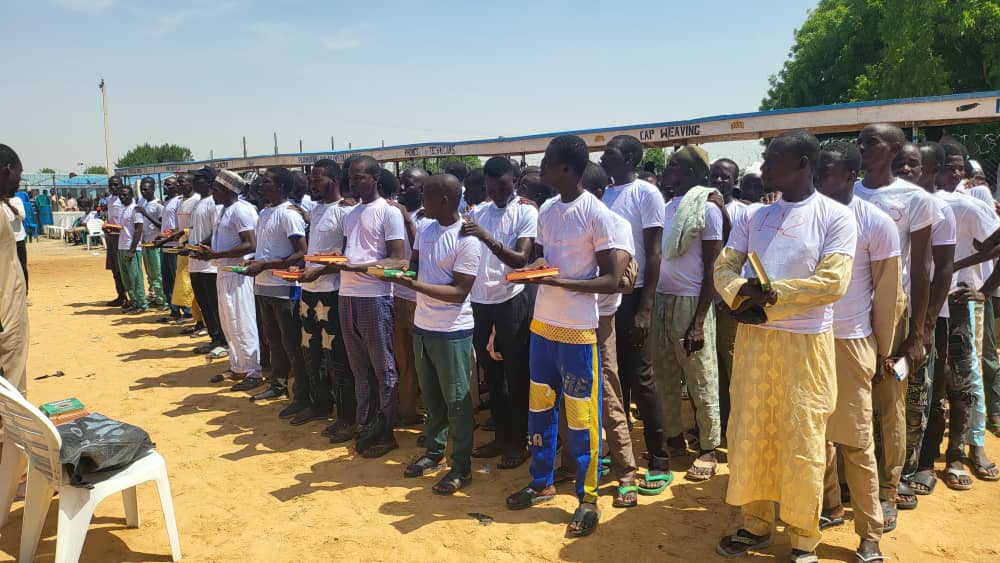
As the Nigerian military gains ground against insurgents, a critical question emerges: when a terrorist surrenders, does the threat dissipate or merely evolve into a new form, prompting urgent national concern and intense debate.
nThe recent surrender of two high-profile Islamic State West Africa Province (ISWAP) commanders, Ismail Mohammed and Abu Umar, on June 8, 2026, has been hailed by the military as evidence of the effectiveness of sustained pressure on insurgent ranks.
nHowever, this development has also reignited long-standing fears about the potential consequences of reintegrating former fighters into society, sparking a fierce argument across Nigeria's public space.
nThe debate was further fueled on April 16, 2026, when the Federal Government announced that 744 former insurgents had completed rehabilitation under the Operation Safe Corridor initiative and would be reintegrated into society, with 597 of them hailing from Borno State.
nThese beneficiaries, who also included nationals from Niger, Chad, Cameroon, and Burkina Faso, underwent psychosocial therapy, vocational training, civic education, and religious reorientation as part of their rehabilitation.
nRear Admiral Dickson Olisemelogor (rtd) has expressed skepticism about the reintegration policy, arguing that it carries a fundamental misunderstanding of extremist transformation, and that the process is more akin to disengagement than deradicalisation.
nAccording to Olisemelogor, deradicalisation entails a genuine change in ideology, which can only be confirmed over time, and that many so-called repentant Boko Haram fighters are not truly de-radicalised, but rather surrender due to military pressure or hunger.
nSome, he warned, may be sent to gather intelligence and infiltrate security agencies, only to return to their old group or form a new terror group when given the opportunity.
nA retired Brigadier General, who identified himself as Makinde, commended the troops of Operation HADIN KAI for their "professionally executed pressure campaign," but cautioned that the development must be treated with "structured suspicion and disciplined monitoring."
nMakinde expressed confidence in the Nigerian military's procedures, including debriefing, intelligence exploitation, and behavioural assessment, but emphasized the need for vigilance, as surrender can sometimes be a tactical move by insurgents seeking survival, access, or operational advantage.
nA serving Major General, speaking anonymously, echoed concerns about the reintegration process, stating that he had criticized the Operation Safe Corridor initiative and struggled to understand how former insurgents could be integrated into society.
nThe Major General cited the example of Jilli market, a Boko Haram supply hub that was recently bombed by the Air Force, and questioned how former insurgents could be reintegrated into a society where their former associates still operate.
nAminat Saudi, a Kano-based businesswoman who lost six relatives in Borno attacks, expressed a deeply personal perspective on the debate, arguing that the focus on reintegration has overlooked the victims of terrorist attacks.
nCoordinator of Operation Safe Corridor, Brigadier General Yusuf Ali, defended the programme, insisting that there is no evidence to suggest that rehabilitated insurgents have returned to terrorism, and that the initiative is a well-structured system of screening and support.
nAli emphasized that the integration of former insurgents is a collaborative effort between the state governments, traditional rulers, and security agencies, and that monitoring continues at the local level to ensure that the clients do not revert to their old ways.
nThe debate surrounding the reintegration of former insurgents has sparked a difficult security dilemma for Nigeria, with policymakers grappling with the challenge of balancing risk and hope in their quest to defeat terrorism.
nUltimately, the question of whether the threat posed by an insurgent truly ends when they lay down their weapon, or simply evolves into a new form, remains a pressing concern, and one that will continue to weigh heavily on the minds of Nigerians.
Related Stories
 General News
CELEBRATING TWO YEARS OF TRANSFORMATIONAL LEADERSHIP IN THE PRESIDENTIAL AMNESTY PROGRAMME
Tomorrow, 14TH March 2026, as we look forward to the second anniversary, we reflect on the remarkable two years since the Administrator of the Preside
 General News
PRESIDENTIAL AMNESTY PROGRAMME PHASE 3: DISREGARD PURPORTED STATEMENT ON DELAYED ITA PAYMENTS — OFFICE OF NATIONAL CHAIRMAN
The Office of the National Chairman of the Presidential Amnesty Programme Phase 3, General Elaye ThankGod Dollar Slaboh, has called on beneficiaries a
 General News
RE: CLARIFICATION ON MY PERSONAL RELATIONSHIPS
PUBLIC NOTICErnrnRE: CLARIFICATION ON MY PERSONAL RELATIONSHIPSrnrnIt has become necessary to make this public clarification following the increasing