
Redefining Family Ties: Science's Evolving Role in Parenthood, by Stephanie Shaakaa
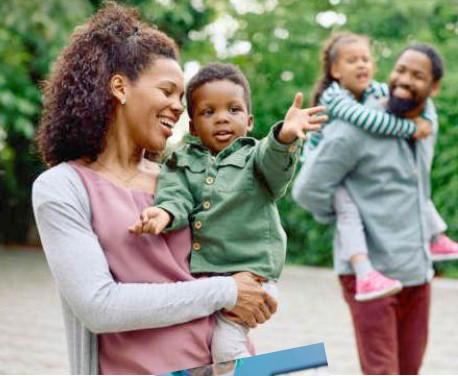
In a bygone era, the journey to parenthood unfolded with a predictable cadence, as if the sequence of events had been etched into the very fabric of human existence, with a man and a woman meeting, falling in love, and ultimately starting a family through marriage, intimacy, pregnancy, and birth, all intertwined in a seamless narrative of biology, emotion, duty, and belonging.
nHowever, this traditional script is no longer the sole blueprint for building a family, as modern parenthood can now commence in a laboratory, with the preservation of frozen eggs, the creation of embryos, and the signing of surrogacy agreements, all testifying to the profound impact of science, contracts, and deliberate design on the most intimate aspects of human life.
nThis seismic shift is not merely a medical breakthrough, but a fundamental transformation of the human experience, one that is quietly redefining the very essence of civilization at its most intimate point, where a woman can scroll through a genetic profile, choosing the beginnings of a future child with the same care that earlier generations once reserved for selecting a life partner.
nIn a different city, a professional who postponed motherhood to pursue a career can now return to the eggs she preserved, discovering that science has given her a second chance to converse with time, while elsewhere, two friends with no romantic involvement are entering a co-parenting agreement, convinced that emotional reliability matters more than the traditional script of marriage.
nAcross the globe, children are now arriving through pathways that were once the realm of science fiction, yet this is no longer the stuff of fiction, but the lived reality of our age, where science has expanded reproductive choice and separated things that history once treated as inseparable, such as sex and conception, pregnancy and motherhood, and marriage and parenthood.
nThe old questions that once asked who loves whom have given way to more disorienting inquiries, including who donated, who carried, who paid, who signed, who raises, and who belongs, and ultimately, who gets to be called a parent, as the language of freedom masks a deeper transformation, where family is no longer simply inherited through biology and custom, but is increasingly designed.
nFor millions confronting infertility, cancer recovery, delayed marriage, failed relationships, or the cruel hand of biology's clock, these technologies are not abstract concepts, but lifelines, offering people the power to stretch time, transcend loss, and defy the tyranny of conventional timelines, where a woman no longer has to tie motherhood to romantic luck, and a child no longer depends entirely on whether love arrived at the socially approved hour.
nThis freedom deserves recognition, but every expansion of freedom also rearranges the moral architecture around it, raising deeper questions about the consequences of a family that has become modular, selectable, and transactional, where genetic origins, gestation, legal custody, and emotional care can belong to different people, and where the story of one child can begin in multiple countries before birth.
nThe family has never been merely a reproductive mechanism, but the first school of memory, language, belonging, and moral inheritance, where human beings first learn trust, duty, tenderness, and the meaning of home, and when that architecture changes, society changes with it, as the fertility revolution is larger than fertility itself, and is about the redesign of the earliest human bond.
nEvery age remakes the family in its own image, and ours is shaping it through autonomy, medicine, commerce, and the radical belief that parenthood should no longer wait for perfect romance, stable marriage, or even physical intimacy, with profound beauty in that refusal to surrender hope, as the desire to nurture life remains one of humanity's most resilient instincts.
nYet, the very tools that solve one human problem may open another, as solving the question of how children are born may reopen the far deeper question of how belonging itself survives, where a child may now inherit genes from one person, gestation from another, legal recognition from a third arrangement, and emotional security from an entirely different household structure.
nLove may still be present, deeply and authentically so, but the path to that love now passes through laboratories, frozen time, legal frameworks, and the marketplace of possibility, creating a defining tension of our era, where the convergence of science, autonomy, commerce, and modern loneliness meets at the cradle, with the triumph of overcoming infertility, illness, delay, and even the limits of age, but with cultural consequences that are only beginning to unfold.
nOur legal systems must now rethink inheritance, our moral imagination must rethink parenthood, and our emotional cultures must rethink what children need to feel rooted in an age of designed origins, as the most important question is no longer whether science can create new roads to family, but what children themselves may one day ask of that freedom, in an age of donor anonymity, surrogate contracts, and designed origins.
nThe adult desire for parenthood may finally collide with the child's future desire for narrative wholeness, to know where they came from, whose face they carry, which history lives in their blood, and whether belonging can remain emotionally complete when its origins were fragmented by choice, forcing civilization to decide whether the right to create life is enough without an equally serious commitment to the child's right to coherent identity.
nThe real question is whether our social wisdom can evolve quickly enough to carry the emotional weight of those roads, as the child of the future may still arrive wrapped in love, but the road to that love now passes through intention rather than accident, design rather than destiny, and possibility rather than tradition, marking not the end of family, but family being rewritten in the image of our age.
nCivilization now stands at the cradle of its own reinvention, watching as science changes not only how life begins, but how humanity itself will understand identity, inheritance, memory, and belonging for generations yet unborn, as the journey to parenthood continues to unfold in unprecedented ways, with the future of family hanging in the balance.
Related Stories
 General News
CELEBRATING TWO YEARS OF TRANSFORMATIONAL LEADERSHIP IN THE PRESIDENTIAL AMNESTY PROGRAMME
Tomorrow, 14TH March 2026, as we look forward to the second anniversary, we reflect on the remarkable two years since the Administrator of the Preside
 General News
PRESIDENTIAL AMNESTY PROGRAMME PHASE 3: DISREGARD PURPORTED STATEMENT ON DELAYED ITA PAYMENTS — OFFICE OF NATIONAL CHAIRMAN
The Office of the National Chairman of the Presidential Amnesty Programme Phase 3, General Elaye ThankGod Dollar Slaboh, has called on beneficiaries a
 General News
RE: CLARIFICATION ON MY PERSONAL RELATIONSHIPS
PUBLIC NOTICErnrnRE: CLARIFICATION ON MY PERSONAL RELATIONSHIPSrnrnIt has become necessary to make this public clarification following the increasing