
Protecting Corrupt or Inept Nigerian Cabinet Members, by Tonnie Iredia
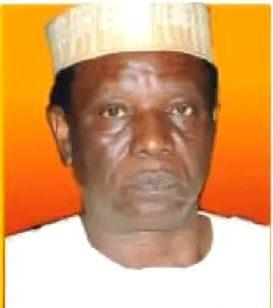
Nigeria's Interior Minister, Olubunmi Tunji-Ojo, has distinguished himself among President Bola Ahmed Tinubu's ministers by working tirelessly to revamp the image of his sector, notorious for corruption, since his appointment.
nNotably, Tunji-Ojo has maintained a low profile, focusing on policy issues and setting empirical targets for those under his supervision, which led to his recognition as Vanguard Personality of the Year just 48 hours ago.
nIn contrast, some ministers have managed to conceal their incompetence, while others, despite facing indictments, have been retained, possibly to maintain party unity or provide a soft landing.
nWhen President Tinubu took office, his appointment of Hadiza Bala Usman as Special Adviser to the President on Policy Coordination was expected to have a significant impact on the federal executive's performance, keeping appointees on their toes.
nHowever, the office failed to raise visible queries, leading to an atmosphere of inaction, reminiscent of former President Buhari's tenure, where appointees were rarely held accountable.
nThe calm was disrupted at the Ministry of Humanitarian Affairs and Poverty Alleviation, where millions of naira allegedly went missing under Minister Betta Edu's watch, prompting President Tinubu to suspend her.
nDespite initial excitement over the suspension, the matter has since been dormant, with no confirmation of guilt or sanctions, and a national weekly magazine even suggested she might have been quietly reinstated.
nIn July 2024, Betta Edu used her former ministry's letterhead to send condolence messages, and recently, she referred to President Tinubu as her boss while congratulating him on his 74th birthday.
nThe lack of action against indicted officials undermines the administration's image, as it appears that some individuals are being shielded from accountability, while others face trial for similar offenses.
nThis disparity raises questions about the government's commitment to fighting corruption, as a proper sack from office is not a sufficient punishment for corruption, and some accused individuals are not facing any sanctions.
nHistorically, governments in Nigeria have been reluctant to penalize indicted ministers, with the exception of Olusegun Obasanjo's government, which openly criticized a minister for misconduct.
nFormer President Muhammadu Buhari, during his 8-year tenure, only dropped two ministers, Saleh Mamman and Alhaji Sabo Nanono, without disclosing the reasons for their removal.
nThe government's failure to provide explanations for dropping ministers creates an impression that nothing significant happens in government, and the public is left unaware of officials who have proven incapable of serving.
nThis lack of transparency can have far-reaching consequences, such as allowing underperforming individuals to be elected into higher offices, like governorships, due to a lack of public awareness about their past performance.
nNigeria needs to adopt the doctrine of ministerial responsibility, which requires ministers to accept responsibility for their actions and outcomes, a principle firmly rooted in many democracies.
nIn civilized societies, leaders take responsibility for public events, even if they were not directly involved, and bow out in honor when things go wrong, as seen in the UK, where Sir Thomas Dugdale resigned as minister for agriculture in 1954.
nThe doctrine of ministerial responsibility facilitates democratic accountability, making officeholders answerable for decisions under their supervision, and promoting good governance, as exemplified in countries like Romania and India.
nIn Nigeria, however, the same events occur without anyone taking responsibility, as seen in recent protests by retired police operatives, university teachers, and medical doctors, with no response from the relevant ministers.
nThe absence of ministerial responsibility in Nigeria contributes to the country's underdevelopment, as it encourages lethargy in government and allows underperforming or indicted ministers to be shielded or given soft landings.
nThe recent departure of Wale Edun as Minister of Finance, without clear reasons, is another example of the lack of transparency and accountability in government, which would have been better addressed by disclosing his contributory negligence, if any, to the country's economic challenges.
Related Stories
 General News
CELEBRATING TWO YEARS OF TRANSFORMATIONAL LEADERSHIP IN THE PRESIDENTIAL AMNESTY PROGRAMME
Tomorrow, 14TH March 2026, as we look forward to the second anniversary, we reflect on the remarkable two years since the Administrator of the Preside
 General News
PRESIDENTIAL AMNESTY PROGRAMME PHASE 3: DISREGARD PURPORTED STATEMENT ON DELAYED ITA PAYMENTS — OFFICE OF NATIONAL CHAIRMAN
The Office of the National Chairman of the Presidential Amnesty Programme Phase 3, General Elaye ThankGod Dollar Slaboh, has called on beneficiaries a
 General News
RE: CLARIFICATION ON MY PERSONAL RELATIONSHIPS
PUBLIC NOTICErnrnRE: CLARIFICATION ON MY PERSONAL RELATIONSHIPSrnrnIt has become necessary to make this public clarification following the increasing