
President’s N4trn bond programme is resurrecting Nigeria’s power sector—Olu Verheijen, Adviser on Energy
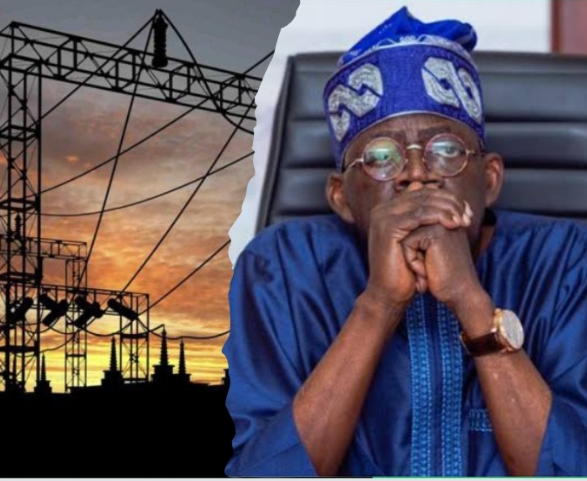
For more than a decade, Nigeria’s power sector laboured under a burden that made reliable electricity commercially impossible.
nThe problem was not merely infrastructure—though the gaps were severe. The fundamental challenge was financial. Years of unpaid obligations had accumulated across the value chain, eroding the credibility of market commitments and making it impossible to attract capital at scale.
nGenerators were owed billions for electricity delivered. Gas suppliers were owed billions for fuel already burned. Yet the obligations remained unpaid, and the market remained trapped in a cycle of illiquidity that left households and businesses with some of the most expensive and unreliable electricity in the world.
nPresident Bola Ahmed Tinubu decided to break that cycle.
nFinancial intervention
nIn 2025, the Federal Executive Council approved a N4 trillion bond programme designed to settle verified debts owed to 21 generation companies—covering legacy obligations accumulated from 2015 to March 2025. This was not a partial measure or a temporary fix. It was the most comprehensive financial intervention in the history of Nigeria’s power sector.
n“This financial reset has been paired with a focused programme of grid-led market redesign to improve performance and unlock growth,” explained Olu Verheijen, Special Adviser to the President on Energy. “Through rigorous verification, negotiated settlements, and a credible bond-backed framework, the programme is resolving legacy obligations and re-establishing the financial credibility required for sustained investment.”
nThe administration moved with unusual speed and precision. First came the verification process—meticulous, transparent, and designed to ensure that only legitimate claims would be settled. Then came the negotiations. When the process concluded, N3.48 trillion had been negotiated as full and final settlement of the verified claims—a reduction achieved through good-faith engagement between government and market participants.
nEight GenCos representing 17 power plants signed Final Settlement Agreements. The ¦ 2.3 trillion encompassed in those signed agreements represented a major step toward market rehabilitation.
nSerious intent
nBut the government’s commitment did not rest on signed agreements alone. The administration proceeded to raise capital from the markets. Series 1 of the bond programme—N501 billion—was launched and achieved 100 percent subscription. Capital markets had delivered their verdict: the government’s commitment to honour its obligations was credible.
nProceeds from the first tranche began disbursing to GenCos, providing immediate liquidity to a part of the value chain that had been starved of payment for years. Series 2, a ¦ 730 billion issuance scheduled for the second quarter of 2026, is designed to further extinguish outstanding debt. The process continues until full settlement is achieved.
n“The Presidential Power Sector Debt Reduction Programme—the most comprehensive financial intervention in the sector’s history—was established to restore liquidity, rebuild confidence, and stabilise the value chain,” Verheijen stated. “Through rigorous verification, negotiated settlements, and a credible bond-backed framework, the programme is resolving legacy obligations and re-establishing the financial credibility required for sustained investment.”
nBeyond the bond
nThe bond programme was never intended to stand alone. It is part of a broader market redesign focused on making Nigeria’s electricity sector bankable, investable, and capable of delivering electricity at scale.
nThe acceleration of the Presidential Metering Initiative is closing the metering gap at speed, deploying millions of smart meters to end estimated billing, improve collections, and reduce theft and commercial losses. With an additional $700 million secured, the initiative now has a pipeline capable of deploying approximately five million smart meters nationwide.
nNew generation capacity has also come online. The 700-megawatt Zungeru Hydroelectric project in Niger State, the 240-megawatt Afam III fast-power project, and the 40-megawatt Kashimbilla Hydropower project have added 980 megawatts to the grid—representing 7 percent of Nigeria’s 14 gigawatts of installed capacity.
nThe Subsidy Reform That Protects the Poor
nCritically, the administration has coupled its financial and infrastructure reforms with a targeted approach to customer support that replaces the regressive blanket subsidy system. Under the old system, high-consuming households—overwhelmingly the wealthiest Nigerians—received the largest subsidy benefits. The poor received almost nothing.
nPresident Tinubu’s tariff reforms have flipped that dynamic. The share of subsidy benefits flowing to vulnerable households has increased to 40 percent, while high-consumption households now receive a smaller proportion. Subsidies are made visible on bills so citizens can see exactly what support they are receiving. And the reforms have freed public resources previously consumed by wasteful subsidies for investment in health, education, and infrastructure.
nVerheijen captured the administration’s philosophy succinctly: “Targeted customer support frameworks are being introduced to protect the most vulnerable while reinforcing payment discipline across the market. Together, these reforms are improving service delivery and restoring the commercial viability of the electricity value chain.”
nThe foundation has been laid. The work of scaling investment and deepening market discipline continues
n nRelated Stories
 General News
CELEBRATING TWO YEARS OF TRANSFORMATIONAL LEADERSHIP IN THE PRESIDENTIAL AMNESTY PROGRAMME
Tomorrow, 14TH March 2026, as we look forward to the second anniversary, we reflect on the remarkable two years since the Administrator of the Preside
 General News
PRESIDENTIAL AMNESTY PROGRAMME PHASE 3: DISREGARD PURPORTED STATEMENT ON DELAYED ITA PAYMENTS — OFFICE OF NATIONAL CHAIRMAN
The Office of the National Chairman of the Presidential Amnesty Programme Phase 3, General Elaye ThankGod Dollar Slaboh, has called on beneficiaries a
 General News
RE: CLARIFICATION ON MY PERSONAL RELATIONSHIPS
PUBLIC NOTICErnrnRE: CLARIFICATION ON MY PERSONAL RELATIONSHIPSrnrnIt has become necessary to make this public clarification following the increasing