
President Trump indicates low probability of US approving freshly introduced Iranian peace plan
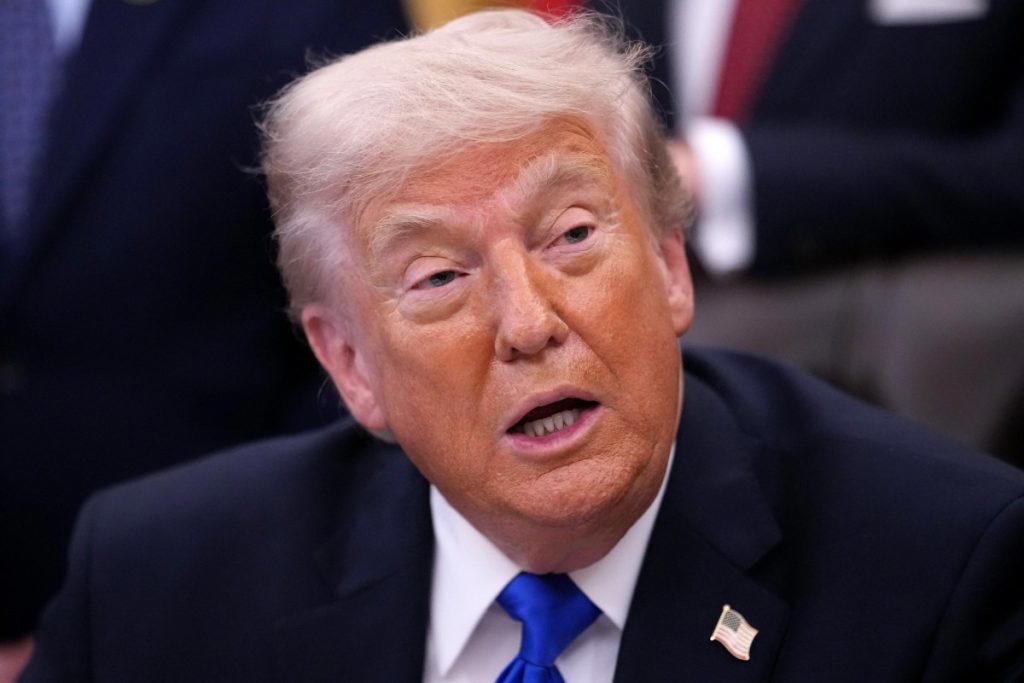
US President Donald Trump said Saturday he will review a new Iranian peace proposal, but cast doubt over its prospects as he left open the possibility of future attacks on Iran.
nNegotiations between the two countries have been deadlocked since a ceasefire came into effect on April 8, with one round of peace talks to end the more than two-month war having failed in Pakistan.
nThe dour outlook came after Iran’s Tasnim and Fars news agencies reported Tehran submitted a 14-point proposal to mediator Islamabad. Details included ending the conflict on all fronts and enacting a new framework for the crucial Strait of Hormuz, Tasnim said.
n“I will soon be reviewing the plan that Iran has just sent to us, but can’t imagine that it would be acceptable in that they have not yet paid a big enough price for what they have done to Humanity, and the World, over the last 47 years,” Trump said on his Truth Social platform.
nIn a brief interview with reporters in West Palm Beach, Florida, he declined to specify what could trigger new military action against the Islamic republic.
n“If they misbehave, if they do something bad, but right now, we’ll see,” he said. “But it’s a possibility that could happen, certainly.”
nOn Saturday, Mohammad Jafar Asadi, a senior figure in the Iranian military’s central command, said “a renewed conflict between Iran and the United States is likely.”
n“Evidence has shown that the United States is not committed to any promises or agreements,” he added, according to Fars news agency.
nDeputy foreign minister Kazem Gharibabadi told diplomats in Tehran “the ball is in the United States’ court to choose the path of diplomacy or the continuation of a confrontational approach.”
nIran, he said, was “prepared for both paths.”
n– ‘Hypocritical’ –
nUS news site Axios reported earlier in the week that Trump’s envoy Steve Witkoff had asked for Tehran’s nuclear program to be put back on the negotiating table.
nIran’s mission to the UN pointed to the massive US nuclear arsenal, accusing Washington on Saturday of “hypocritical behavior” towards Iran’s own atomic ambitions.
nThere was no legal “restriction on the level of uranium enrichment, so long as it is conducted under the IAEA’s supervision, as was the case with Iran,” it said, using the abbreviation for the UN nuclear watchdog.
nIran has maintained a stranglehold on the Strait of Hormuz since the war began, choking off major flows of oil, gas and fertilizer to the world economy, while the United States has imposed a counter-blockade on Iranian ports.
nOil prices are about 50 percent above pre-war levels.
nThe vice speaker of Iran’s parliament, Ali Nikzad, said that under draft legislation being considered for managing the waterway, 30 percent of tolls collected would go towards military infrastructure, with the rest earmarked for “economic development.”
n“Managing the Strait of Hormuz is more important than acquiring nuclear weapons,” he said.
nFighting meanwhile continued Saturday in Lebanon, where Israel has carried out deadly strikes despite a separate truce with the Iran-backed armed group Hezbollah.
nThe Israeli military said it had struck dozens of Hezbollah targets across southern Lebanon following evacuation warnings for nine villages.
nLebanon’s state-run National News Agency (NNA) reported three deaths in the attacks.
nHezbollah, for its part, claimed several attacks targeting Israeli troops.
nThe Israeli strikes included one in the village of Yaroun on what its military called a “religious building,” which was damaged.
nThe French Catholic charity L’Oeuvre d’Orient said the troops had “destroyed” a convent belonging to the Salvatorian Sisters, a Greek-Catholic religious order with which the charity is affiliated.
n– Iran’s economic toll –
nIn Washington, lawmakers were wrestling over whether Trump had breached a deadline to seek congressional approval for the war.
nAdministration officials argue the ceasefire paused a 60-day clock, after which congressional authorisation would be required — a claim disputed by opposition Democrats.
nIn Iran, the war’s economic toll is deepening, with oil exports crimped and inflation surging past 50 percent.
n“Everyone is trying to endure it, but… they are falling apart,” 40-year-old Amir, a Tehran resident, told an AFP reporter based outside the country.
n“We still have not seen much of the economic effects because everyone had a bit of savings. They had some gold and dollars for a rainy day. When they run out, things will change.”
n nRelated Stories
 General News
CELEBRATING TWO YEARS OF TRANSFORMATIONAL LEADERSHIP IN THE PRESIDENTIAL AMNESTY PROGRAMME
Tomorrow, 14TH March 2026, as we look forward to the second anniversary, we reflect on the remarkable two years since the Administrator of the Preside
 General News
PRESIDENTIAL AMNESTY PROGRAMME PHASE 3: DISREGARD PURPORTED STATEMENT ON DELAYED ITA PAYMENTS — OFFICE OF NATIONAL CHAIRMAN
The Office of the National Chairman of the Presidential Amnesty Programme Phase 3, General Elaye ThankGod Dollar Slaboh, has called on beneficiaries a
 General News
RE: CLARIFICATION ON MY PERSONAL RELATIONSHIPS
PUBLIC NOTICErnrnRE: CLARIFICATION ON MY PERSONAL RELATIONSHIPSrnrnIt has become necessary to make this public clarification following the increasing