
PRESIDENT TINUBU SIGNS NEW TAX LAWS
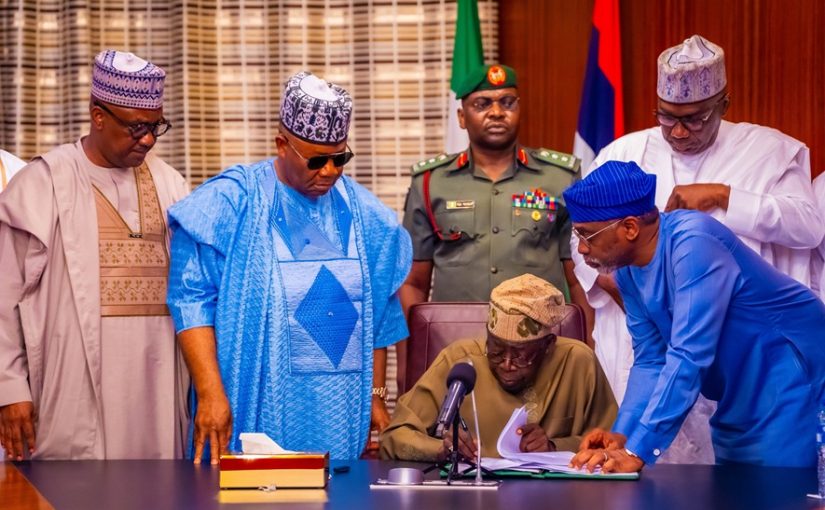
Nigeria’s Tinubu signs new tax laws rnrnNigerian President Bola Tinubu has signed four new tax laws, marking the latest chapter in his push to reform the economy of Africa’s most populous nation.rnrnThe new rules, which overhaul some levies that date back to Nigeria’s colonial era, are designed to boost government revenue as a share of gross domestic product from levels that rank it among the lowest in the world.rnrnThey will reduce taxes for low-income households and small businesses while making the wealthy and larger companies pay more. The bills are the most significant reforms since the president loosened currency rules and phased out fuel subsidies after taking office in 2023.rnrn“These new laws represent more than fiscal reform,” Tinubu said at the signing ceremony in Abuja, the capital, according to a text of his remarks. “They reflect our commitment to fairness, transparency, and national development.”rnrnChanges include offering Nigerians a first-ever conditional rebate of 20% on annual rent.rnrnThe government hopes to lift the tax share of GDP to 18% by 2030 from around 13% at the moment.rnrnTinubu will have to rely on Nigeria’s 36 state governors and 774 council heads to implement some aspects of the new laws, especially the exclusion of small businesses from certain taxes — a point he noted in his remarks.rnrn“Let me be clear, signing these bills into law is only the beginning,” he said. “Implementation must be decisive, coordinated, and inclusive.”rnrnThe government will allow a three-month window before implementation begins to give businesses time to adjust to the changes, Taiwo Oyedele, who headed the tax reform committee, said in October.rnrnTaken as a whole, Tinubu’s reforms have helped improve investor sentiment toward Nigeria, even as they were initially blamed for fanning a cost-of-living crisis that sparked deadly protests last year.rnrnForeign exchange reserves have increased and the naira has stabilised following a 70% depreciation against the dollar that was partly due to the removal of its peg against the US currency. In May, Moody’s Ratings upgraded the country’s foreign currency debt rating.
Related Stories
 NEWS
NEWS𝗕𝗔𝗬𝗘𝗟𝗦𝗔 𝗔𝗣𝗖 𝗠𝗘𝗗𝗜𝗔 𝗗𝗜𝗥𝗘𝗖𝗧𝗢𝗥 𝗚𝗘𝗡𝗘𝗥𝗔𝗟 𝗘𝗚𝗕𝗘𝗥𝗜 𝗖𝗢𝗨𝗡𝗧𝗘𝗥𝗦 𝗚𝗢𝗩𝗘𝗥𝗡𝗢𝗥 𝗗𝗜𝗥𝗜 𝗢𝗡 𝗣𝗜𝗔
The Director General of the Bayelsa State APC Media Team, Mr. Aye S. O. Egberi, has faulted Governor Douye Diri’s recent comments on the Petroleum Ind
 NEWS
NEWSPAP Third Phase Leadership Visits Federal University Otuoke, Seeks Partnership
The National Leadership of the Presidential Amnesty Programme (PAP), Third Phase, on Monday, October 20, 2025, paid a courtesy visit to the management
 NEWS
NEWSPresidential Amnesty Programme and Wigwe University Forge Strategic Alliance to Empower Niger Delta Youths.
Presidential Amnesty Programme and Wigwe University Forge Strategic Alliance to Empower Niger Delta Youths.rnrnIn a landmark meeting that signals a ne