
Power Sector: Financial Strains Intensify as Government Covers Only 4% of N1.9 Trillion Subsidy Burden
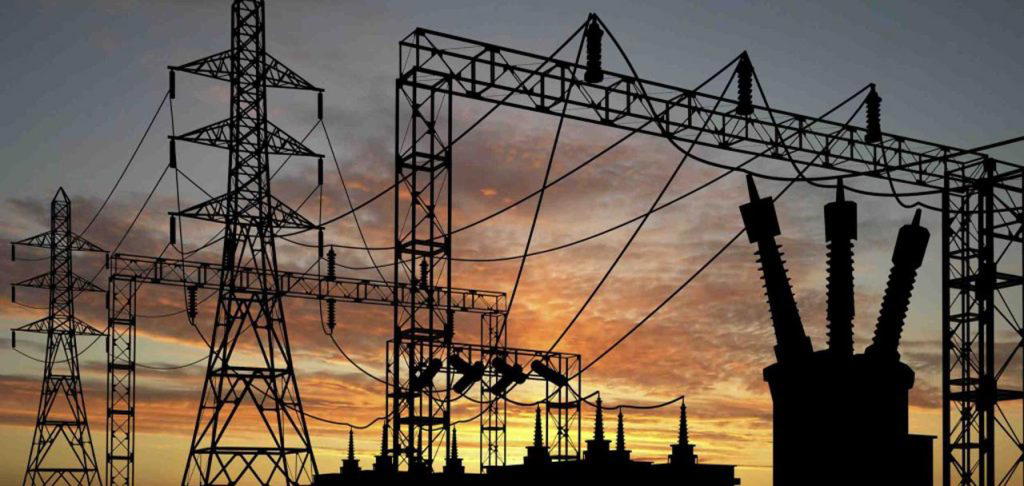
The Federal Government's failure to fulfill its financial commitments to power generation companies has exacerbated the crisis in the already struggling electricity sector, with recent data indicating that it paid a mere N76.95 billion, approximately four percent of the N1.928 trillion subsidy required in 2025.
nThis substantial shortfall occurred despite the government's allocation of N958 billion for electricity subsidies in 2025, resulting in a significant outstanding liability of about N1.85 trillion, as only N76.95 billion was actually released.
nA quarterly analysis of data from the Nigerian Electricity Regulatory Commission reveals that subsidy obligations were substantial, standing at N536.40 billion in the first quarter of 2025, before declining slightly to N514.36 billion in the second quarter.
nThe subsidy obligations continued to decrease, dropping to N458.76 billion in the third quarter and eventually settling at N418.79 billion in the fourth quarter, according to the Nigerian Electricity Regulatory Commission's data.
nThe electricity subsidy for January 2026 alone was a staggering N126.48 billion, highlighting the persistent funding gap and the government's inability to meet its financial obligations, as disclosed by the Nigerian Electricity Regulatory Commission.
nIndustry analysts attribute the government's failure to meet its obligations to the sector's fragile financial state, which has left generation companies unable to pay gas suppliers for fuel used in power plants, ultimately resulting in reduced supply volumes and a significant decline in electricity generation and supply nationwide.
nExperts also point to the inadequate funding of the Nigerian Bulk Electricity Trading Plc as a contributing factor to the crisis, as it is the market's central offtaker and plays a crucial role in the sector.
nFormer Managing Director of the Niger Delta Power Holding Company, Mr. Chiedu Ugbo, criticized the ongoing public disagreements over the actual debt figures, describing them as unhelpful and counterproductive in addressing the sector's challenges.
nUgbo emphasized that the focus should be on finding practical solutions rather than engaging in public disputes, stating that "At a time when Nigerians are grappling with intense heat, reduced productivity, and the real economic and social consequences of inadequate electricity supply, it is difficult to justify public disputes over figures instead of focusing on practical solutions."
nHe further noted that "This is a time for leadership and collaboration, not blame-shifting, we must confront our realities with honesty and a shared sense of responsibility," highlighting the need for collective action to address the sector's challenges.
nUgbo acknowledged that the Nigerian Bulk Electricity Trading Plc cannot deny the significant outstanding indebtedness to generation companies and other creditors, but also noted that generation companies must recognize that the situation is not entirely the fault of the Nigerian Bulk Electricity Trading Plc.
nHe explained that the debt is a sector-wide issue arising from long-standing collection inefficiencies, tariff shortfalls, and structural gaps, and that the Nigerian Bulk Electricity Trading Plc essentially plays a clearing house role within the market.
nUgbo warned that public disputes between the Nigerian Bulk Electricity Trading Plc and generation companies would only exacerbate the situation, stating that "There is no scenario in which GenCos will be paid on unreconciled amounts, just as there is no viable electricity market where GenCos, NBET, gas suppliers, and regulators operate as adversaries rather than partners."
nFormer Managing Director of the Nigerian Bulk Electricity Trading Plc, Mr. Rumundaka Wonodi, emphasized the importance of timely payments to generation companies, stating that the Nigerian Bulk Electricity Trading Plc was established as a creditworthy central offtaker and load aggregator.
nWonodi noted that the partnership between the Nigerian Bulk Electricity Trading Plc and generation companies is built on full and timely settlement of invoices, and that this is what will best serve the sector, adding that a similar partnership between the Nigerian Bulk Electricity Trading Plc and distribution companies will also benefit both the sector and consumers.
nHe disagreed with the notion that generation companies should be understanding because the situation is not the Nigerian Bulk Electricity Trading Plc's fault, stating that the Nigerian Bulk Electricity Trading Plc is effectively a proxy for the government, and that the government must step up and adequately fund the Nigerian Bulk Electricity Trading Plc to meet its obligations.
Related Stories
 General News
CELEBRATING TWO YEARS OF TRANSFORMATIONAL LEADERSHIP IN THE PRESIDENTIAL AMNESTY PROGRAMME
Tomorrow, 14TH March 2026, as we look forward to the second anniversary, we reflect on the remarkable two years since the Administrator of the Preside
 General News
PRESIDENTIAL AMNESTY PROGRAMME PHASE 3: DISREGARD PURPORTED STATEMENT ON DELAYED ITA PAYMENTS — OFFICE OF NATIONAL CHAIRMAN
The Office of the National Chairman of the Presidential Amnesty Programme Phase 3, General Elaye ThankGod Dollar Slaboh, has called on beneficiaries a
 General News
RE: CLARIFICATION ON MY PERSONAL RELATIONSHIPS
PUBLIC NOTICErnrnRE: CLARIFICATION ON MY PERSONAL RELATIONSHIPSrnrnIt has become necessary to make this public clarification following the increasing