
POWER FAILURE: Nigeria loses 3,100 GWh to gas flaring
•NUPRC, NOSDRA disagree on volume
nBy Ediri Ejoh
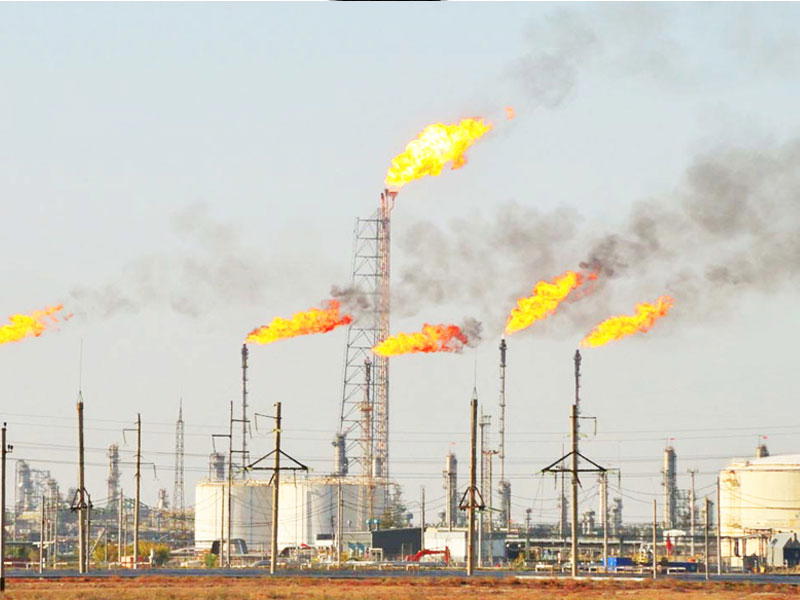
nThere are indications that the Federal Government’s ambition to transform Nigeria into a gas-driven economy by 2030 is facing significant challenges, as the country lost an estimated 3,100 gigawatt-hours (GWh) of electricity generation potential to persistent gas flaring by oil companies in May 2026.
nThis came as figures released by the Nigerian Upstream Petroleum Regulatory Commission (NUPRC) differed from those of the National Oil Spill Detection and Response Agency (NOSDRA) on the volume of gas flared during the period.
nWhile the NUPRC recorded 17.6 million standard cubic feet (MMSCF) of gas flared in May 2026, NOSDRA put the figure at 30.7 million standard cubic feet (MSCF).
nData obtained from NOSDRA’s latest report showed that the monetary value of the gas flared during the period stood at $107.5 million.
nAccording to the agency, the defaulting companies, including International Oil Companies (IOCs), are liable to penalties amounting to $61.4 million.
nProviding a breakdown of flaring across oilfields, NOSDRA disclosed that gas flaring by companies operating onshore rose by 62.3 per cent to 22.3 MSCF, compared to 8.4 MSCF flared offshore.
nThe agency further stated that the volume of gas flared during the review period translated into carbon dioxide emissions estimated at 1.6 million tonnes.
nNOSDRA lamented that despite efforts to curb the practice, gas flaring has persisted in Nigeria since the 1950s, releasing carbon dioxide and other harmful gases into the atmosphere.
nThe Federal Government has repeatedly stated its commitment to the “Decade of Gas” initiative.
nUnder the initiative, launched in 2021, Nigeria aims to become a gas-powered economy by 2030 through improved power supply, industrial utilisation and increased gas exports.
nA government report obtained by Vanguard stated that “increasing gas utilisation for power generation and incentivising investments in the gas value chain” remain top priorities.
nVanguard gathered that gas flaring has remained persistently high despite increased investments in the gas sector, suggesting that inflows into the industry have not translated into proportional improvements in gas production and utilisation.
nChecks by Vanguard also indicated that Nigeria’s inability to consistently generate more than 4,000 megawatts (MW) of electricity for households and businesses is partly linked to inadequate gas supply to Electricity Generation Companies (GenCos).
nMeanwhile, the Renevlyn Development Initiative, RDI, has urged the Federal Government to impose an outright ban on gas flaring, arguing that oil companies operating in the Niger Delta are more comfortable paying penalties than ending the practice.““RDI’s position followed recent data from the Nigerian Oil Spill Monitor covering March 2012 to 2025, which showed that oil companies operating in Nigeria paid an estimated $646 million in gas flaring penalties in 2025, the highest in the last five years.
n nRelated Stories
 General News
CELEBRATING TWO YEARS OF TRANSFORMATIONAL LEADERSHIP IN THE PRESIDENTIAL AMNESTY PROGRAMME
Tomorrow, 14TH March 2026, as we look forward to the second anniversary, we reflect on the remarkable two years since the Administrator of the Preside
 General News
PRESIDENTIAL AMNESTY PROGRAMME PHASE 3: DISREGARD PURPORTED STATEMENT ON DELAYED ITA PAYMENTS — OFFICE OF NATIONAL CHAIRMAN
The Office of the National Chairman of the Presidential Amnesty Programme Phase 3, General Elaye ThankGod Dollar Slaboh, has called on beneficiaries a
 General News
RE: CLARIFICATION ON MY PERSONAL RELATIONSHIPS
PUBLIC NOTICErnrnRE: CLARIFICATION ON MY PERSONAL RELATIONSHIPSrnrnIt has become necessary to make this public clarification following the increasing