
Peter Obi and the hard road to a new Nigeria
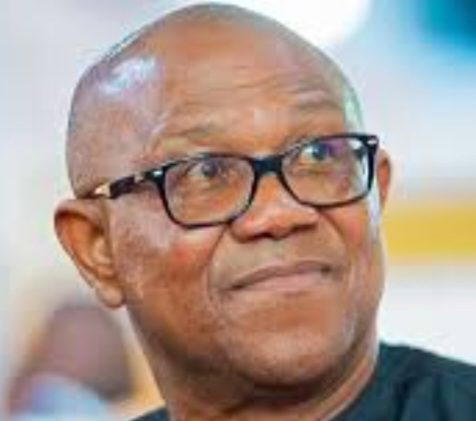
Peter Obi
nBy Fred Chukwuelobe
nPeter Obi, presidential candidate of the Nigeria Democratic Congress (NDC) in the 2027 election, sat down with Arise Television anchor Ojy Okpe for an extensive conversation on the election and a wide range of issues confronting Nigeria. It was one of those interviews that leaves you with plenty to think about long after the television has gone off.
nObi spoke about his plans to ensure that the votes of Nigerians are respected, what he would do if he loses a free, fair and credible election, his relationship with the North and how he intends to win over northerners, some of whom still harbour resentment over the 1966 coup and the subsequent civil war in which the Igbo were accused of responsibility. He also spoke about leadership, fuel subsidy, corruption, his priorities and how he intends to hit the ground running from day one.
nThere were many takeaways from the interview, which I found engaging and interesting.
nIf wishes were horses, Peter Obi’s plans could indeed be a pathway to a more successful Nigeria. As he has repeatedly put it, “A new Nigeria is possible.”
nObi came across as a man who believes he is prepared to lead. He spoke confidently about his experience as governor of Anambra State, his travels around the world and his academic background. He spoke about what he believes he did right in Anambra and why he thinks those experiences can be replicated at the national level.
nListening to him, one gets the impression of a man who is knowledgeable, focused and determined to make a difference.
nOne statement, however, particularly caught my attention: that nobody born since Nigeria’s independence in 1960 has ever ruled the country. That is instructive.
nBut I must disagree with the increasingly fashionable argument that Nigeria’s problem is simply that the older generation has refused to give way to the youths.
nThe evidence does not entirely support that argument.
nWe have had young people in positions of authority, and their performances have not necessarily demonstrated that age is the principal problem. The so-called leaders of tomorrow have, in many instances, shown themselves to be inexperienced, compromised or incapable of providing the type of leadership Nigeria desperately needs.
nNeither do I believe that our fundamental problem is a lack of educational qualifications among political office holders.
nThis is not, in any way, an endorsement of the falsification or forgery of academic credentials. But Nigeria has had professors, PhD holders, priests, lawyers, technocrats and graduates of some of the world’s finest universities occupying positions of authority. Their academic credentials have not automatically translated into good governance.
nEducation is an advantage. It is not, by itself, a guarantee of leadership.
nAnd while Peter Obi’s experience as governor of Anambra State is an important credential, I do not believe that it is, on its own, sufficient preparation for the enormous responsibility of governing a country as complicated as Nigeria.
nNigeria is not Anambra.
nNigeria is a country of more than 250 ethnic nationalities, competing interests, deep religious and regional sensitivities and a political culture in which too many people appear to be more interested in what they can extract from the country for themselves, their families or their ethnic groups than in what they can contribute to its development.
nFor me, the biggest obstacle to Nigeria’s progress remains corruption.
nIt is systemic, systematic, pervasive and, sadly, socially tolerated.
nIf Nigeria is ever going to make meaningful progress, whoever occupies the presidency must be prepared to confront corruption with unusual courage: not merely the corruption of politicians, but corruption wherever it exists.
nPeter Obi is widely perceived as somebody capable of doing this.
nBut that is precisely where the real challenge begins.
nHe will have to contend with corrupt politicians, a compromised judiciary, an inefficient civil service, elements within the security architecture, corruptible religious and traditional institutions and, perhaps most importantly, a society in which corruption has become so normalised that some people now consider it a legitimate pathway to wealth.
nPeter Obi will not be fighting corruption alone. He will be fighting a system that has beneficiaries at virtually every level.
nHe will need tough people around him. He will need institutions that are prepared to enforce his policies. He will need political allies who understand that public office is a responsibility, not an investment.
nAnd he will need the courage to confront people who may have helped him get into office.
nThat is where the real test of leadership will come.
nHow, for instance, will he deal with an unproductive National Assembly whose finances are charged to the first-line revenues of the federation?
nHow will he reform a judiciary whose independence is constitutionally protected but whose administration and financing remain part of a much larger governance problem?
nHow will he reduce the size and inefficiency of an overbloated civil service, much of which is still trapped in the old culture of moving files from one table to another?
nHow will he dismantle the bureaucratic bottlenecks that have turned red tape into an unofficial arm of government?
nThese are not academic questions. They are the issues that will confront whoever becomes president.
nI am not being pessimistic. At least, I hope I am not. But talk is cheap.
nA presidential campaign is the easiest part of the journey. The real work begins after the swearing-in ceremony, when the campaign promises meet the realities of a country that has resisted reform for decades.
nPeter Obi may enter Aso Rock with the best intentions. He may discover, as many before him have discovered, that the enormity of Nigeria’s problems is considerably greater than they appeared from outside government.
nIt will take more than words, statistics, PowerPoint presentations and carefully crafted promises to change Nigeria.
nThis, however, does not mean that Obi, or any other presidential aspirant, should throw his hands in the air and surrender to the mismanagement, lack of accountability, abuse of power, corruption and bigotry that have combined to hold Nigeria down since 1999.
nSomeone must confront them. Someone must start.
nPerhaps the most important part of Obi’s interview, for me, was his response to the question of the 1966 coup.
nFor decades, the coup has been described in simplistic terms as an “Igbo coup”. That narrative has contributed significantly to the suspicion, bitterness and historical grievances that eventually helped push Nigeria into the 1967–1970 civil war.
nI believe the time has come for Nigeria to move beyond this.
nHistory must be remembered, but it must not become a permanent prison.
nAs Obi pointed out, Rwanda went through an even more devastating experience of ethnic bloodletting and national trauma, yet the country has managed, over time, to rise above its past and build one of Africa’s more organised and progressive societies. Nigeria must learn to do the same.
nPoliticians who continue to weaponise the events of 1966 to divide Nigerians should be told that the argument has become stale. It is time to stop using the wounds of history as campaign ammunition.
nThe children and grandchildren of those who fought that war are still living together, doing business together, marrying one another and building lives together.
nWhat exactly are we going to achieve by perpetually reopening the wounds?
nNigeria needs a new conversation about itself.
nA conversation about unity without pretending that our differences do not exist. A conversation about justice without turning every injustice into an ethnic contest. A conversation about leadership that goes beyond whether the president is young or old, Christian or Muslim, northern or southern, Igbo, Hausa, Yoruba or from any other ethnic group.
nPeter Obi’s interview was filled with hope.
nBut the Nigerian situation is much deeper than he made it appear.
nChanging Nigeria will require more than a good president. It will require strong institutions, disciplined political leadership, a courageous civil service, an independent judiciary, a professional security architecture and, most importantly, a citizenry prepared to demand accountability and to stop rewarding corruption at the ballot box.
nIt will take time. It will take sacrifice. It will take consistency. And it will take leaders who are prepared to do the right thing even when doing the right thing is politically inconvenient.
nIf Peter Obi gets his way, as he hopes to, perhaps a new Nigeria may indeed be possible.
nBut the bigger question is whether Nigerians are ready to walk with him on that difficult road.
nBecause changing Nigeria is not going to be the job of Peter Obi alone; it will be the job of Nigeria.
n nRelated Stories
 General News
CELEBRATING TWO YEARS OF TRANSFORMATIONAL LEADERSHIP IN THE PRESIDENTIAL AMNESTY PROGRAMME
Tomorrow, 14TH March 2026, as we look forward to the second anniversary, we reflect on the remarkable two years since the Administrator of the Preside
 General News
PRESIDENTIAL AMNESTY PROGRAMME PHASE 3: DISREGARD PURPORTED STATEMENT ON DELAYED ITA PAYMENTS — OFFICE OF NATIONAL CHAIRMAN
The Office of the National Chairman of the Presidential Amnesty Programme Phase 3, General Elaye ThankGod Dollar Slaboh, has called on beneficiaries a
 General News
RE: CLARIFICATION ON MY PERSONAL RELATIONSHIPS
PUBLIC NOTICErnrnRE: CLARIFICATION ON MY PERSONAL RELATIONSHIPSrnrnIt has become necessary to make this public clarification following the increasing