
People with disabilities demand representation in government, urge federal and state authorities to allocate them positions.
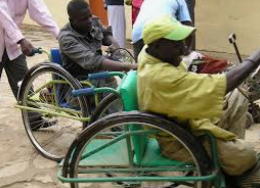
Persons with disabilities are urging federal and state governments to set aside legislative seats specifically for them, emphasizing that this is crucial for effectively tackling the challenges they face on a daily basis. The call for reserved seats is rooted in the belief that inclusive governance is essential for addressing the unique needs of PWDs.
nThe demand for legislative representation was made during a town hall meeting organized by News Central TV in Asaba, Delta State, which brought together over 200 stakeholders, including policymakers, advocates, and members of the disability community. This diverse group of participants gathered to discuss the obstacles to inclusion and potential pathways for reform.
nThe town hall meeting, sponsored by The Albino Foundation Africa, shed light on pressing issues such as the limited access to education and healthcare, high unemployment rates, and the weak enforcement of laws designed to protect the rights of PWDs. These issues were highlighted as major barriers to the full participation of PWDs in society.
nIsaac Odjuwu, President of the Initiative for Social Justice and Inclusive Development, stressed that the involvement of PWDs in the lawmaking process is vital to ensuring that their needs are properly addressed. He argued that it is essential to have PWDs in legislative positions, saying "You cannot make laws that affect us without us".
nOdjuwu's remarks were echoed by other participants, who shared their personal experiences of discrimination and systemic neglect, highlighting the need for greater representation and inclusion. A visually impaired teacher, Sola Idowu, shared his struggles to secure employment since 2014, despite his qualifications and abilities.
nChinedu Uwabuofu, another participant, described the difficulties he faced due to inaccessible facilities at Delta State University, which forced him to sit outside lecture halls, further marginalizing him. These personal stories underscored the need for tangible change and greater support for PWDs.
nThe Asagba of Asaba, Epiphany Azinge, emphasized the importance of stronger implementation of existing laws, while other speakers stressed the need to remove structural barriers and promote equal participation for all. This call to action was reinforced by the Managing Director of News Central, Kayode Akintemi.
nKayode Akintemi reaffirmed News Central's commitment to amplifying the voices of marginalized communities, including PWDs, and promoting greater inclusion and understanding. This commitment is seen as a crucial step towards creating a more just and equitable society.
Related Stories
 General News
CELEBRATING TWO YEARS OF TRANSFORMATIONAL LEADERSHIP IN THE PRESIDENTIAL AMNESTY PROGRAMME
Tomorrow, 14TH March 2026, as we look forward to the second anniversary, we reflect on the remarkable two years since the Administrator of the Preside
 General News
PRESIDENTIAL AMNESTY PROGRAMME PHASE 3: DISREGARD PURPORTED STATEMENT ON DELAYED ITA PAYMENTS — OFFICE OF NATIONAL CHAIRMAN
The Office of the National Chairman of the Presidential Amnesty Programme Phase 3, General Elaye ThankGod Dollar Slaboh, has called on beneficiaries a
 General News
RE: CLARIFICATION ON MY PERSONAL RELATIONSHIPS
PUBLIC NOTICErnrnRE: CLARIFICATION ON MY PERSONAL RELATIONSHIPSrnrnIt has become necessary to make this public clarification following the increasing