
Oyo struggles with learning setback as more than 670,000 youngsters are deprived of education
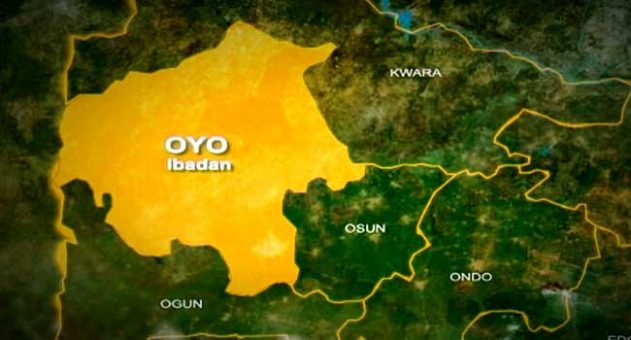
Education stakeholders in Oyo State have sounded the alarm on a worsening basic education crisis, with hundreds of thousands of children still out of school despite recent government initiatives and funding commitments, according to Adeola Badru in Ibadan.
nSpeaking at a stakeholders' engagement, Programme Director of Educare Trust, Folorunsho Moshood, described the situation in Oyo State as a "troubling paradox of progress and persistent systemic failure", where the state has made progress in expanding access to basic education and modernising classrooms, but still faces a learning crisis and high exclusion rates.
nAccording to Moshood, Oyo State requires urgent, coordinated national and sub-national responses to address these challenges, which are exacerbated by poverty, distance, hidden costs, and lack of interest.
nData from the 2022/2023 Annual School Census reveals that Oyo State has one of the largest student populations in south-west Nigeria, with over two million pupils in public primary schools alone, second only to Lagos.
nHowever, the state records the highest number of out-of-school children in the region, with approximately 674,324 children aged 3 to 17, or about 20.1 per cent, excluded from education, which Moshood described as "a national emergency".
nMoshood cited structural drivers such as poverty, distance, hidden costs, and lack of interest, which require stronger policy enforcement and social protection measures to address the crisis.
nWhile the government recently announced that 60,000 children had been returned to classrooms, stakeholders stressed that this figure represents only a fraction of those still excluded from education.
nOn infrastructure, Moshood noted that many public schools lack usable classrooms, toilets, WASH facilities, functional libraries, and sporting amenities, which hinder effective teaching and learning.
nMoshood emphasized that the environment must be conducive for learning to thrive, which is a fundamental issue of quality, not just access.
nStakeholders also raised concerns about uneven teacher distribution, particularly in rural areas, and gaps in special education, with qualified teachers often reluctant to accept postings to underserved communities.
nDespite government efforts, including the payment of over N3.5 billion in counterpart funding to access Universal Basic Education Commission grants, stakeholders insisted that funding must translate into measurable outcomes.
nConcerns were also raised over the stalled implementation of the national intervention targeting out-of-school children, with Oyo State capturing only 7,768 children, just 29 per cent of the 27,000 target, under a 2025 initiative by the National Commission on Almajiri and Out-of-School Children Education.
nMoshood warned that delays in the programme risk eroding public confidence and undermining future interventions, and stakeholders called for stronger accountability mechanisms and improved student welfare systems.
nThe stakeholders concluded that ensuring every child has access to quality education is fundamental to Nigeria's future, and that anything less risks deepening inequality and weakening the nation's human capital development.
Related Stories
 General News
CELEBRATING TWO YEARS OF TRANSFORMATIONAL LEADERSHIP IN THE PRESIDENTIAL AMNESTY PROGRAMME
Tomorrow, 14TH March 2026, as we look forward to the second anniversary, we reflect on the remarkable two years since the Administrator of the Preside
 General News
PRESIDENTIAL AMNESTY PROGRAMME PHASE 3: DISREGARD PURPORTED STATEMENT ON DELAYED ITA PAYMENTS — OFFICE OF NATIONAL CHAIRMAN
The Office of the National Chairman of the Presidential Amnesty Programme Phase 3, General Elaye ThankGod Dollar Slaboh, has called on beneficiaries a
 General News
RE: CLARIFICATION ON MY PERSONAL RELATIONSHIPS
PUBLIC NOTICErnrnRE: CLARIFICATION ON MY PERSONAL RELATIONSHIPSrnrnIt has become necessary to make this public clarification following the increasing