
Oyedele, Wike meet to finetune taxation in FCT
By Emma Ujah, Abuja Bureau Chief
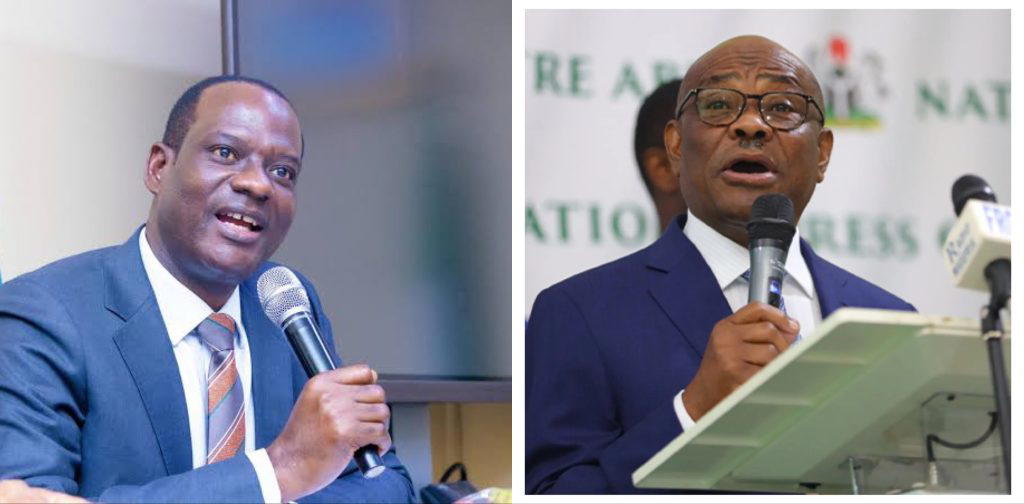
nThe Minister of Finance and Coordinating Minister of the Economy, Mr. Taiwo Oyedele and his Federal Capital Territory (FCT) counterpart, Barr. Nyesom Wike have met to finetune the tax administration in the FCT.
nMr. Oyedele, in a statement on Sunday, described it as a, “productive bilateral meeting,” adding, “the two Ministers also reviewed plans to harmonise tax administration within the FCT.”
nThe harmonisation, he said, would eliminate “multiple taxation while optimising revenue generation in line with the new tax reform law, to accelerate development across the Territory.”
nThe Finance Minister noted that the meeting between him and Barr. Wike “centred on strengthening collaboration to advance the FCT’s infrastructure renewal agenda, with particular commendation for the FCT Minister’s focus on completing previously abandoned projects to unlock value for residents.”
nMr. Oyedele, last week, issued the General Guidelines for the implementation of the Tax Acts 2025, setting out the process for transition from the repealed tax laws to the new tax framework effective from January 1, 2026.
nThe Guidelines provide direction to taxpayers, tax practitioners, revenue authorities and other stakeholders on how to address various issues arising from the old regime to the new framework.
nUnder the Guidelines, the Tax Acts 2025 comprising the Nigeria Revenue Service (Establishment) Act, the Nigeria Tax Act, the Nigeria Tax Administration Act, and the Joint Revenue Board (Establishment) Act apply from the respective commencement dates as enacted in each law. In particular, January 1, 2026 for the Nigeria Tax Act, 2025.
nTax liabilities, assessments, audits, investigations, disputes and enforcement actions relating to periods before that date will be treated under the repealed tax laws.
nTax returns relating to accounting periods ending before January 1, 2026, will be filed under the previous tax laws, while returns relating to accounting period ending from January 1, 2026, onward will be administered under the new tax framework.
nThe document also covers the treatment of income taxes, transaction taxes, development levies, tax incentives, exemptions, record-keeping obligations and transactions that span both the old and new tax regimes.
nExisting tax incentives and exemptions granted under the repealed laws will remain in place until their expiration dates. New applications and pending requests, however, will be considered under the provisions of the Tax Acts 2025.
nThe Guidelines were to promote uniform implementation and support effective administration across the Nigeria Revenue Service, State Internal Revenue Services, the FCT Internal Revenue Service, Local Government Revenue Committees, tax practitioners and taxpayers nationwide.
n nRelated Stories
 General News
CELEBRATING TWO YEARS OF TRANSFORMATIONAL LEADERSHIP IN THE PRESIDENTIAL AMNESTY PROGRAMME
Tomorrow, 14TH March 2026, as we look forward to the second anniversary, we reflect on the remarkable two years since the Administrator of the Preside
 General News
PRESIDENTIAL AMNESTY PROGRAMME PHASE 3: DISREGARD PURPORTED STATEMENT ON DELAYED ITA PAYMENTS — OFFICE OF NATIONAL CHAIRMAN
The Office of the National Chairman of the Presidential Amnesty Programme Phase 3, General Elaye ThankGod Dollar Slaboh, has called on beneficiaries a
 General News
RE: CLARIFICATION ON MY PERSONAL RELATIONSHIPS
PUBLIC NOTICErnrnRE: CLARIFICATION ON MY PERSONAL RELATIONSHIPSrnrnIt has become necessary to make this public clarification following the increasing