
Overseas study and health trips propel international travel expenditure to $6 billion
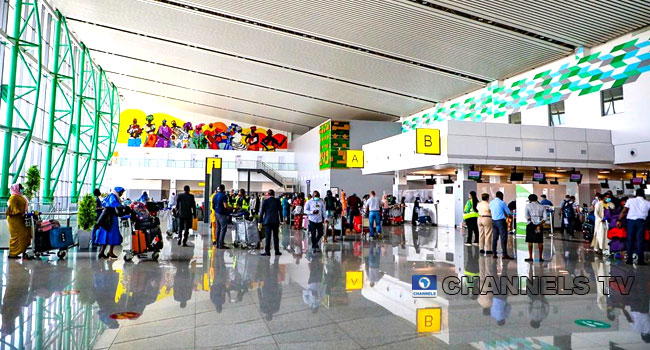
Nigerians spent a total of $5.996 billion on airline tickets for foreign travels in 2025, marking a 32 per cent rise year-on-year, with education-related travel and international business engagements driving the increase.
nThis surge in foreign travel spending also led to a significant rise in expenditure on medical tourism and personal travels, highlighting systemic failures in Nigeria's economy, education, healthcare, and tourism sectors, according to experts.
nA breakdown of the data obtained from the Central Bank of Nigeria reveals that education-related travel remained the largest component of foreign travel spending, with Nigerians spending $2.845 billion in 2025, a 14.5 per cent increase from $2.484 billion in 2024.
nForeign airlines dominated the travel tickets market, with experts noting that they were the major beneficiaries of the increased foreign travel by Nigerians, with airlines such as Ethiopian Airlines and Air Maroc benefiting from the trend.
nThe data shows that total foreign travel expenditure rose to $5.996 billion in 2025 from $4.544 billion in 2024, with spending growth concentrated largely in the first nine months of the year before moderating in the final quarter.
nIn the first quarter of 2025, Nigerians spent $1.267 billion on foreign travel, representing a 20.2 per cent increase from $1.054 billion recorded in the corresponding period of 2024.
nThe second quarter of 2025 saw a sharper increase, with spending rising to $1.688 billion from $1.096 billion in the second quarter of 2024, representing a 54.0 per cent year-on-year increase.
nIn the third quarter of 2025, expenditure reached a yearly peak of $1.806 billion, compared to $1.175 billion in the third quarter of 2024, indicating a 53.7 per cent year-on-year increase.
nHowever, growth moderated significantly in the fourth quarter of 2025, with total expenditure standing at $1.235 billion, only 1.3 per cent higher than the $1.219 billion recorded in the fourth quarter of 2024.
nQuarter-on-quarter, total travel spending rose by 33.2 per cent in the second quarter of 2025 and by 7.0 per cent in the third quarter of 2025, before declining by 31.6 per cent in the fourth quarter of 2025.
nBusiness travel spending also rose significantly, with expenditure increasing to $231.75 million in the first quarter of 2025 from $77.33 million in the first quarter of 2024, representing a 199.7 per cent year-on-year increase.
nIn the second quarter of 2025, expenditure on business trips jumped by 403.1 per cent year-on-year to $234.56 million from $46.62 million in the second quarter of 2024.
nMedical-related travel expenditure also increased, rising to $684.72 million in 2025 from $643.15 million in 2024, indicating a 6.5 per cent year-on-year increase.
nPersonal travel expenditure for tourism and other purposes remained elevated throughout the year, rising by 31.3 per cent year-on-year to $1.62 billion in 2025 from $1.235 billion in 2024.
nExperts, including Mr. Olumide Ohunayo, Director of Research at Zenith Travels and Consult Ltd, commented on the development, stating that foreign airlines were the major beneficiaries of the surge in overseas travel by Nigerians.
nOhunayo attributed the rising education-related travel to the declining focus on local institutions, saying that most institutions are more focused on making money than providing educational services.
nHe also called for the suspension of licences for new universities, except for specialised ones that are not available in the country, to address the issue.
nChief Executive Officer of Belujane Konzult, Mr. Chris Aligbe, blamed the declining standard of education in Nigeria for worsening the pressure on foreign exchange, stating that people no longer rely on the country's educational sector.
nOhunayo also commented on the rising medical tourism, saying that the country must urgently address infrastructure challenges and insecurity to stem the trend.
nHe noted that building infrastructure, particularly power, and addressing insecurity are crucial to reducing the cost of medical services and encouraging medical professionals to return to the country.
nAligbe also blamed the weak health sector for the rising foreign medical trips, stating that the sector's decline has led to doctors leaving the country due to low pay and inadequate resources.
nOn tourism-related travel, Aligbe said that insecurity and lack of policy direction are limiting the growth of Nigeria's domestic tourism industry, which has the potential to earn significant revenue for the country.
nHe also linked the rise in foreign travel to fare developments in the aviation sector during the year, noting that the increase in domestic airline fares led to a surge in foreign travel as people opted for more stable and affordable options.
Related Stories
 General News
CELEBRATING TWO YEARS OF TRANSFORMATIONAL LEADERSHIP IN THE PRESIDENTIAL AMNESTY PROGRAMME
Tomorrow, 14TH March 2026, as we look forward to the second anniversary, we reflect on the remarkable two years since the Administrator of the Preside
 General News
PRESIDENTIAL AMNESTY PROGRAMME PHASE 3: DISREGARD PURPORTED STATEMENT ON DELAYED ITA PAYMENTS — OFFICE OF NATIONAL CHAIRMAN
The Office of the National Chairman of the Presidential Amnesty Programme Phase 3, General Elaye ThankGod Dollar Slaboh, has called on beneficiaries a
 General News
RE: CLARIFICATION ON MY PERSONAL RELATIONSHIPS
PUBLIC NOTICErnrnRE: CLARIFICATION ON MY PERSONAL RELATIONSHIPSrnrnIt has become necessary to make this public clarification following the increasing