
Overseas funding for factory production drops by more than half over a two-year period
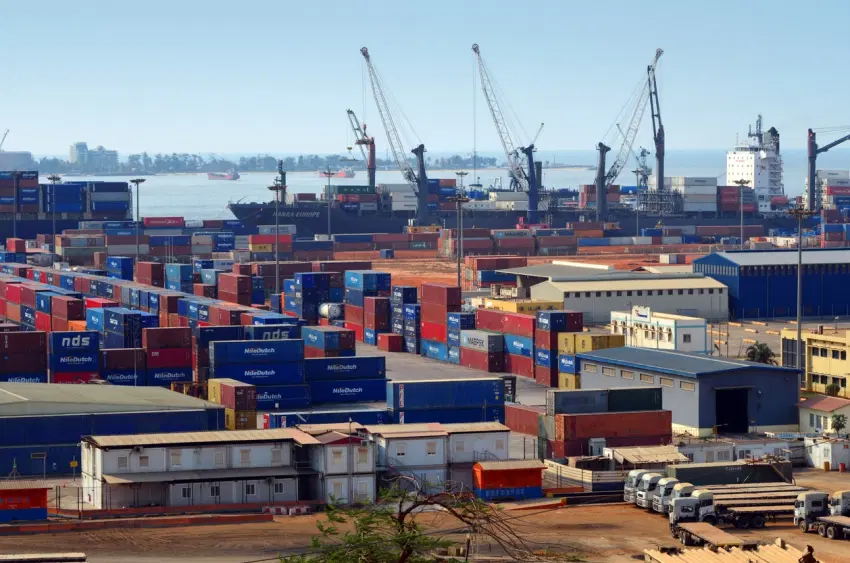
Nigeria's manufacturing sector has experienced a significant decline in foreign investment over the past two years, with capital importation plummeting to $772.45m in 2025, underscoring waning investor confidence in the country's real sector.
nThis downturn is evident in the 51.44 per cent drop from the $1.59 billion recorded in 2023, as revealed by data from the National Bureau of Statistics (NBS).
nThe sector's share of total capital importation has also drastically weakened, falling from 49.73 per cent in 2023 to 11.58 per cent in 2024, and further to 3.33 per cent in 2025, marking a major structural shift in foreign investment patterns.
nMeanwhile, total capital importation into the economy has surged, rising sharply from $3.91 billion in 2023 to $12.32 billion in 2024, and nearly doubling again to $23.22 billion in 2025, according to NBS data.
nThis disparity highlights a growing preference among foreign investors for short-term financial instruments over long-term productive investments such as manufacturing, which is a key indicator of investor confidence and economic attractiveness.
nA breakdown of fourth quarter (Q4) 2025 data further reinforces this trend, with total capital importation standing at $6.44 billion, representing a 26.61 per cent increase compared to $5.09 billion recorded in the corresponding period of 2024.
nOn a quarter-on-quarter basis, inflows rose by 7.13 per cent from $6.01 billion in Q3 2025, with the bulk of these inflows being portfolio investments, which accounted for $5.49 billion or 85.14 per cent of total capital imported during the quarter.
nOther investments contributed $599.65 million (9.31 per cent), while Foreign Direct Investment (FDI) lagged significantly at $357.80 million, representing just 5.55 per cent of total capital importation.
nSectoral distribution shows that the banking sector attracted the highest inflow at $3.85 billion (59.75 per cent), followed by the financing sector with $1.94 billion (30.15 per cent), while the production/manufacturing sector recorded a modest $308.93 million, accounting for only 4.79 per cent.
nAnalysts warn that the sharp decline in manufacturing investment raises concerns about Nigeria's industrialisation prospects, particularly at a time when the country is seeking to diversify away from oil and boost local production.
Related Stories
 General News
CELEBRATING TWO YEARS OF TRANSFORMATIONAL LEADERSHIP IN THE PRESIDENTIAL AMNESTY PROGRAMME
Tomorrow, 14TH March 2026, as we look forward to the second anniversary, we reflect on the remarkable two years since the Administrator of the Preside
 General News
PRESIDENTIAL AMNESTY PROGRAMME PHASE 3: DISREGARD PURPORTED STATEMENT ON DELAYED ITA PAYMENTS — OFFICE OF NATIONAL CHAIRMAN
The Office of the National Chairman of the Presidential Amnesty Programme Phase 3, General Elaye ThankGod Dollar Slaboh, has called on beneficiaries a
 General News
RE: CLARIFICATION ON MY PERSONAL RELATIONSHIPS
PUBLIC NOTICErnrnRE: CLARIFICATION ON MY PERSONAL RELATIONSHIPSrnrnIt has become necessary to make this public clarification following the increasing