
Over 16,000 obsolete weapons destroyed since inception – Arms Control Centre
By Kingsley Omonobi
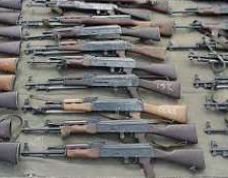
nThe National Centre for the Control of Small Arms and Light Weapons (NCCSALW) says it has destroyed more than 16,000 obsolete, decommissioned and unserviceable weapons since its establishment as part of efforts to curb the proliferation of illicit firearms in Nigeria.
nDirector-General of the Centre, retired Deputy Inspector-General of Police Johnson Babatunde Kokumo, disclosed this during a courtesy visit to the Inspector-General of Police at the Force Headquarters in Abuja.
nKokumo commended the Nigeria Police Force for its contribution to the Centre’s arms disposal programme, revealing that the Force supplied 11,907 illicit, obsolete, decommissioned and unserviceable weapons.
nAccording to him, the weapons comprised 8,438 automatic firearms and 3,489 locally fabricated guns.
n“We are pleased to report that the Centre has destroyed over 16,000 obsolete, decommissioned and unserviceable weapons since its inception,” Kokumo said.
nHe described the proliferation of illicit arms as a major security challenge, noting that such weapons contribute to terrorism, violent extremism and other forms of violent crime.
nKokumo said illicit firearms often originate from porous borders, diversion from government stockpiles and illegal local manufacturing, adding that some locally fabricated weapons have become increasingly sophisticated.
nHe stressed the need for stronger institutional collaboration between the Centre and the Nigeria Police Force, particularly in armoury management, accountability, intelligence sharing and support for prosecution.
nResponding, the Inspector-General of Police, Kayode Disu, underscored the importance of effective armoury management within the Police Force.
nHe said proper control, accountability and routine inspections of armouries are critical to national security and called for stricter measures to safeguard weapon storage facilities.
nDisu said only trusted personnel should be assigned responsibility for managing police armouries, while regular inspections, audits and inventory checks should be conducted to ensure accountability.
nThe Inspector-General also stressed the need to tackle the growing challenge of locally manufactured illicit firearms through improved intelligence gathering, inter-agency collaboration and targeted enforcement against illegal arms manufacturers.
nAccording to him, some locally produced firearms closely resemble imported weapons, making it necessary to intensify efforts to dismantle illegal arms production and reduce the circulation of illicit weapons across the country.
n nRelated Stories
 General News
CELEBRATING TWO YEARS OF TRANSFORMATIONAL LEADERSHIP IN THE PRESIDENTIAL AMNESTY PROGRAMME
Tomorrow, 14TH March 2026, as we look forward to the second anniversary, we reflect on the remarkable two years since the Administrator of the Preside
 General News
PRESIDENTIAL AMNESTY PROGRAMME PHASE 3: DISREGARD PURPORTED STATEMENT ON DELAYED ITA PAYMENTS — OFFICE OF NATIONAL CHAIRMAN
The Office of the National Chairman of the Presidential Amnesty Programme Phase 3, General Elaye ThankGod Dollar Slaboh, has called on beneficiaries a
 General News
RE: CLARIFICATION ON MY PERSONAL RELATIONSHIPS
PUBLIC NOTICErnrnRE: CLARIFICATION ON MY PERSONAL RELATIONSHIPSrnrnIt has become necessary to make this public clarification following the increasing