
Over 13 million people in Nigeria are afflicted with asthma, according to LASU professor Adeyeye
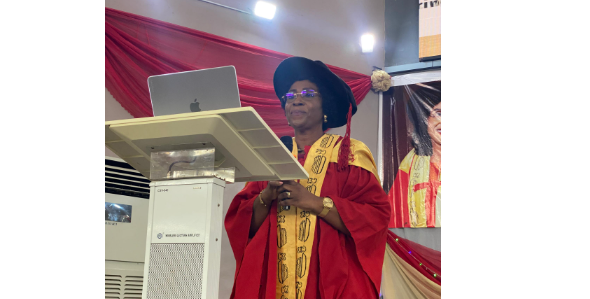
Professor Olufunke Olayinka Adeyeye, a Professor of Medicine at the Lagos State University, LASU, Ojo, has revealed that approximately 13 million Nigerians are afflicted with Asthma, a debilitating respiratory disease.
nAccording to Professor Adeyeye, Asthma, despite being a life-threatening condition, has not received the necessary attention in Nigeria's healthcare system, resulting in it being frequently misdiagnosed and under-prioritised.
nWhile delivering the 118th Inaugural Lecture Series of the University, titled "Breath in Bondage: Breaking the Yoke of Asthma with Knowledge and Action", Professor Adeyeye stated that Bronchial Asthma, a common and chronic illness, has profound effects on individuals, families, and communities.
nAsthma, if neglected or poorly managed, can severely restrict the physical, emotional, social, and economic well-being of its victims, robbing them of dignity and freedom, and limiting their potential, as noted by Professor Adeyeye.
nIn Nigeria, asthma often goes unseen, misjudged, or ignored, with symptoms such as persistent "catarrh" and "chest pain" being dismissed or misdiagnosed in overburdened clinics.
nProfessor Adeyeye explained that the widespread failure to recognise and respond to asthma as a chronic and potentially life-threatening respiratory condition has severe consequences, with the metaphor "breath in bondage" capturing the experience of asthma sufferers.
nAn earlier study in Nigeria estimated that 13 million people are affected by asthma, with prevalence increasing with age and varying across the country depending on urbanization, pollution, and healthcare access.
nAsthma is responsible for approximately 1,000 deaths each day, and although often manageable, it can be life-threatening without proper diagnosis and treatment, according to Professor Adeyeye.
nThe stigma surrounding asthma also plays a significant role, with individuals with asthma often being labelled as weak, overprotected, or attention-seeking, and adolescents feeling embarrassed using inhalers in public.
nIn some communities, asthma is attributed to spiritual or cultural causes, further delaying proper medical care, as noted by Professor Adeyeye.
nTo combat the disease, Professor Adeyeye recommended that non-communicable disease (NCD) prevention and control should include population-wide interventions to reduce risk factor exposure, individual approaches to modify risk factors, and treatment of NCDs.
nInvesting in better management of NCDs is critical, and management of NCDs includes detecting, screening, and treating these diseases, and providing access to care for people in need, as stated by Professor Adeyeye.
nThere is a need to implement the WHO package of essential non-communicable (PEN) disease interventions for primary health care, according to Professor Adeyeye.
nIntegrating asthma care into the national non-communicable disease (NCD) strategy and making essential asthma medications, such as inhaled corticosteroids, readily available and subsidized for patients is also necessary, as recommended by Professor Adeyeye.
nImproving access to diagnosis and making tools such as peak flow meters, spirometers, and FeNO machines available is crucial, as noted by Professor Adeyeye.
nEstablishing school-based asthma programmes, including screening for asthma on enrolment, training teachers and caregivers on asthma emergency preparedness, and implementing asthma-friendly policies, is also essential, according to Professor Adeyeye.
nThe government should support postgraduate training and research in pulmonology, where there are currently few trainees, and encourage operational and translational research on asthma and other chronic respiratory diseases, focusing on locally relevant interventions, as recommended by Professor Adeyeye.
Related Stories
 General News
CELEBRATING TWO YEARS OF TRANSFORMATIONAL LEADERSHIP IN THE PRESIDENTIAL AMNESTY PROGRAMME
Tomorrow, 14TH March 2026, as we look forward to the second anniversary, we reflect on the remarkable two years since the Administrator of the Preside
 General News
PRESIDENTIAL AMNESTY PROGRAMME PHASE 3: DISREGARD PURPORTED STATEMENT ON DELAYED ITA PAYMENTS — OFFICE OF NATIONAL CHAIRMAN
The Office of the National Chairman of the Presidential Amnesty Programme Phase 3, General Elaye ThankGod Dollar Slaboh, has called on beneficiaries a
 General News
RE: CLARIFICATION ON MY PERSONAL RELATIONSHIPS
PUBLIC NOTICErnrnRE: CLARIFICATION ON MY PERSONAL RELATIONSHIPSrnrnIt has become necessary to make this public clarification following the increasing