From last week continues the narrative of the plan by the British Monarch to play host to President Bola Tinubu and his wife on March 18 in Windsor Castle, with its significance in the light of similar hostings of past Nigerian and other African heads of state over the years.
President William Taubman of Liberia and his wife, Antoinette were hosted July 10 to 13, 1962 and Emperor Haile Selassie of Ethiopia October 14 to 16, 1964.
The hosting by King Charles of President Bola Tinubu is no doubt a plus for Nigeria. This country is still a great country in spite of what we have gone through and we are going through now. When President Tinubu was sworn-in on May 29, 2023, the expectation was that Nigeria will be closer to London than any other country. Apart from being our colonial master, we speak the English Language. The British, along with the Vatican, brought the Christian religion to us. Apart from that, the British/Nigeria relationship had always been very strong.
Over three million Nigerians are presently in the United Kingdom. London was the headquarters of NADECO in the days of General Sani Abacha (September 20, 1943 – June 8, 1998). Even the then Senator Bola Tinubu was living in London during his NADECO years in the same house with my late friend, Dapo Durosinmi-Etti.
But since being sworn-in, the President has moved closer to the Elysee Palace in Paris and extended a little bit of friendship to the Arab world. He has played less role on the African continent, sometimes sending his Vice, Alhaji Kashim Shettima Mustapha (60), to attend ceremonies in the continent. Maybe the March 18 visit, will change the Presidents’ attitude towards London.
On January 11, 1976 in Addis Ababa at extraordinary meeting of the Organisation of Africa Unity, OAU, General Murtala Mohammed (November 8, 1938 – February 13, 1976) spoke on Africa’s struggle. “Africa has come of age. It is no longer under the orbit of any extra continental power. It should no longer take orders from any country, however powerful. The fortunes of Africa are in our hands to make or mar. For too long have we been kicked around; for too long have we been treated like adolescents who cannot discern their interest and act accordingly. For too long has it been presumed that the African needs outside “experts” to tell him who are his friends and who are his enemies. The time has come when we should make it clear that we can decide for ourselves; that we know our own interests and how to protect those interests; that we are capable of resolving African problems without presumptuous lesson in ideological dangers, which more often than not have no relevance for us, not for the problem at hand”.
The speech was no doubt volcanic. It was a landmark speech.
I have listened to arguments that Nigeria’s golden period in foreign affairs was during the era of General Murtala Muhammed, whose 50th anniversary of his assassination was recently observed. No doubt, it was a golden period.
I still want to believe that Nigeria’s golden era in foreign affairs was during the years of Alhaji Tafawa Balewa, especially in 1965 when Nigeria hosted the Commonwealth conference. He was put on the cover of Time Magazine, the American weekly, on December 30, 1960. When he travelled to the United States of American between July 25 to 28 1961, for that electrifying trip, the then US Vice President, Lyndon Baines Johnson (August 27, 1908- January 22, 1973) personally came to welcome him and his entourage at the airport in Washington. He was the voice of Africa at that time. The pride of the continent. Alhaji Tafawa Balewa gave us our deserved pride.
We got our independence just five years before, yet we were asked to host the Commonwealth Conference to solve the Rhodesian issue which we did not create and which Britain itself could not solve.
In terms of accommodation in Lagos, the Prime Minister was occupying a four-bedroom house now opposite Island Club, Onikan, Lagos. And the only reputable hotel in Lagos at that time was the Federal Palace Hotel, Victoria Island, Lagos, which was constructed and originally owned by AG Leventis.
The hotel was acquired by the Nigerian government in 1964 and went through a series of managers the following years. When Nigeria gained its independence from Britain in 1960, it was in the main boardroom of the newly constructed Federal Palace Hotel that Nigeria’s independence declaration was signed. The official celebration of Nigeria’s independence took place in the hotel’s Independence Hall.
In terms of accommodation, we were handicapped, and this created a problem, according to the late Chief Benjamin Akinnusi Osunshade (March 27, 1926- October 27, 2025), the Bobagunwa of Idanre in Ondo State, the then Chief Private Secretary to the Prime Minister.
He told me before he died in Isolo, Lagos, the challenge the Federal Government was confronted with in providing accommodation for the Commonwealth leaders and officials.
Twenty-two Commonwealth leaders accepted to attend the conference.
The January 1966 Commonwealth Prime Ministers’ Conference focused on the Rhodesian crisis and was chaired by Nigerian Prime Minister Sir Abubakar Tafawa Balewa. Key attendees included British Prime Minister Harold Wilson, Archbishop Makarios of Cyprus, Milton Obote (Uganda), Lee Kuan Yew (Singapore), and Sir Albert Margai (Sierra Leone).
Others included Borg Oliver of Malta, Dr. E. E. Williams(Trinidad & Tobago), Zambia’s Vice-President R.C. Kamanga, Jamaica’s Acting Prime Minister, Malaysia’s Deputy Prime Minister and Commonwealth Secretariat’s Secretary-General, Arnold Smith.
This was the first Commonwealth conference held outside London.
The conference opened on 11 January, at that time there was fresh communal crisis in Ilesha, Osun state. Alhaji Sir Abubakar Tafawa Balewa and Mr. Harold Wilson led the delegates into the ballroom, accompanied by Mr. Arthur Bottomley. After two minutes’ silence in memory of Mr Shastri, the Nigerian Prime Minister welcomed his guests, gathered ‘to discuss a major problem which has not only assumed global proportions, but is threatening to create a division within our cherished commonwealth organization…Although a few friends and colleagues are not at the meeting, everybody nonetheless has one objective, the speedy solution of the Rhodesian crisis’.
Thereafter he controlled the conference with the unforced dignity of a man in a customary role, rather than as the first African ever to preside over such a gathering’, to quote an onlooker. He was followed by Mr. Lester Pearson, Canada being the oldest dominion of the commonwealth, whom many regarded as an obvious mediator, and Mr. Lee Kuan Yew speaking for the newest member state. Sir Abubakar then delivered a keynote speech, pointing out in a review of the present situation that their task was not only to find a way of crushing the illegal regime but also more emphatically to consider the right long-term solution for the future of the territory.
Although the desire of the African people, the Commonwealth and the United Nations was to ensure an African majority rule in Southern Rhodesia, it would be unwise to neglect the fear of the white majority in the country; the earlier the racists were made to know about their future, the sooner would the rebellion end.
After Smith’s defeat, the release of all nationalists and a conference, the 1961 constitution should be abrogated and give way to a period of direct rule under which the police, armed forces, judiciary and civil service should to a large measure reverts to control by the British, with appointed executive and legislative councils, of all races, presided over by the governor. His present skills and his vision of a Rhodesian future had both been acquired in the old council of ministers’ chamber, observing two Scots governors.
Wilson stated Britain’s position in a massive review of his policy to bring down the Smith regime. He insisted that the problem was Britain’s responsibility alone, not a matter for other organisations, that economic sanctions had already cut Rhodesia’s inward and outward trade by half, that the oil embargo was providing more successful than he could have hoped, and that given time sanctions would work. Further than that he would not go, and sat down to hear the same predictable messages of condemnation in the restricted session confined to the leaders (who were supported by three colleagues each from Britain, Nigeria and Zambia, and two each from the others), uttered from Asia, the Carribean and Cyprus. The Africans in particular, he later wrote, sought one after another ‘to prove how much more African each was than his neighbours’.
Zambia thought there would be no resistance. Canada suggested that if sanctions failed, the UN should be invited to step in and impose mandatory world sanctions. Wilson felt that Britain was again, as before the United Nation a month before, ‘in the dock’, with the difference that most of the Lagos prosecution were their countries’ principals, rather than remote plenipotentiaries voicing other persons’ opinions. He was impressed, if not encouraged, by the sophisticated quality of a 40-minute extempore speech by Lee Kuan Yew, equal in substance to any world leader’s that he had heard and displaying an awareness of ‘what the modern world was really about’.
At the end of the Conference, the Prime Ministers decided on the following measures of commonwealth action: To appoint two continuing committee, composed of representatives of all commonwealth countries, to meet with the Secretary-General in London. The first would review regularly the effect of sanctions, and also the special needs which might from time to time arise in honouring the Commonwealth’s undertaking to come to the support of Zambia as required; the second would co-ordinate a special commonwealth programme of assistance in training Rhodesians Africans as set out below. The sanctions committee would recommend the reconvening of the Prime Ministers’ meeting when they judged that this was necessary. In any case, the Prime Ministers agreed to meet again in July 1966 if the rebellion had not been ended before then. The sanctions committee would advise the Prime Ministers if it considered that action by the United Nations was called for.
Some Prime Ministers indicated that they reserved the right, if need arose, to propose mandatory United Nations action under articles 41 or 42 of chapter VII of the charter.
Twenty-four hours after the Conference ended in Lagos, Alhaji Tafawa Balewa was assassinated. Rhodesia, now Zimbabwe became independent on April 18, 1980.
I hate to think that the best that has happened to my country, in foreign affairs, occured only in the past.
Concluded
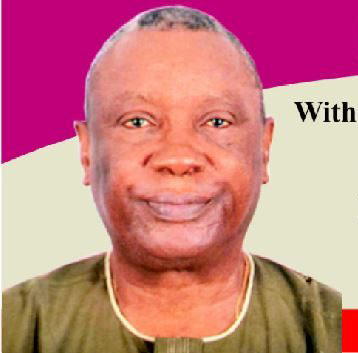
Eric Teniola, a former director at the Presidency wrote from Lagos.

Comments
Please login to leave a comment.
No comments yet. Be the first to share your thoughts!