
Oriire Abduction: The children came home, the fears remain
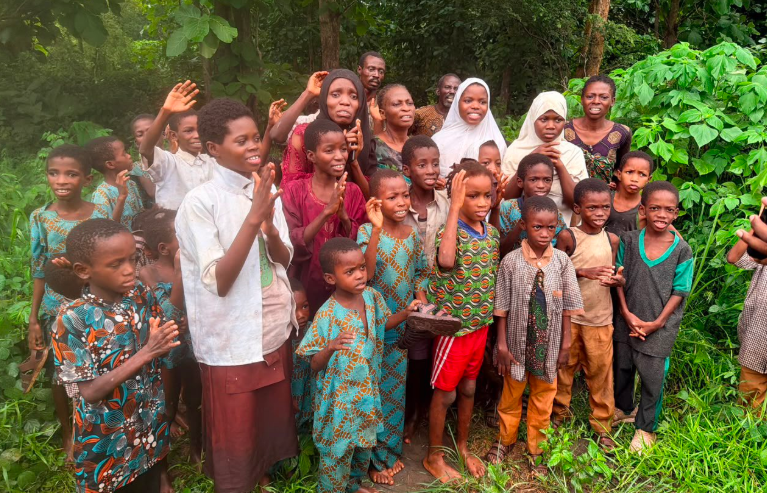
File: Oriire students and teachers rescued.
nBy Adeola Badru
nFor 56 agonising days, the people of Oriire Local Government Area of Oyo State measured time differently. The passing of each day was not marked by work, school or the ordinary rhythm of rural life, but by unanswered prayers and anxious anticipation. Parents woke every morning hoping for news of children who had disappeared into captivity.
nNights brought little comfort, only another round of questions about whether the abducted pupils and their teachers were alive, safe or even coming home. When the announcement finally came that the victims had been rescued, celebrations erupted across the community, and, indeed, Nigeria
nYet beyond the jubilation lies a more profound story, one that raises uncomfortable questions about Nigeria’s security architecture, the protection of schools, the welfare of frontline troops and the resilience of communities determined not to surrender to fear.
nAn end to an ordeal
nThe rescue brought an end to a painful chapter for the affected families, but it also exposed the enormous social cost of insecurity in rural Nigeria.
nIt demonstrated how a single criminal act can paralyse an entire community, disrupt education, weaken economic activities and leave emotional scars that outlive the crisis itself.
nThe voices of parents, community leaders, residents and security personnel revealed that while the children have returned, the underlying conditions that made the abduction possible remain a source of deep concern.
nNo one captured the emotional burden of the 56-day ordeal more poignantly than one of the mothers, Mrs Kadijat, whose children were among those rescued.
nFor nearly two months, hope and despair competed for space in her heart. The announcement of the rescue was, for her, an answer to countless prayers.
n“The first thing I did was thank Almighty God. I also appreciate those who worked tirelessly on this. May God continue to bless their efforts and grant them success. They will not labour in vain. I am so happy that it turned out this way.”
nHer gratitude was directed both at God and at those involved in securing the children’s freedom. Yet beneath her words lay the emotional exhaustion that accompanies prolonged uncertainty.
n“It felt like a heavy burden on me. But now my mind has become deeply at ease. The news we received has truly brought peace to our hearts.”
nHer experience reflects a reality often overlooked in discussions about insecurity. While attention frequently focuses on the operational success or failure of rescue missions, families endure weeks of psychological trauma.
nEvery rumour becomes a source of hope or despair. Every passing day without information deepens the emotional wound.
nThe new cost of education
nRemarkably, the ordeal has not shaken her belief in education. Asked whether she would still send her children back to school after everything that had happened, her answer came without hesitation.
n“As long as we are in this world, they have to get an education. We are determined to ensure they continue studying. May God make it easy for them, and for us as well.”
nThose words speak to a national challenge extending far beyond Orire. Across Nigeria, attacks on schools have forced thousands of parents to question whether education is worth the risk.
nYet for many families, withdrawing children from school would amount to allowing criminals to dictate their future.
nTheir determination to continue investing in education is therefore an act of resilience as much as it is an expression of hope.
nA community gripped by panic
nIf parents represent the emotional heart of the story, the wider community illustrates the far-reaching consequences of insecurity.
nProphet Akande Moses Ayobami remembers vividly how normal life came to an abrupt halt when news of the abduction spread.
n“When we heard this news, we were very sad. I wasn’t even at home that day. I had gone to Ogbomoso for a meeting. It was when I returned that I received a call saying the children had been kidnapped.”
nHe rushed back immediately, only to encounter a community gripped by panic, saying, “When I arrived, the whole town was deserted. All the children had fled into the bush. We saw many children running around the nearby villages.”
nHis account demonstrates that kidnappings affect far more than those directly taken captive. Fear itself becomes a powerful force, emptying streets, disrupting livelihoods and changing people’s behaviour.
n“We couldn’t cook like this before,” he said while preparing food after the rescue. Everything we did was in fear and anxiety.”
nHe added that even the simplest routines had become difficult because people’s thoughts were consumed by uncertainty.
n“But when we heard they had returned, we were exceedingly joyful. Our sleep returned to normal. Peace has now returned to the town.”
nHis observation that “our sleep returned to normal” may sound ordinary, yet it encapsulates the psychological damage inflicted by insecurity.
nThe restoration of peaceful sleep symbolises the gradual return of confidence after weeks of collective trauma.
nA sigh of relief from the throne, but…
nFor the the Elesinele of Esinele, Oba Tajudeen Abioye, however, celebration alone is not enough. While expressing gratitude for the safe return of the pupils and their teachers, he believes the rescue should become a catalyst for lasting reforms rather than a reason for complacency.
n“When everyone heard the news, everyone started celebrating all around. Everyone is happy. Before, they were grieving,” he said.
nBut now that what we had been looking for has been found, what else is left? It is for us to dance and rejoice.
nThe monarch acknowledged the efforts that led to the successful rescue but insisted that preventing future attacks must now become the priority.
n“We thank God that they have rescued the children safely,” he said. “Now we need security.”
nHis appeal was not framed as a political demand but as a practical necessity. According to him, the nearest police formation is too far from the community to respond effectively during emergencies.
n“The police station is very far from here. Before they can get here, it takes over an hour. If anything happens, the damage would already have been done.”
nHis requests were clear and specific, adding, “We are requesting an Army barracks. We also requested that a police post be stationed close to us here,” he said.
nThose demands underscore one of Nigeria’s enduring security challenges: while rescue operations demonstrate the capability of security agencies to respond to crises, many rural communities continue to lack the permanent security presence needed to prevent such incidents from occurring in the first place.
nWelfare of officers remains a source of concern
nThe interviews with military personnel revealed another side of the story that rarely receives public attention.
nWhile communities depend on security forces for protection, the troops themselves often operate under difficult conditions.
nMaster Warrant Officer Igiranyisede Sydney, the Regimental Sergeant Major of the 169 Motorised Motorcycle Battalion in Ogbomoso, acknowledged that his unit faces significant logistical challenges.
n“Our biggest challenges are accommodation and how to stabilise after arriving as a newly established unit,” he said. “We have issues of accommodation, water, bathrooms and toilet facilities.”
nAppreciating Governor Makinde
nHe nevertheless expressed appreciation for the intervention of the Oyo State Government, saying the support would help address some of the immediate needs confronting the battalion.
nHis views highlight an often-neglected aspect of national security. Soldiers are expected to confront dangerous criminal networks, yet their effectiveness is closely linked to the quality of the facilities and welfare support available to them. Operational success depends not only on courage and training but also on basic infrastructure.
nThat point became even more evident in the remarks of Warrant Officer Sani Danusan, adding, “We are very happy,” he said after receiving welfare items from the state government. “We appreciate what the governor has brought to us.”
nHe disclosed that the support came as a complete surprise, stating, “I didn’t even come here with a mattress. I wanted to buy one from the market tomorrow.“
n“When they told me they had brought mattresses, I was very happy. If they see anything challenging, they should alert us so that we can take action immediately.“
nA deserved celebration
nThe celebrations that greeted the return of the children were genuine and deserved. For the families who endured 56 days of uncertainty, nothing could compare with the relief of knowing that their loved ones had survived.
nYet the interviews conducted in the aftermath of the rescue point to a truth that extends well beyond one community in Oyo State.
nThe children came home. But the questions remain. Can rural communities be made secure before another school is targeted?
nCan intelligence gathering and rapid response be strengthened to prevent future abductions?
nCan frontline troops receive the welfare and logistics they need to sustain operations? And can parents continue to send their children to school without fearing that education itself has become a dangerous journey?
nThe answers to those questions will determine whether the story of Oriire is remembered merely as a successful rescue or as the moment Nigeria decided that protecting its children, its communities and those who defend them deserved more than emergency responses.
n nRelated Stories
 General News
CELEBRATING TWO YEARS OF TRANSFORMATIONAL LEADERSHIP IN THE PRESIDENTIAL AMNESTY PROGRAMME
Tomorrow, 14TH March 2026, as we look forward to the second anniversary, we reflect on the remarkable two years since the Administrator of the Preside
 General News
PRESIDENTIAL AMNESTY PROGRAMME PHASE 3: DISREGARD PURPORTED STATEMENT ON DELAYED ITA PAYMENTS — OFFICE OF NATIONAL CHAIRMAN
The Office of the National Chairman of the Presidential Amnesty Programme Phase 3, General Elaye ThankGod Dollar Slaboh, has called on beneficiaries a
 General News
RE: CLARIFICATION ON MY PERSONAL RELATIONSHIPS
PUBLIC NOTICErnrnRE: CLARIFICATION ON MY PERSONAL RELATIONSHIPSrnrnIt has become necessary to make this public clarification following the increasing