
ONSA Inquires About Alternative Route
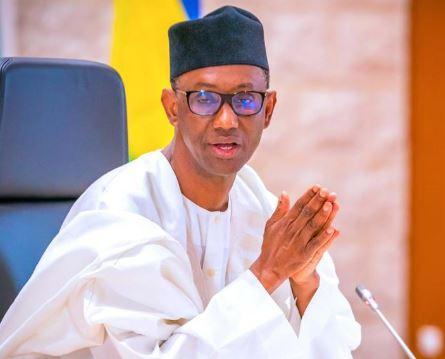
The complexity and interconnectedness of security threats have elevated the significance of the National Security Adviser in coordinating defence, intelligence, and policy, with the Office of the NSA playing a central role in Nigeria's security framework.
nIn Nigeria, the need to strengthen the Office of the National Security Adviser and enhance its role within the country's national security architecture has been noted by observers and analysts, in line with practices in other countries.
nIt was just past midnight when the first reports began to filter in, with security alerts from the field, intelligence briefings, and updates from various agencies converging on Abuja, where critical decisions shaping the nation's safety are often made behind closed doors.
nThe Office of the National Security Adviser sits at the centre of this information network, tasked with coordinating Nigeria's response to increasingly complex threats, as the nature of security has transformed globally to encompass cyberspace, transnational organised crime, economic sabotage, and public health emergencies.
nIn Nigeria, these evolving realities have intensified scrutiny of the country's security architecture and whether its coordinating bodies are adequately equipped to respond, with the National Security Adviser, currently Mallam Nuhu Ribadu, frequently mentioned in this discussion.
nAs the President's principal staff officer on security matters, the NSA is positioned as the vital intersection where intelligence, defence strategy, and policy converge, with statutorily recognised powers and influence.
nHowever, analysts note that beyond the formal structure, the conversation has increasingly centred on the office's actual influence within Nigeria's wider security framework, with Expert perspectives from National Executive Chairman of the Joint National Transport Safety Committee of Nigeria, Amb. Taiwo Mogobojuri, who has studied the country's security coordination system.
nAmb. Mogobojuri acknowledged the office's central advisory role but questioned its practical influence, stating that "Considering the numerous security challenges being experienced in Nigeria, the powers and influence of the NSA are limited", which strikes at the heart of a widening conversation about whether Nigeria's existing security coordination model is truly fit for purpose.
nIn principle, modern national security systems are anchored on a central coordinating authority, one that links intelligence agencies, the military, law enforcement, and policymakers into a single, coherent framework, with the goal of ensuring seamless information flow and delivering a unified strategic response to emerging threats.
nThe Office of the NSA is designed to play this pivotal role in Nigeria, with intelligence from agencies such as the Department of State Services and the National Intelligence Agency expected to converge there before distilled advice is passed to the President.
nCrucially, however, the NSA does not command troops or deploy security forces, with that responsibility resting with the armed forces, the police, and other operational agencies, in line with global practice where the NSA functions as a strategic coordinator rather than a field commander.
nAs Amb. Mogobojuri explains, "The National Security Adviser is a strategic coordinator, while field operations remain the responsibility of military and law enforcement agencies", with the NSA acting as an "honest broker" in shaping policy options for the President without issuing operational directives.
nA comparative look at national security systems reveals a wide variance in the adviser's role, with the United States, the United Kingdom, Australia, and Canada having different models, and Israel prioritising rapid integration of intelligence and decision-making during emergencies.
nGhana operates a model that separates advisory functions from operational coordination, with observers noting that Nigeria's system possesses strong legal backing but suffers from comparatively limited institutional depth within the coordinating office itself.
nFor Mogobojuri, the problem is not that Nigeria lacks a framework; it is that the existing structure has yet to reach its full potential, with a need to equip the office with more powers and influence to enable the NSA to have a direct impact on the overall security and defence architecture.
nThis is not a call to transform the NSA into a field commander issuing operational orders, but rather a case for measured reform, deepening capacity, clarifying authority, and reinforcing institutional support, with a dedicated professional corps within the office providing stability, analytical depth, and institutional memory critical for sustained security planning.
nStrengthening real-time intelligence fusion, backed by technology and clear operational protocols, would significantly enhance decision-making, with the NSA already synthesising inputs from agencies such as the DSS, NIA, and Defence Intelligence Agency.
nGranting the NSA clearer authority to steer inter-agency responses could reduce delays, close operational gaps, and strengthen Nigeria's capacity to respond decisively, with crises demanding more than coordination; they require clarity of command within defined legal limits.
nAs Nigeria's security environment continues to evolve, marked by intertwined threats from insurgency and banditry to cybercrime and transnational criminal networks, these challenges place immense pressure on institutions responsible for immediate response and long-term strategy.
nEvaluating national security performance requires looking beyond any single office to assess how well the system's various institutions work together, as Mogobojuri noted, involving "examining multiple institutions working together rather than attributing responsibility to a single advisory office".
nThe Office of the National Security Adviser remains central to that system, and its effectiveness, experts maintain, will continue to shape discussions about the resilience of Nigeria's security architecture for years to come.
Related Stories
 General News
CELEBRATING TWO YEARS OF TRANSFORMATIONAL LEADERSHIP IN THE PRESIDENTIAL AMNESTY PROGRAMME
Tomorrow, 14TH March 2026, as we look forward to the second anniversary, we reflect on the remarkable two years since the Administrator of the Preside
 General News
PRESIDENTIAL AMNESTY PROGRAMME PHASE 3: DISREGARD PURPORTED STATEMENT ON DELAYED ITA PAYMENTS — OFFICE OF NATIONAL CHAIRMAN
The Office of the National Chairman of the Presidential Amnesty Programme Phase 3, General Elaye ThankGod Dollar Slaboh, has called on beneficiaries a
 General News
RE: CLARIFICATION ON MY PERSONAL RELATIONSHIPS
PUBLIC NOTICErnrnRE: CLARIFICATION ON MY PERSONAL RELATIONSHIPSrnrnIt has become necessary to make this public clarification following the increasing