
Onaiyekan Controversy: Afenifere leaders, analysts clash over Tinubu presidency’s response to Catholic Bishops
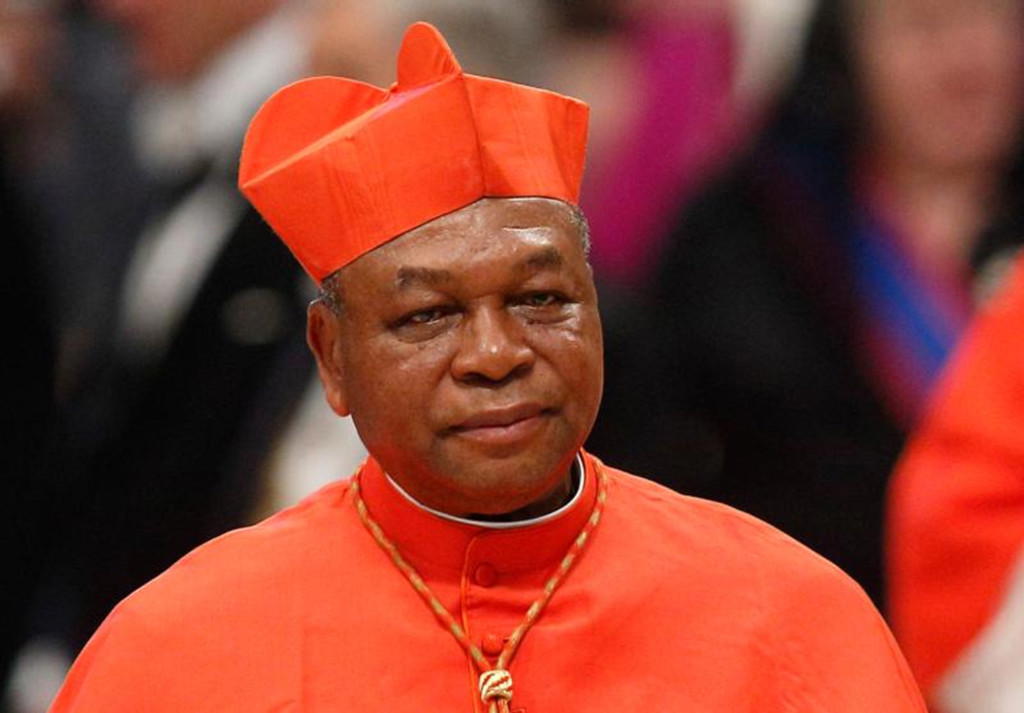
Cardinal John Onaiyekan
nBy Dayo Johnson, Olasunkanmi Akoni, Rotimi Ojomoyela & James Ogunnaike
nThe controversy surrounding the meeting between President Bola Ahmed Tinubu and the Catholic Bishops’ Conference of Nigeria (CBCN), as well as subsequent comments by Archbishop Emeritus of Abuja, Cardinal John Onaiyekan, has continued to generate reactions from political leaders and public affairs analysts.
nWhile some have defended the right of the Catholic Bishops and Cardinal Onaiyekan to comment on national issues affecting Nigerians, others have criticised the manner in which the meeting was discussed publicly, arguing that religious leaders should exercise caution when engaging with government officials.
nThe National Organising Secretary of Afenifere, Apagun Kole Omololu, former Speaker of the Ondo State House of Assembly, Rt. Hon. Bakkita Bello, Afenifere leader, Senator Femi Okurounmu, and other stakeholders shared different perspectives on the development.
nTinubu Has Extended Fellowship to Catholic Church — Omololu
nThe National Organising Secretary of Afenifere, Apagun Kole Omololu, said President Bola Ahmed Tinubu has demonstrated strong commitment to promoting peaceful coexistence among Nigeria’s religious communities, particularly the Catholic Church.
nOmololu recalled that since Nigeria gained independence from Britain on October 1, 1960, five different Popes had been inaugurated at the Vatican, including Pope Paul VI in 1963, Pope John Paul I and Pope John Paul II in 1978, Pope Benedict XVI in 2005, Pope Francis in 2013 and Pope Leo XIV in 2025.
nHe noted that the only time a Nigerian leader was physically present at the Vatican to honour a newly inaugurated Pope was on Sunday, May 18, 2025, when President Tinubu attended the inauguration Mass of Pope Leo XIV at St. Peter’s Square.
nAccording to him, the gesture demonstrated Tinubu’s respect for the Catholic community in Nigeria and showed that the President was committed to strengthening relations with the Church.
nHe said: “That act by the President was to demonstrate to the Roman Catholic community in Nigeria that they have no better friend than President Bola Ahmed Tinubu.”
nOmololu added that Tinubu had extended a hand of fellowship to the entire Christian community and particularly the Catholic Church, describing the President as a leader who would promote religious harmony and mutual prosperity among Nigerians.
nHowever, he stressed that while the Church has a responsibility to speak truth to power, such interventions must be based on facts and should not carry political undertones.
nCBCN Has Right to Raise National Concerns — Bello
nA former Speaker of the Ondo State House of Assembly and Chairman of Afenifere in Ondo State, Rt. Hon. Bakkita Bello, said the meeting between President Tinubu and the Catholic Bishops could only have centred on issues affecting Nigeria and Nigerians.
nBello said the President, as the nation’s leader, has the constitutional responsibility to manage the country’s resources, protect lives and property, ensure citizens’ welfare and promote peaceful coexistence.
nHe described the CBCN as an important stakeholder in national development, saying the organisation plays a significant role in promoting stability through faith-based counselling and interventions.
nAccording to him, President Tinubu did not do the bishops any favour by granting them audience but simply listened to critical stakeholders whose views could contribute to better governance.
nHe said: “As a major block of faith-based leaders, if the CBCN requested audience with the President and it was granted, President Bola Tinubu has not done the CBCN any favour but listening to critical citizens and leadership, which is necessary towards the advancement of the country and through all-round inclusivity.”
nBello argued that the bishops represented millions of Nigerians and were not at the Presidential Villa as individuals but as representatives of the Catholic faithful.
nHe added that issues discussed between the President and the bishops were matters concerning Nigeria and should not be considered confidential if they did not involve classified national security information.
nQuestioning claims that Cardinal Onaiyekan breached confidentiality, Bello asked: “Did the President, after being advised to do more in stemming Nigeria from further bleeding and forestalling electoral banditry in the 2027 elections, give the CBCN any national classified information or national sensitive security details which has now been disclosed to the public?”
nHe also questioned whether the issues discussed by the bishops on television platforms were unconstitutional, saying the focus should rather be on addressing the concerns raised.
nBello warned presidential aides against making statements that could alienate important groups, especially as the country approaches the 2027 elections.
nHe said government officials should defend the administration while also building bridges with people who hold opposing views.
nPublic Office Holders Must Accept Criticism — Okurounmu
nAfenifere leader and former Senator Femi Okurounmu said he saw nothing wrong with the comments made by Cardinal John Onaiyekan on the meeting between the Catholic Bishops’ Conference of Nigeria (CBCN) and President Bola Ahmed Tinubu.
nOkurounmu argued that the President, as a public office holder, must be prepared to accept criticism because his actions and decisions affect the entire country and are subject to public scrutiny.
nAccording to him, the principle applies to all elected officials, including governors, lawmakers, local government chairmen and councillors.
nHe said: “The President is a public figure who governs Nigerians in the public interest. His actions and decisions are therefore subject to public scrutiny and criticism. Anyone who accepts the responsibility of governing the people must also be prepared to accept criticism.”
nThe former lawmaker noted that criticism could be objective or biased, fair or unfair, but public officials must understand that accountability comes with leadership.
nOkurounmu also faulted the decision of some government officials to respond aggressively to the cardinal’s comments, saying the Presidency should not react to every criticism.
nHe maintained that Cardinal Onaiyekan did not violate any confidentiality agreement by speaking about the meeting because there was no indication that both parties agreed that discussions should remain private.
nAccording to him, the cardinal attended the meeting as a representative of the Catholic Church, and members of the Church had a right to know what issues were discussed on their behalf.
nHe said: “They met with the President in their capacity as public and religious leaders. Even if one argues that he represented only the Catholic Church, he still has a responsibility to inform members of the Church about what transpired.”
nOkurounmu added that there was nothing confidential about a public figure discussing national issues with the President unless both parties expressly agreed otherwise.
nHe said Catholics across Nigeria deserved to be informed about matters discussed with their representatives, stressing that public accountability remained a fundamental part of democratic governance.
nPresidency Media Team Must Be Strategic, Not Reactive — Fadaka
nPublic affairs analyst, Hon. Ayo Fadaka, said the Catholic Bishops’ Conference of Nigeria has historically played a significant role in national affairs and urged the Presidential Media Team to adopt a more strategic approach in managing public communication.
nFadaka recalled that the CBCN had remained an important voice in Nigeria’s democracy, particularly during periods of military rule when religious leaders challenged government policies.
nHe cited the role of Archbishop Olubunmi Okogie during the military era of General Muhammadu Buhari as Head of State, saying religious leaders had historically served as a conscience for the nation.
nAccording to him, the State House Media Team should learn from history and understand that managing the image of the Presidency goes beyond reacting to every criticism.
nHe said: “While I agreed very readily that the cream of that team remains practising journalists, either as reporters, columnists and even editors, it is incumbent for them to know that managing the media profile of the Presidency goes well beyond being ultra reactive to issues concerning the Presidency.”
nFadaka advised presidential spokespersons to conduct proper assessment before engaging in public confrontations, warning that poorly calculated responses could generate unnecessary negative publicity for the administration.
nHe said the Catholic Bishops Conference had always existed as an institution that contributed to national discourse and was not created by any government.
nRecalling the confrontation between Catholic leaders and the military government of General Sani Abacha in 1996, Fadaka said the Church had a history of speaking on national issues regardless of political circumstances.
nHe said: “Before President Tinubu’s tenure, there has always been the Catholic Bishops Conference, always irrepressible and continually propelled by its acclaimed social intervention roles in this nation.”
nFadaka argued that the recent controversy would likely have faded if not for what he described as unnecessary attacks on Cardinal Onaiyekan by some presidential supporters.
nAccording to him, the Presidential Media Team should recognise the influence of the Catholic Church and avoid actions that could create unnecessary tension between the government and millions of Catholic faithful.
nHe said: “They should have taken due cognisance of the strength of the Catholic Church pulpit and its overlapping capacity within Christendom should it be deployed against government.”
nFadaka stressed that the role of presidential spokespersons was to promote understanding between government and citizens, not to act as attack agents.
nHe added: “They must be Presidential always, it is their duty to engender understanding and harmony between the Presidency and nation, anything short of this is a disservice to the Presidency.”
nPresidency Should Embrace Constructive Criticism — Ogunsuyi
nFormer Ekiti State Commissioner and public affairs analyst, Lanre Ogunsuyi, urged the Presidency to welcome constructive criticism instead of engaging in public confrontation with religious leaders.
nOgunsuyi said the controversy surrounding Cardinal Onaiyekan’s comments should not distract attention from the major economic and security challenges facing Nigeria.
nHe noted that the cardinal did not merely confirm that the meeting took place but used the opportunity to explain concerns previously raised by the Catholic Bishops regarding the country’s worsening economic situation and insecurity.
nWhile acknowledging that participants at private meetings are generally expected to exercise discretion, Ogunsuyi said there was a difference between revealing confidential discussions and restating publicly known concerns.
nHe observed that religious leaders around the world routinely brief their followers after engagements with heads of state.
nAccording to him, the key issue was whether the cardinal disclosed privileged information or simply repeated positions already known to Nigerians.
nOgunsuyi said: “The Catholic Church is one of the largest churches in Nigeria and its observations on governance often resonate beyond Catholic members.”
nHe added that governments should be willing to listen to criticism from respected religious leaders and other stakeholders, while religious leaders must also ensure that their criticisms are presented accurately and responsibly.
nHe said: “It is not everybody that comes to Aso Rock that should come there to clap.”
nOgunsuyi added that President Tinubu would have gained more from appreciating the bishops for their contribution towards finding solutions to national problems rather than allowing controversy to trail the meeting.
nReligious Leaders Should Exercise Caution — Onayemi
nThe Convener of Yoruba Commitment Forum, Otunba Tayo Onayemi, said Cardinal John Onaiyekan, as an individual, was entitled to his opinion but should exercise caution because of the influence he wields as a Catholic leader.
nOnayemi said religious leaders occupy a sensitive position in society and should be mindful that millions of followers look up to them for guidance.
nAccording to him, not all responsibilities of governance can be handled by government alone, urging religious institutions to also contribute more towards addressing social challenges within their communities.
nHe questioned the contributions of religious organisations to issues such as job creation, provision of basic amenities and community development.
nOnayemi said: “The Archbishop should realise that not everything can be done by government. It is instructive to ask the Archbishop how many congregants that he has established businesses for and what his Diocese has done in the area of provision of water and certain basic necessities for their neighbourhood.”
nHe criticised what he described as a “holier than thou” attitude among some religious leaders, saying clerics should balance criticism with practical contributions to society.
nAccording to him, some religious leaders avoid political comments and focus more on humanitarian activities.
nOnayemi urged the Federal Government to concentrate on governance rather than engaging in prolonged exchanges with the cardinal.
nOnaiyekan Has Global Reputation, Presidency Must Handle Criticism Carefully — Ikuli
nPublic affairs analyst, Wisdom Oniekpar Ikuli, defended Cardinal John Onaiyekan’s record and urged government officials to handle criticism from respected national figures with maturity.
nIkuli described Onaiyekan as one of Nigeria’s most influential religious leaders, highlighting his decades of service at national, continental and international levels.
nHe recalled that the cardinal had served as President of the Catholic Bishops’ Conference of Nigeria (CBCN), President of the Christian Association of Nigeria (CAN), Co-President of the Nigeria Inter-Religious Council (NIREC), President of the Regional Episcopal Conference of West Africa (RECOWA), President of the Symposium of Episcopal Conferences of Africa and Madagascar (SECAM), and held several other international positions.
nAccording to him, Onaiyekan’s influence extends beyond Nigeria and Africa due to his contributions to global religious dialogue.
nIkuli said: “Onaiyekan has been president of every possible national and continental Christian body you can dream of.”
nHe described the cardinal as a respected scholar and statesman whose contributions to peace-building and interfaith dialogue had earned him international recognition.
nThe analyst urged presidential aides to improve their handling of public criticism, especially as Nigeria approaches the 2027 general elections.
nHe also warned that dismissing the influence of the Catholic community in Nigeria would be politically unrealistic.
nIkuli said: “It shall amount to wishful thinking to ever wish away the influence of over 38 million Nigerian Catholics in Nigeria’s politics, particularly as we countdown to the 2027 general elections.”
nHe called on officials involved in the controversy to consider reconciliation and issue an apology to the Catholic Church, the CBCN and Cardinal Onaiyekan if necessary.
nAccording to him, apologising should not be interpreted as weakness but as a demonstration of maturity and responsibility.
nOnaiyekan’s Comments Unacceptable, Says Ekujumi
nPublic analyst and human rights activist, Nelson Ekujumi, disagreed with the cardinal’s decision to publicly discuss issues from the meeting with President Tinubu.
nEkujumi described the action as unfortunate, arguing that private engagements between national leaders and religious bodies should be treated with a measure of confidentiality.
nHe said: “The conduct of Cardinal John Onaiyekan divulging publicly what transpired at a private meeting between Mr. President and the conference of Catholic Bishops is highly sad, unfortunate and condemnable in all ramifications.”
nThe analyst also criticised the cardinal’s assessment of the government’s economic policies, arguing that the administration inherited serious economic challenges and had taken steps to address them.
nEkujumi specifically defended the removal of fuel subsidy and reforms in the foreign exchange market, saying those measures had improved the financial capacity of states and local governments.
nAccording to him, states and local governments are now better positioned to pay salaries, settle inherited debts and execute development projects.
nHe argued that while more work remained to be done, the government deserved recognition for efforts aimed at rebuilding the economy.
nEkujumi said Cardinal Onaiyekan should be open about his political positions if he chooses to criticise government policies.
nHe added that the Presidency was right to respond to what he described as the cardinal’s “abuse of privilege.”
nOnaiyekan’s Influence Requires Balanced Engagement — Oladejo
nA chieftain of the All Progressives Congress (APC) in Lagos State, Seye Oladejo, said religious leaders play an important role in democratic societies by providing moral guidance and holding governments accountable.
nOladejo acknowledged Cardinal Onaiyekan’s decades of service and contributions to national development, describing him as a respected cleric whose views attract attention across religious and political divides.
nHowever, he argued that criticism from religious leaders must remain balanced, objective and mindful of broader national realities.
nAccording to him, the issue was not whether the cardinal had the right to criticise government, but whether his interventions reflected the neutrality expected of a respected statesman or aligned with opposition narratives.
nOladejo said: “Every administration deserves scrutiny. President Bola Ahmed Tinubu’s government is no exception. However, scrutiny must be fair, consistent and rooted in the full context of national realities.”
nHe argued that Nigeria’s economic challenges did not begin with the Tinubu administration, noting that the government inherited issues including fuel subsidy burdens, multiple exchange rates, debt obligations, declining oil revenues, insecurity and infrastructure deficits.
nAccording to him, President Tinubu chose difficult reforms rather than postponing structural problems.
nOladejo acknowledged that Nigerians are experiencing hardship but argued that the government should be assessed based on its long-term plans to rebuild the economy.
nHe said: “No reasonable supporter of President Tinubu claims that Nigerians are not experiencing hardship. They are. The President himself has repeatedly acknowledged the sacrifices citizens are making.”
nHe added that responsible leadership requires addressing the root causes of national problems rather than relying on temporary solutions.
nOladejo maintained that constructive criticism remained important in democracy but warned that criticism without context could become political opposition rather than patriotic intervention.
nHe concluded: “Cardinal Onaiyekan’s stature gives his words extraordinary influence. That influence should continue to inspire national reflection, not inadvertently reinforce partisan narratives.”
n nRelated Stories
 General News
CELEBRATING TWO YEARS OF TRANSFORMATIONAL LEADERSHIP IN THE PRESIDENTIAL AMNESTY PROGRAMME
Tomorrow, 14TH March 2026, as we look forward to the second anniversary, we reflect on the remarkable two years since the Administrator of the Preside
 General News
PRESIDENTIAL AMNESTY PROGRAMME PHASE 3: DISREGARD PURPORTED STATEMENT ON DELAYED ITA PAYMENTS — OFFICE OF NATIONAL CHAIRMAN
The Office of the National Chairman of the Presidential Amnesty Programme Phase 3, General Elaye ThankGod Dollar Slaboh, has called on beneficiaries a
 General News
RE: CLARIFICATION ON MY PERSONAL RELATIONSHIPS
PUBLIC NOTICErnrnRE: CLARIFICATION ON MY PERSONAL RELATIONSHIPSrnrnIt has become necessary to make this public clarification following the increasing