
Northern region's current humanitarian crisis surpasses that of Ethiopia during its 1985 famine, says Fred Eno, former UN Systems Advisor in Nigeria
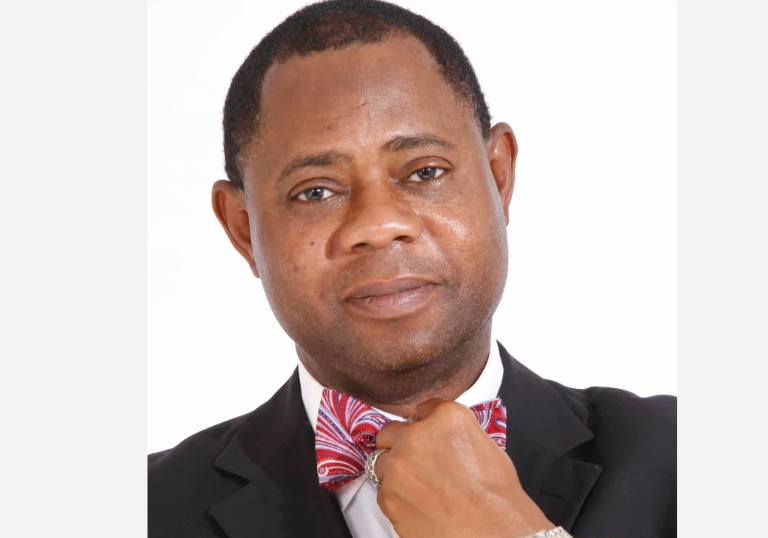
Fred Eno, a veteran journalist, politician, diplomat, and philanthropist, has spent nearly four decades addressing issues that continue to shape Nigeria's narrative, including the annulment of the June 12, 1993 elections and the ongoing Boko Haram insurgency in North-East Nigeria.
nEno, who has visited 42 out of 54 African countries, recently concluded his assignment as Advisor to the United Nations Systems in Nigeria, a position that placed him at the forefront of the country's security and humanitarian crises.
nWhen asked about his involvement in Nigerian politics after the annulment of the June 12 elections, Eno stated that he has never stopped working for and thinking about how to make Nigeria a better place, emphasizing that one's responsibilities as a citizen do not depend on holding a political position.
nEno spent the last 10 years with the United Nations in Nigeria before stepping aside on June 1, 2025, and was the Adviser to the Resident Coordinator and Humanitarian Coordinator in Nigeria, a role that kept him active in serving the society.
nRegarding President Trump's decision to send military officers to help train and tackle insurgency in Nigeria, Eno believes they are coming 10 years too late, stating that they should have arrived earlier to make a more significant impact.
nEno emphasized that Nigeria has the capacity and diplomatic prowess to match American interests, and that the country should work together with the US to address its security challenges, rather than prioritizing national pride and sovereignty.
nHe noted that America has been making significant profits from Nigeria's oil industry for decades, and that it is in their interest to help Nigeria address its security issues, which could have a ripple effect on the entire Sahel region.
nEno expressed his frustration with the lack of progress in addressing Nigeria's security challenges, stating that the country has tough guys who can negotiate its integrity and sovereignty at all levels, but that successive administrations have failed to take decisive action.
nHe emphasized the need for Nigerians to change their narrative and work together to address the country's challenges, rather than constantly talking down the nation and its leadership.
nEno acknowledged that there are failures at different levels in Nigeria, but that the greatest failure lies in the country's political leadership, which has failed to deliver the benefits of democratic governance to the people.
nHe stated that the entire political elite is not bad or incompetent, but that the competent individuals within the elite have not generated sufficient opportunities for Nigerians, and that the country needs to change its narrative to focus on progress and development.
nEno believes that Nigerians are not ignorant or mischievous in their criticism of the leadership, but that senior and respected Nigerians often use the country's failures to create the impression that the incompetence of certain leaders is to blame.
nHe argued that policies such as the removal of oil subsidies and the allocation of crude oil to Dangote are working for the majority of Nigerians, and that the country needs to take bold decisions to drive progress and development.
nEno expressed his support for the current administration's economic team, stating that they are doing a great job, particularly in stabilizing the currency and supporting the manufacturing sector.
nHowever, he acknowledged that the economic growth has not yet translated into a better life for the average Nigerian, and that poverty still affects many citizens, emphasizing the need for consistency in social safety net programs to make a meaningful impact.
nEno discussed the cash transfer policy, stating that it takes time to show results, and that the numbers are starting to increase, with many families beginning to feel the impact of the program.
nHe noted that almost all state governments have data on their vulnerable populations and are involved in disbursing cash to their people, with various ministries and agencies also contributing to the data compilation.
nEno reflected on his experience working with the late MKO Abiola and the Hope 93 campaign, which was later truncated, and saw a correlation between Hope 93 and President Tinubu's Renewed Hope agenda, stating that they share the same ideology and goals.
nHe emphasized that Hope 93 was shaped by the desire to ensure democratic governance in Nigeria, and that Renewed Hope has inherited this agenda, with President Tinubu being an integral part of the original Hope 93 movement.
Related Stories
 General News
CELEBRATING TWO YEARS OF TRANSFORMATIONAL LEADERSHIP IN THE PRESIDENTIAL AMNESTY PROGRAMME
Tomorrow, 14TH March 2026, as we look forward to the second anniversary, we reflect on the remarkable two years since the Administrator of the Preside
 General News
PRESIDENTIAL AMNESTY PROGRAMME PHASE 3: DISREGARD PURPORTED STATEMENT ON DELAYED ITA PAYMENTS — OFFICE OF NATIONAL CHAIRMAN
The Office of the National Chairman of the Presidential Amnesty Programme Phase 3, General Elaye ThankGod Dollar Slaboh, has called on beneficiaries a
 General News
RE: CLARIFICATION ON MY PERSONAL RELATIONSHIPS
PUBLIC NOTICErnrnRE: CLARIFICATION ON MY PERSONAL RELATIONSHIPSrnrnIt has become necessary to make this public clarification following the increasing