
Northern communities need urgent investment in health, education — Shettima
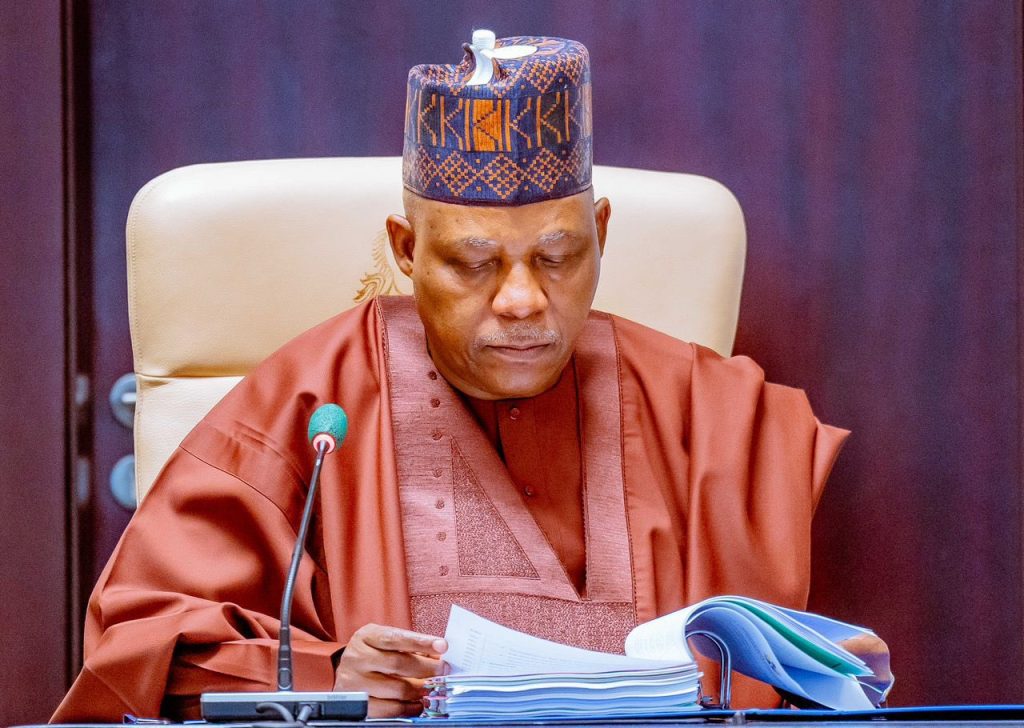
Shettima
nVice President Kashim Shettima has called for urgent investments in health, education and skills development across northern Nigeria.
nShettima said that communities in the region had continued to bear the consequences of inadequate human capital development.
nRepresented by Sen. Ibrahim Hadejia, Deputy Chief of Staff, Office of the vice president, he spoke at the Northern Nigeria Human Capital Development Summit in Abuja.
nThe News Agency of Nigeria (NAN) reports that the summit was organised by the Sir Ahmadu Bello Memorial Foundation in collaboration with the Northern Nigeria Governors’ Forum.
nAccording to Shettima, no region in the country has paid a greater price for human capital deficits than northern Nigeria, citing poor maternal health outcomes, low school enrolment and limited opportunities for young people.
n“There is no part of this country that has paid the price for the inadequacy of human capital as much as northern Nigeria.
n“You have paid for it in the bodies of mothers who do not survive the act of giving life.
n“This has also been done in the minds of children who are never taught to read, and in the talents of young people who carry the weight of a region without the tools to lift it,” he said.
nThe Vice President said the North was rich in population, talent and potential, but required deliberate investments in people to transform those assets into prosperity.
nHe described the summit as a timely intervention, saying the focus should be on confronting development challenges and closing the gaps that have hindered progress across communities.
nAccording to him, the Federal Government’s Human Capital Development (HCD) 2.0 Strategy provides a roadmap for improving outcomes in health, education, nutrition, skills development and livelihoods.
nHe urged governors and other stakeholders to take ownership of the human capital agenda, noting that schools, primary healthcare centres and frontline service providers fall largely within the responsibility of state governments.
n“The classrooms are in your states. The primary healthcare centres are under your authority. The teachers, nurses, midwives and community workers are all in your employ.
n“No federal programme, no matter how well designed, can educate the child you have not enrolled or save the mother you have not reached,” he said.
nAlso speaking, Governor Abdullahi Sule of Nasarawa State identified the Almajiri system, out-of-school children and early marriage as major obstacles to human capital development in northern communities.
nSule said northern leaders must confront the issues honestly and collectively, noting that millions of children remain outside the formal education system across the region.
nAccording to him, Nasarawa State repatriated more than 200,000 Almajiri children to their states of origin during the COVID-19 pandemic as part of efforts to address the challenge.
nHe, however, said the problem persisted, adding that northern states account for about 15 million of Nigeria’s estimated 18 million out-of-school children.
n“The elephant in the room is the Almajiri system. We have discussed many issues here, but we must tell ourselves the truth.
n“If we are serious about human capital development, we must address out-of-school children, early marriage and the conditions that continue to keep young people out of education,” he said.
nThe governor called on northern governors, traditional rulers, religious leaders and the National Assembly to work together on sustainable solutions, including legislation and expanded access to formal and vocational education.
nHe said that tackling the challenge required creating alternatives for vulnerable children through quality education, skills acquisition and social support programmes.
nHe also linked poor educational outcomes to insecurity and poverty, warning that failure to invest in young people could undermine development efforts across the region.
nHe joined the vice president to call for increased funding for education, healthcare and skills development programmes to improve human capital outcomes and unlock the region’s economic potential.
nThey urged governments at all levels to translate commitments into concrete actions through better funding, improved service delivery and stronger accountability mechanisms.
nThe summit brought together governors, ministers, development partners, traditional rulers and other stakeholders to discuss strategies for accelerating human capital development in northern Nigeria.
n nRelated Stories
 General News
CELEBRATING TWO YEARS OF TRANSFORMATIONAL LEADERSHIP IN THE PRESIDENTIAL AMNESTY PROGRAMME
Tomorrow, 14TH March 2026, as we look forward to the second anniversary, we reflect on the remarkable two years since the Administrator of the Preside
 General News
PRESIDENTIAL AMNESTY PROGRAMME PHASE 3: DISREGARD PURPORTED STATEMENT ON DELAYED ITA PAYMENTS — OFFICE OF NATIONAL CHAIRMAN
The Office of the National Chairman of the Presidential Amnesty Programme Phase 3, General Elaye ThankGod Dollar Slaboh, has called on beneficiaries a
 General News
RE: CLARIFICATION ON MY PERSONAL RELATIONSHIPS
PUBLIC NOTICErnrnRE: CLARIFICATION ON MY PERSONAL RELATIONSHIPSrnrnIt has become necessary to make this public clarification following the increasing