
Non-Oil exporters seek one-stop system to tackle setbacks, boost market access
By Progress Godfrey
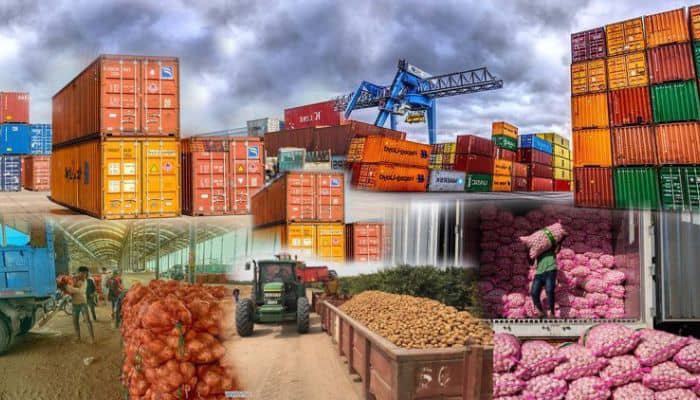
nNon-oil exporters have called for the establishment of a one-stop export processing system to address regulatory bottlenecks, reduce costs, and enhance Nigeria’s competitiveness in global markets.
nThe call was made at a policy roundtable on market access for Nigeria’s non-oil export sector, themed ‘Advancing SME Competitiveness under DCTS and AfCFTA’. The event brought together policymakers, regulators, development partners and private sector players to review challenges and propose reforms.
nNational President of the Network of Practicing Non-Oil Exporters of Nigeria (NPNEN), Hon. Ahmad Rabiu, said the study highlighted structural barriers affecting exports, including weak infrastructure assumptions, low capacity to meet international standards, and gaps within regulatory institutions.
nHe stressed the need for a pragmatic export strategy rooted in local realities, noting that countries like Malaysia succeeded by aligning policies with domestic capacity. He also called for the revival of inland ports to ease cargo movement and reduce pressure on seaports.
nSimilarly, President of the Nigeria Trade and Investment Center, Canada, Mr. Olufemi Boyede, identified key constraints such as limited access to finance, poor logistics, and policy inconsistencies. He noted that multiple regulatory agencies at export points increase costs and reduce efficiency.
n“One of the biggest barriers is the multiplicity of regulators, each imposing charges, which raises the cost of Nigerian exports. A one-stop export processing centre is the way forward,” he said.
nAlso speaking, Executive Director, African International Trade and Commerce Research, Mr. Sand Mba, said most exporters face challenges before reaching the border, particularly logistics hurdles, compliance issues, and unofficial charges.
nAccording to him, about 62 percent of exporters struggle with pre-border constraints, limiting their ability to scale and access international markets.
nStakeholders at the forum agreed that improved coordination, better access to finance, and stronger institutional support are critical to unlocking opportunities under the African Continental Free Trade Area (AfCFTA) and the UK’s Developing Countries Trading Scheme (DCTS).
n nRelated Stories
 General News
CELEBRATING TWO YEARS OF TRANSFORMATIONAL LEADERSHIP IN THE PRESIDENTIAL AMNESTY PROGRAMME
Tomorrow, 14TH March 2026, as we look forward to the second anniversary, we reflect on the remarkable two years since the Administrator of the Preside
 General News
PRESIDENTIAL AMNESTY PROGRAMME PHASE 3: DISREGARD PURPORTED STATEMENT ON DELAYED ITA PAYMENTS — OFFICE OF NATIONAL CHAIRMAN
The Office of the National Chairman of the Presidential Amnesty Programme Phase 3, General Elaye ThankGod Dollar Slaboh, has called on beneficiaries a
 General News
RE: CLARIFICATION ON MY PERSONAL RELATIONSHIPS
PUBLIC NOTICErnrnRE: CLARIFICATION ON MY PERSONAL RELATIONSHIPSrnrnIt has become necessary to make this public clarification following the increasing