
NNPC Investigation: I'm a dedicated supporter, not a liability, to the Tinubu administration — Oshiomhole
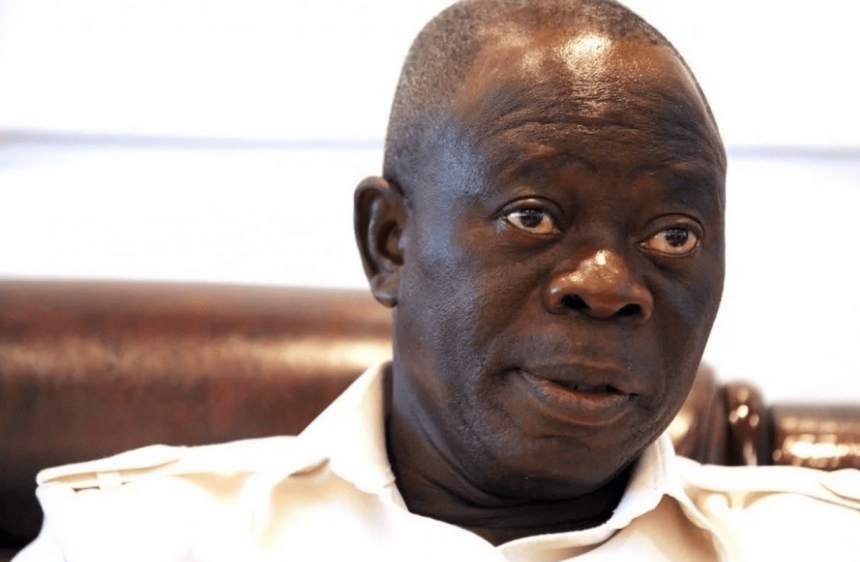
Adams Oshiomhole, the former Edo State governor and senator, has come out in defense of the ongoing investigation into the audited accounts of the Nigerian National Petroleum Company Limited, emphasizing that the Senate Committee on Public Accounts has a responsibility to look into the issues raised in the company's financial reports.
nAs the Chairman of the Senate Committee on Public Accounts, Oshiomhole has faced criticism, but he insists that his actions are not a burden to the administration of President Bola Ahmed Tinubu, and that democracy entitles citizens and lawmakers to demand accountability from public institutions.
nOshiomhole made these comments in Akure, where he was responding to the controversies surrounding the committee's scrutiny of the NNPCL's audited reports, which cover the period between 2017 and 2023, and highlighted the importance of transparency and accountability in a democratic system.
nAccording to Oshiomhole, the concerns raised by the committee are based on observations contained in audited reports prepared by independent and internationally recognized audit firms, which identified transactions totaling about N210 trillion between 2017 and 2022 that require clarification.
nHe described these figures as "mind-boggling" and noted that they originated from the audited reports submitted for legislative review, rather than from politicians, and that the reports were prepared by professional auditors.
nOshiomhole explained that under the Constitution, government agencies are required to submit their accounts to the Auditor-General, whose reports are then forwarded to the National Assembly for oversight, ensuring that the legislative body can hold these agencies accountable.
nDuring the committee's review, NNPCL officials revealed that over N107 trillion had been deposited in financial institutions that later became insolvent, resulting in significant losses, and the committee requested more information, including the names of the banks involved and the amounts held in each institution.
nAn additional N103 trillion was reportedly linked to transactions involving marketers, tanker operators, and other entities, prompting the committee to seek supporting documentation and details of these transactions, with Oshiomhole questioning how such large sums could disappear without leaving any trail.
nOshiomhole emphasized that the committee's responsibility is to examine concerns already highlighted by auditors, and that if auditors deem the explanations provided as insufficient, the National Assembly has a duty to seek clarification and ensure accountability.
nResponding to criticism that he is undermining the government, Oshiomhole rejected these claims, stating that he is fully committed to President Bola Tinubu's administration and to Nigeria's progress, and that the transactions under review occurred between 2017 and 2022, before Tinubu took office.
nOshiomhole pointed out that the current administration's actions regarding some officials linked to the period under review suggest a desire to improve accountability and performance, demonstrating a commitment to transparency and good governance.
nOshiomhole also discussed his evolving stance on fuel subsidy, noting that his position changed as the financial burden on the country increased, and that he initially opposed fuel subsidy removal under previous administrations because the costs were relatively low, measured in tens of billions of naira.
nHowever, as the subsidy regime expanded into trillions of naira annually, Oshiomhole came to realize that it had become a channel for diverting enormous sums of public funds, leading him to conclude that the system was no longer sustainable and that removal of the subsidy was necessary.
Related Stories
 General News
CELEBRATING TWO YEARS OF TRANSFORMATIONAL LEADERSHIP IN THE PRESIDENTIAL AMNESTY PROGRAMME
Tomorrow, 14TH March 2026, as we look forward to the second anniversary, we reflect on the remarkable two years since the Administrator of the Preside
 General News
PRESIDENTIAL AMNESTY PROGRAMME PHASE 3: DISREGARD PURPORTED STATEMENT ON DELAYED ITA PAYMENTS — OFFICE OF NATIONAL CHAIRMAN
The Office of the National Chairman of the Presidential Amnesty Programme Phase 3, General Elaye ThankGod Dollar Slaboh, has called on beneficiaries a
 General News
RE: CLARIFICATION ON MY PERSONAL RELATIONSHIPS
PUBLIC NOTICErnrnRE: CLARIFICATION ON MY PERSONAL RELATIONSHIPSrnrnIt has become necessary to make this public clarification following the increasing