
Nigeria's textile exports plummet 55.3% to N16.55 billion amid soaring imports of N1.06 trillion
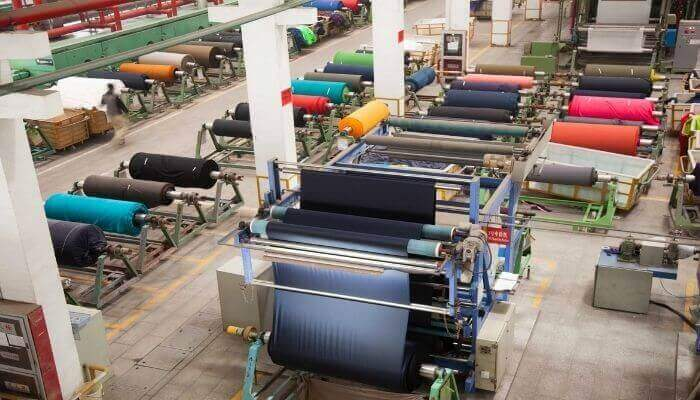
Nigeria's textile exports experienced a dramatic decline in 2025, with a 55.25 per cent drop to N16.55 billion from the N36.98 billion recorded in 2024, while the country's textile imports surged significantly during the same period.
nData from the National Bureau of Statistics (NBS) revealed that export earnings from textile products plummeted, whereas the value of imported textile items increased by 46.11 per cent to N1.061 trillion in 2025, up from N726.176 billion in 2024.
nThe disparity between Nigeria's textile imports and exports continues to grow, highlighting the country's increasing reliance on foreign textile products amidst the persistent challenges facing the local industry.
nA closer examination of the data shows that textile exports had been steadily increasing in the years leading up to the decline, with export value rising from N10.268 billion in 2022 to N18.755 billion in 2023, and then surging to N36.981 billion in 2024.
nHowever, the figure took a drastic turn, dropping to N16.550 billion in 2025, while textile imports continued to climb consistently over the same period, with import value standing at N365.463 billion in 2022 and increasing marginally to N377.468 billion in 2023.
nThe import value then jumped significantly to N726.176 billion in 2024 before rising further to N1.061 trillion in 2025, reflecting the structural weaknesses in Nigeria's textile manufacturing sector, which has struggled for decades with high production costs, inadequate power supply, smuggling, and competition from cheaper imported fabrics.
nIndustry stakeholders have repeatedly warned that without robust policy support, investment in local manufacturing, and stricter control of textile imports, Nigeria's once-thriving textile industry could face further decline, and analysts say the latest figures reinforce concerns about the country's trade imbalance in the textile segment.
nThe data also underscores the increasing demand for textile products in the domestic market, much of which is being met through imports rather than local production, with imports now outweighing exports by a substantial margin.
nDirector General of the Manufacturers Association of Nigeria (MAN), Segun Ajayi-Kadir, stated that reviving Nigeria's textile industry requires a comprehensive approach, linking cotton farming to garment production and strengthening the entire value chain.
nAjayi-Kadir advocates for stronger local sourcing, improved policy enforcement to combat smuggling and counterfeiting, and increased investments in technology, citing high production costs and poor infrastructure, counterfeiting, and the influx of cheap imports as factors stifling competitiveness in the textile industry.
nHe urged the government to partner with financial institutions and industry players to drive the revival of and competitiveness in the country's textile and leather sectors, describing the sectors as labour-intensive with huge potential for value addition, job creation, and exports.
nAjayi-Kadir noted that the industries also reflect Nigeria's creativity and cultural heritage, emphasizing the need for strategic collaboration involving manufacturers, government, financial institutions, research bodies, and development partners.
nThe MAN DG stressed the need for coordinated efforts across the entire value chain, from cotton farming and spinning to garment making, and from hides processing to finished leather goods, also urging the government to enforce policies that protect local industries, promote fair competition, and strengthen industrial clusters.
nAjayi-Kadir appealed to the government to enforce policies that support local industries, ensure fair competition, and strengthen industrial clusters, reiterating the importance of a holistic approach to revive the textile industry.
Related Stories
 General News
CELEBRATING TWO YEARS OF TRANSFORMATIONAL LEADERSHIP IN THE PRESIDENTIAL AMNESTY PROGRAMME
Tomorrow, 14TH March 2026, as we look forward to the second anniversary, we reflect on the remarkable two years since the Administrator of the Preside
 General News
PRESIDENTIAL AMNESTY PROGRAMME PHASE 3: DISREGARD PURPORTED STATEMENT ON DELAYED ITA PAYMENTS — OFFICE OF NATIONAL CHAIRMAN
The Office of the National Chairman of the Presidential Amnesty Programme Phase 3, General Elaye ThankGod Dollar Slaboh, has called on beneficiaries a
 General News
RE: CLARIFICATION ON MY PERSONAL RELATIONSHIPS
PUBLIC NOTICErnrnRE: CLARIFICATION ON MY PERSONAL RELATIONSHIPSrnrnIt has become necessary to make this public clarification following the increasing