
Nigeria's reliance on imported military gear is unsustainable, says Minister
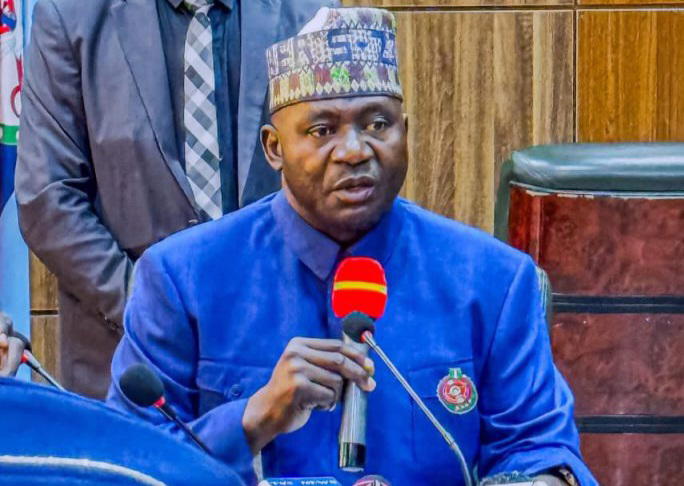
Minister of Defence, Gen. Christopher Musa, has emphasized the need for Nigeria to bolster its local defence production and reduce its reliance on imported military hardware to effectively tackle emerging security challenges, stressing that this is crucial for the country's security.
nThis statement was made by Musa at the Nigerian People’s Strategic Conference and Defence Exhibition 2026, held in Abuja, which focused on the theme “Building a Modern Security Ecosystem: Integrating Private Sector Capacity into Nigeria’s National Security Architecture”.
nAccording to Musa, recent global conflicts have highlighted the risks associated with dependence on foreign suppliers for critical defence and security equipment, as countries often face difficulties procuring essential military assets during international crises.
nMusa noted that local production is a strategic necessity, saying “Nigeria cannot continue to depend entirely on imported security solutions” and that recent global conflicts have demonstrated the difficulties of procuring critical military and security equipment during periods of international crisis.
nThe minister acknowledged that Nigeria has the capacity to develop indigenous defence technologies and security solutions capable of meeting its operational requirements, praising local defence manufacturers and innovators for their contributions.
nHe commended their efforts in producing military vehicles, drones, surveillance systems, and other security technologies, calling for deliberate patronage of locally manufactured defence equipment to strengthen the country’s industrial base and enhance self-reliance.
nMusa also advocated for increased support for universities, research institutions, and young innovators developing solutions for intelligence gathering, surveillance, and threat detection, recognizing the importance of emerging technologies in security operations.
nHe noted that technologies such as artificial intelligence, drones, satellite imagery, biometric systems, and predictive analytics are transforming security operations globally, and Nigeria must embrace these technologies while ensuring they serve national interests and operate within established legal frameworks.
nMusa emphasized that security is a collective responsibility requiring collaboration among government institutions, security agencies, the private sector, and local communities, stressing that modern security threats have become increasingly sophisticated and technology-driven.
nThe minister highlighted that criminals often rely on local collaborators for intelligence, logistics, and financial support, making community participation essential to national security efforts, and urged citizens to provide timely information to security agencies and resist supporting criminal elements.
nMusa called for stronger public-private partnerships in security, saying private firms could support intelligence gathering, infrastructure protection, cybersecurity, surveillance, and emergency response operations, but stressed that such partnerships must be properly regulated and coordinated.
nHe proposed strengthening legal frameworks for public-private security cooperation, promoting local defence manufacturing, investing in training, and establishing secure platforms for information sharing, reaffirming the commitment of the Armed Forces and other security agencies to defending the country’s territorial integrity.
nAccording to Musa, military action alone cannot solve Nigeria’s security challenges, stressing the need for a whole-of-government and whole-of-society approach to national security, which requires the collective efforts of all stakeholders.
nEarlier, the convener of the conference, Mr Charles Awuzie, explained that the conference was conceived as a platform to bring together government, defence institutions, industry leaders, technology innovators, investors, and citizens to explore practical solutions for building a modern and coordinated national security ecosystem.
nAwuzie announced that the conference would become an annual forum for strategic engagement on national security and development, stressing that security concerns affect every Nigerian regardless of profession, location, or social status, and that the platform is designed to complement existing government efforts.
Related Stories
 General News
CELEBRATING TWO YEARS OF TRANSFORMATIONAL LEADERSHIP IN THE PRESIDENTIAL AMNESTY PROGRAMME
Tomorrow, 14TH March 2026, as we look forward to the second anniversary, we reflect on the remarkable two years since the Administrator of the Preside
 General News
PRESIDENTIAL AMNESTY PROGRAMME PHASE 3: DISREGARD PURPORTED STATEMENT ON DELAYED ITA PAYMENTS — OFFICE OF NATIONAL CHAIRMAN
The Office of the National Chairman of the Presidential Amnesty Programme Phase 3, General Elaye ThankGod Dollar Slaboh, has called on beneficiaries a
 General News
RE: CLARIFICATION ON MY PERSONAL RELATIONSHIPS
PUBLIC NOTICErnrnRE: CLARIFICATION ON MY PERSONAL RELATIONSHIPSrnrnIt has become necessary to make this public clarification following the increasing