
Nigeria's Power Sector Suffers 11,200MW Shortfall Following Privatization
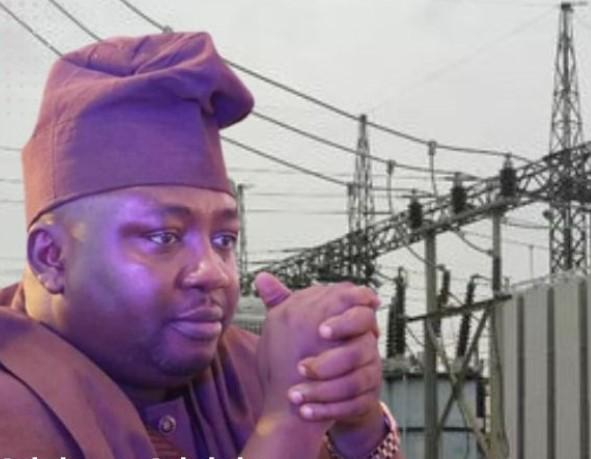
Nigeria's power sector is grappling with a severe crisis, as the country's generation capacity has dipped by 15 percent over the past five years, with available generation capacity standing at 6,773.10 megawatts as of 2025, compared to 7,792.51 megawatts in 2020.
nThe Nigerian Independent System Operator has revealed that the country's average electricity generation is currently at 4,300 megawatts, a significant shortfall from the available generation capacity of 15,500 megawatts, resulting in a gross shortfall of 11,200 megawatts.
nStockholders are calling for a state of emergency in the power sector, which has failed to improve despite investments of billions of naira over the last five years, with the country requiring between 30,000 MW and 100,000 MW of generated power to sustain a constant and stable electricity supply nationwide.
nA document obtained by Sunday Vanguard shows that the available generation capacity has fluctuated over the years, standing at 7,792.51mw in 2020, 6,336.52mw in 2021, 5,757.03mw in 2022, 6,428.38mw in 2023, 6,358.79mw in 2024, and 6,773.10mw in 2025.
nThe average generation capacity has also seen a marginal increase, rising by 12.59 percent to 4,633.79mw in 2025, compared to 4,050.07mw in 2020, with the average generation capacity standing at 4,050.07mw in 2020, 4,118.98mw in 2021, 3,940.54mw in 2022, 4,201.42mw in 2023, 4,178.49mw in 2024, and 4,633.79mw in 2025.
nThe Central Bank of Nigeria has injected over N2.3 trillion into the power sector for infrastructure, meters, and to support Generation and Distribution companies, while the World Bank has invested over $2 billion in the last five years, including the Nigeria Electrification Project and the $750 million DARES program.
nThe Nigerian Independent System Operator has attributed the reduced output to inadequate gas deliveries to generation companies, with thermal plants requiring an estimated 1,629.75 million standard cubic feet of gas per day to operate at optimal capacity, but actual gas supply standing at approximately 692 MMSCF per day as of February 23, 2026.
nThe shortfall of about 937 MMSCF per day has constrained available generation capacity, directly reducing the volume of electricity dispatched to Distribution Companies, with NISO working with relevant stakeholders to improve gas availability and restore generation capacity.
nThe power sector debt has hit N6.8 trillion, according to the Generation Companies, which have called on the Federal Government to take structural action as a matter of urgency, with the debt expected to rise by 33 percent by the end of 2026.
nThe GENCOs have rejected the Federal Government's recent settlement offer of N2.8 trillion, disputing it as an inaccurate reflection of their verified legacy debts, and are demanding transparency regarding the basis of the computation.
nThe Minister of Power, Adebayo Adelabu, has embarked on the construction of a 1mw hybrid solar PV Power Plant at the Power House in Abuja, in a move seen as a sign of frustration with the national grid, with the Presidency also planning to invest heavily in a solar power project to move the Aso Rock Presidential Villa off the national grid by March 2026.
nExperts in the power sector have attributed policy inconsistency, regulatory lacuna, corruption, and lack of political will to the challenges hampering growth in the power sector, with some calling for the removal of the Minister of Power over the gross inefficiency rocking the sector.
nAdetayo Adegbemle, Executive Director of PowerUp Nigeria, has called for the removal of the Minister of Power, stating that the minister would have been sacked and replaced after eight months of incompetence in a working system.
nDr. Joy Ogaji, Executive Director of the Association of Power Generation Companies, has said that the Federal Government's decision to bypass its own infrastructure cites a total failure of the Service-Based Tariff model, signaling to the market and to local and international investors that the national grid is no longer a viable platform for critical infrastructure.
nProf. Wumi Iledare, an energy economist and Executive Director of the Emmanuel Egbigah Foundation, has stated that the anomaly in Nigeria's electricity pricing structure is driving revenue growth, not efficiency, improved service delivery, or fairness.
nMuda Yusuf of the Centre for the Promotion of Private Enterprise has argued that Nigeria's power sector remains one of the most challenging areas of the country's economic reform agenda, with deep structural, financial, and governance challenges that require immediate attention.
Related Stories
 General News
CELEBRATING TWO YEARS OF TRANSFORMATIONAL LEADERSHIP IN THE PRESIDENTIAL AMNESTY PROGRAMME
Tomorrow, 14TH March 2026, as we look forward to the second anniversary, we reflect on the remarkable two years since the Administrator of the Preside
 General News
PRESIDENTIAL AMNESTY PROGRAMME PHASE 3: DISREGARD PURPORTED STATEMENT ON DELAYED ITA PAYMENTS — OFFICE OF NATIONAL CHAIRMAN
The Office of the National Chairman of the Presidential Amnesty Programme Phase 3, General Elaye ThankGod Dollar Slaboh, has called on beneficiaries a
 General News
RE: CLARIFICATION ON MY PERSONAL RELATIONSHIPS
PUBLIC NOTICErnrnRE: CLARIFICATION ON MY PERSONAL RELATIONSHIPSrnrnIt has become necessary to make this public clarification following the increasing