
Nigeria's Maritime Academy Forecasts N24 Billion in Income
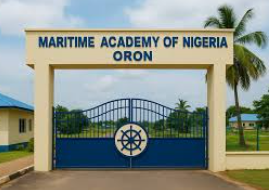
…Expands Cadet Training Opportunities for 2026
nBy Gift ChapiOdekina, Abuja
nThe Maritime Academy of Nigeria has projected a total revenue of N24.01 billion for the 2026 fiscal year, while unveiling plans to expand training opportunities for cadets and students.
nActing Rector Dr. Kevin Okonna disclosed the figures on Wednesday before the House of Representatives Committee on Maritime Safety, Education and Administration during the Academy’s 2026 budget defence session.
nOkonna stated that after remitting a projected N10.8 million to the Consolidated Revenue Fund, the Academy would retain a net revenue of N23.99 billion. He said the bulk of the income—N13.33 billion—would come from a 5 percent statutory allocation from the Nigerian Maritime Administration and Safety Agency, with additional inflows of N696.66 million from the Maritime Organization of West and Central Africa (MOWCA), N55 million outstanding from the 2025 budget, and N697.38 million from cadet and student fees. Other sources, including rent, are expected to generate N30.17 million.
nOn expenditures, Okonna said the Academy plans to spend N8.78 billion on overheads, N1.36 billion on personnel emoluments, and N13.85 billion on capital projects, totaling the net revenue.
nHighlighting achievements, he noted that 80 cadets from the 2021 graduating set secured employment and sea-time experience in 2025 through strategic engagements with ship owners. The Academy also signed a three-year Memorandum of Understanding with NLNG Shipping and Marine Services Limited, deploying 43 cadets onboard NLNG vessels for practical training.
nOkonna added that the Academy recently earned two international certifications covering quality management and educational management systems, and now provides 24-hour power supply for cadets and students on campus.
nChairman of the Committee, Hon. Khadija Waziri-Bukar Ibrahim, described the Academy as central to Nigeria’s maritime capacity building and human capital development. She stressed the sector’s role in driving trade, national security, and employment, while noting challenges such as infrastructure deficits, outdated training equipment, accreditation requirements, and the need for modern simulation facilities.
nShe assured that the Committee would support initiatives to enhance maritime education, infrastructure, staff welfare, and compliance with international standards, emphasizing fiscal discipline, accountability, and transparency.
nAccording to Waziri-Bukar Ibrahim, the budget defence process is collaborative, aiming to transform the Maritime Academy of Nigeria, Oron, into a globally competitive institution that strengthens Nigeria’s blue economy.
n nRelated Stories
 General News
CELEBRATING TWO YEARS OF TRANSFORMATIONAL LEADERSHIP IN THE PRESIDENTIAL AMNESTY PROGRAMME
Tomorrow, 14TH March 2026, as we look forward to the second anniversary, we reflect on the remarkable two years since the Administrator of the Preside
 General News
PRESIDENTIAL AMNESTY PROGRAMME PHASE 3: DISREGARD PURPORTED STATEMENT ON DELAYED ITA PAYMENTS — OFFICE OF NATIONAL CHAIRMAN
The Office of the National Chairman of the Presidential Amnesty Programme Phase 3, General Elaye ThankGod Dollar Slaboh, has called on beneficiaries a
 General News
RE: CLARIFICATION ON MY PERSONAL RELATIONSHIPS
PUBLIC NOTICErnrnRE: CLARIFICATION ON MY PERSONAL RELATIONSHIPSrnrnIt has become necessary to make this public clarification following the increasing