
Nigeria’s indigenous languages to face extinction within 70 years – Linguists
Map-of-Nigeria
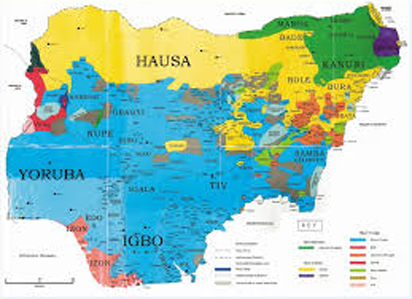
nLinguists estimate that if current non-transmission trends persist, many of Nigeria’s more than 500 indigenous languages could face severe endangerment or extinction within 50 to 70 years.
nChildren, parents and experts said urban lifestyles had reduced children’s exposure to indigenous languages and weakened intergenerational transmission.
nMaimuna Egigogo, 12, a resident of Kubwa, said that she understood Nupe but could not speak it because her parents communicated with her mainly in English.
nShe said she frequently interacted with her grandparents, aunt and uncle before moving from Bida, Niger, to Abuja three years ago.
n“But since I came to Abuja, everyone around me, including my parents, speaks only English, so I think that is why I cannot speak my dialect,” she explained.
nAmina Bello, a mother of three, said she did not speak Ebira with her children because she believed English would give them educational and social advantages.
nBenjamin Mitu, from Plateau, said he and his wife adopted English at home because they spoke different indigenous languages and feared confusing their children.
n“I do not want a situation where I speak my indigenous language while my wife speaks hers and the children end up learning neither language well,” he said.
nStephen Adeniyi, another child, said he spoke only English because his parents worked long hours, leaving him mostly with school and domestic staff who communicated in English.
n“My parents do not have the time to teach me our indigenous language because of work, so I do not really blame them,” he said.
nRebecca Ibrahim said preserving her indigenous language was a deliberate family policy, adding that she spoke her local dialect with her children at home.
nShe said she also encouraged her children to visit their grandparents during holidays to strengthen their understanding and use of their indigenous language.
n“My parents taught me our indigenous language and they are still helping me to teach my children,” Ibrahim said.
nEmmanuel David, an Itsekiri, said he would struggle to converse with his parents if they stopped speaking English and switched completely to their indigenous language.
nMichael Peter recalled growing up where indigenous-language use, was compulsory, while folktales, songs, proverbs and regular visits to ancestral communities strengthened cultural knowledge.
nPeter urged parents to become more intentional about preserving cultural identity by encouraging regular use of indigenous languages and passing traditions to younger generations.
nProf. Chinwe Anunobi, Chief Executive Officer of the National Library of Nigeria, expressed concern over the global decline of indigenous languages during the 2026 International Mother Tongue Day event.
nAnunobi warned that many indigenous languages faced extinction because of neglect and reduced intergenerational transmission, threatening cultural identity, traditional knowledge and community diversity.
nShe advocated education in indigenous languages, saying it could improve literacy, comprehension and academic performance while helping children maintain connections with their cultural heritage.
nEducationist Funmi Soyoye dismissed concerns that teaching children indigenous languages could undermine English proficiency, saying multilingual exposure could strengthen communication and language-learning abilities.
n“The brain is not a bucket. Learning a second language does not push out the first. The brain is like a muscle,” Soyoye said.
nShe said children could transfer sentence construction, storytelling and vocabulary skills acquired in indigenous languages to English, especially when encouraged to read and communicate bilingually.
n“When a child learns how to build a sentence, tell a story or use a proverb in Igbo, they transfer that skill to English,” she said.
nSoyoye said that children needed exposure to quality English and indigenous languages, warning that poor use of both languages, rather than bilingualism, could affect effective communication. Vanguard News
n nRelated Stories
 General News
CELEBRATING TWO YEARS OF TRANSFORMATIONAL LEADERSHIP IN THE PRESIDENTIAL AMNESTY PROGRAMME
Tomorrow, 14TH March 2026, as we look forward to the second anniversary, we reflect on the remarkable two years since the Administrator of the Preside
 General News
PRESIDENTIAL AMNESTY PROGRAMME PHASE 3: DISREGARD PURPORTED STATEMENT ON DELAYED ITA PAYMENTS — OFFICE OF NATIONAL CHAIRMAN
The Office of the National Chairman of the Presidential Amnesty Programme Phase 3, General Elaye ThankGod Dollar Slaboh, has called on beneficiaries a
 General News
RE: CLARIFICATION ON MY PERSONAL RELATIONSHIPS
PUBLIC NOTICErnrnRE: CLARIFICATION ON MY PERSONAL RELATIONSHIPSrnrnIt has become necessary to make this public clarification following the increasing